
May 2022
Table of Contents
- 1.0 Program Context
- 2.0 Methodology
- 3.0 Findings
- 4.0 Conclusion
- Appendix A: Mitacs Logic Model
- Appendix B: Endnotes
1.0 Program Context
Mitacs is a national, not-for-profit organization that provides paid work-integrated learning (WIL) opportunities, and professional skills training, to students and postdoctoral fellows through multi-sectoral partnerships with academia (domestic and international) across all disciplines.
Mitacs was created as a Network of Centres of Excellence in 1999 to support applied and industrial research in mathematics and related academic disciplines. Mitacs launched its first research internship program in 2003 that was designed to increase the deployment of post-secondary graduates into the private sector. It broadened the eligibility criteria of its research internship program in 2007 to include all academic disciplines. Moreover, in 2018-19 Mitacs broadened its internship eligibility criteria to include college and polytechnic students and in 2020-21 further broadened its partnering organization eligibility to include municipalities and hospitals.
To date, ISED provides funding to support four Mitacs WIL programs:
- Accelerate - R&D and innovation internships for post-secondary students and postdoctoral fellows in Canadian organizations. Professional skills training is also a component of the Accelerate program. This is Mitacs' largest program.
- Current streams include: Accelerate Entrepreneur, Accelerate Explore (pilot stream), Accelerate Fellowship, Accelerate Industrial Postdoc, Accelerate International, Business Strategy Internships
- Elevate – Collaborative R&D internships and professional development training for postdoctoral fellows to gain business skills while helping to address research challenges of partner organizations.
- Globalink – R&D internships in Canada for international undergraduate and graduate students as well as R&D internships abroad for undergraduate and graduate students from Canada.
- Current streams include: Globalink Research Award (Canadian and international students), Globalink Research Internship (international students), Globalink Graduate Fellowship
- Entrepreneur International – Internships for entrepreneurs at start-up companies housed in incubators/accelerators linked to a Canadian post-secondary institution, to connect in-person with clients and investors in Mitacs partner countries and explore new market opportunities abroad.
- This internship program was launched in 2019-20 and is excluded from the scope of this evaluation.
As per its 2017 funding agreement with ISED, Mitacs is expected to support 10,000 internships per year by March 31, 2022.
ISED funding to Mitacs has expanded over the last five years.
- Mitacs established its first partnership with ISED in the form of a funding agreement of $35 million over five years, beginning in 2012-13 to 2016-17.
- ISED funding to Mitacs expanded to $220.5 million over five years in 2017-18 to increase internships for Canadian students at post-secondary institutions and deliver professional skills training.
- Mitacs received funding of $7 million over five years from ISED in 2019-20 as part of the federal government's Export Diversification Strategy to support international incubator internships.
- Mitacs received $40 million from ISED in 2020-21 as part of the Government of Canada COVID-19 Emergency Response Plan to help Canadian post-secondary students facing economic hardships and aid employers in accessing student talent.
- ISED funding to Mitacs was renewed in the amount of $708 million over five years beginning in 2021-22. Eligibility across all Mitacs programs was further broadened to include recent graduates (within two years of graduation).
In addition to ISED funding, the financial contributions from provincial governments, and Mitacs' Canadian and international partnering organizations, help support the delivery of Mitacs WIL opportunities.
Funding from ISED and provincial governments enable Mitacs to deliver WIL opportunities across Canada and increase the amount of WIL opportunities that Mitacs provides to post-secondary students and postdoctoral fellows. Mitacs also provides a single point of contact for the academic community through its business development representatives and these positions are funded equally by Mitacs and the partnering post-secondary institution. As of 2020-21, Mitacs' business development team is comprised of 67 personnel across Canada.
In terms of governance, the organization is supported by a Board of Directors comprising of representatives from industry, academia, public sector, and the not-for-profit sector. Of the 13-member Board of Directors, six are women (46%) and three are visible minorities (23%), as of 2021-22, nearing the 50% gender parity and 30% representation of underrepresented groups outlined in the federal government's 50-30 Challenge.
Mitacs provides 'one-to-one' dollar matching on R&D and innovation projects with partnering organizations.
- Mitacs matches up to $7,500 per four-month Accelerate internship project.
- Mitacs matches up to $30,000 per year, for a two-year Elevate fellowship project.
- Mitacs matches internship project funds starting at $7,500 for a 12-24 week Globalink internship.
By delivering WIL opportunities and encouraging partnerships, Mitacs facilitates the transfer of knowledge between post-secondary institutions and industry. Knowledge transfer activities support Canada's economy through talent development and the production of innovative goods and services in domestic and global markets.
2.0 Methodology
2.1 Evaluation Context
An evaluation of ISED's funding to Mitacs is required every five years under the Financial Administration Act.
The objectives of the evaluation are to examine the relevance, performance, and efficiency of ISED funding to Mitacs in accordance with the Treasury Board Secretariat Policy on Results.
The scope of the evaluation included all Mitacs internship programs with the exception of Mitacs Entrepreneur International internships and associated funding due to COVID-19 impacts. The evaluation covered all other ISED funding to Mitacs during the period from April 1, 2016 to March 31, 2021.
The evaluation was conducted in-house by ISED's Audit and Evaluation Branch. The evaluation used a results-based approach, examining the achievement of expected outcomes, as identified in the logic model in Appendix A.
2.2 Evaluation Questions
Relevance
- To what extent is there a continued need to support work-integrated learning (WIL) in Canada?
- How does Mitacs uniquely address this need?
Performance
- To what extent have Mitacs WIL opportunities contributed to improving the employability of post-secondary students and postdoctoral fellows?
- To what extent have Mitacs WIL opportunities contributed to attracting post-secondary students and postdoctoral fellows, as well as retaining them within Canada's workforce?
- To what extent have Mitacs WIL opportunities contributed to:
- increasing the nature and extent of research linkages with Canadian and international partners?
- increasing partnering companies' investments in industrial research, development and innovation?
Efficiency
- To what extent is the Mitacs delivery model an efficient approach for providing WIL opportunities to post-secondary students and postdoctoral fellows?
The evaluation produced seven findings, all of which were supported by at least three lines of evidence, and led to no recommendations.
2.3 Data Collection Methods
The evaluation was based on four data collection methods, including qualitative and quantitative sources
Literature and Document Review
The literature review was comprised of pertinent literature to gain a thorough understanding of the relevance of WIL in Canada and internationally. It also included a comparative analysis of WIL models in Canada and internationally. The document review included key government priority setting documents. It was also comprised of program reporting documents to support the assessment of performance and efficiency.
Performance, Administrative and Financial Data Review
Mitacs performance data, collected as part of its Performance Measurement Strategy, was reviewed in order to assess the extent to which progress has been made towards achieving the short-term, medium-term, and long-term outcomes outlined in the Mitacs logic model. An analysis of the administrative and financial data from Mitacs was also performed to assess efficiency.
Virtual Interviews
A total of 40 interviews were conducted using either MS Teams or WebEx meetings across the following stakeholder groups to gather diverse perspectives on the relevance, performance and efficiency of Mitacs:
- Mitacs management and Board of Directors;
- ISED program management;
- Other federal government departments;
- Provincial government ministries;
- Universities and colleges; and
- Industry.
Online Surveys
Online surveys were conducted to gather perspectives on the impacts of Mitacs WIL opportunities and potential improvements to enhance program effectiveness. The surveys targeted students and academic supervisors that participated in a Mitacs WIL program between 2019-20 and 2020-21 in areas related to artificial intelligence (AI), quantum, COVID-19, business strategy, or college internships. Surveys resulted in responses from a total of 107 students and 182 academic supervisors.
2.4 Challenges for the Evaluation
The evaluation encountered three potential challenges:
Attribution Challenges
The presence of other WIL programs made isolating and measuring the direct impact of ISED's funding to Mitacs challenging. To alleviate this challenge, interview questions were designed in a way that respondents could answer, to the extent possible, the incremental impact of ISED's funding to Mitacs.
COVID-19 Challenges
Due to the onset of COVID-19, some WIL opportunities were interrupted, particularly international internships. Consequently, more emphasis was placed on the earlier years of the evaluation period for international internships.
Respondent Bias Challenges
Many interview and survey participants are either involved in program delivery or are direct beneficiaries and as a result, responses may have been positively biased. To mitigate this challenge, responses were validated using other lines of evidence.
3.0 Findings
3.1 Relevance
Finding 1: There is a continued need to support work-integrated learning (WIL) in order to develop work-ready talent in Canada. The demand for WIL has evolved over the years but barriers to access exist for certain post-secondary student populations. The COVID-19 pandemic has also heightened the need for virtual WIL opportunities.
WIL contributes to developing work-ready talent by providing students with opportunities to develop professional skills that are viewed as attractive to employers.
Work-integrated learning (WIL) combines classroom and on-the-job learning, benefiting young Canadians, employers and post-secondary institutions. Canada has one of the most educated populations in the world, but important skill gaps remain.Footnote 1
For example, interviews with industry representatives indicate that students gain technical skills during their studies but lack the professional skills needed to compete for R&D opportunities in industry, leaving students with the perception that they are not work-ready upon graduation.
Similarly, these interviews also noted that businesses view students as not prepared for the work environment if they have not participated in WIL. Workplace experiences help young Canadians develop the professional skills needed to compete for high-quality jobs and to contribute to industry R&D such as the creation of breakthrough technologies.Footnote 2
WIL opportunities allow employers in industry gain access to talent, assess work-ready hires, and help sensitize post-secondary institutions to the labour force needs of businesses. Through WIL, post-secondary institutions also increase recruitment potential, stimulate innovation through commercially relevant projects, and gain stronger insights into industry skills requirements.
For example, literature and interviews with representatives from post-secondary institutions indicate that projects based on solving problems connect theoretical knowledge to practice and these types of projects help students learn important professional skills such as decision-making, critical reflection and problem solving.
It is the presence of these types of WIL opportunities that have the potential for preparing work-ready graduates and demonstrate the value of ongoing learning through their professional careers.Footnote 3
The federal government plays a key role in supporting the delivery of WIL opportunities in order to encourage the participation of employers and students.
According to literature, Canada has a dynamic economy and with its centralized focus on R&D and technology, WIL has supported innovation by training the future workforce and providing these individuals with critical skills.
In Canada, student wages are often subsidized by the federal government, and to a certain extent provincial governments as well as partnering organizations.Footnote 4 ,Footnote 5 ,Footnote 6
Interviews with federal government representatives noted that students provide employers with new ideas and perspectives, but it is challenging for small and medium enterprises (SMEs) to invest in innovation and hire top talent. By subsidizing student wages, employers are incentivized to facilitate WIL opportunities and students are attracted by the offering of competitive pay. Nearly 60% of all Mitacs intern survey respondents in 2020-21 indicated that the stipend was one factor for participating in a Mitacs internship. Furthermore, 36% of academic supervisor respondents to ISED's surveys indicated that Mitacs was the most cost-effective option for their industry partner.
Support for WIL helps ensure that the next generation of workers are ready to contribute to the evolving knowledge economy.Footnote 7
In 2017, the federal government demonstrated its commitment to supporting WIL through the launch of the Innovation and Skills Plan (ISP). The ISP aims to improve Canada's innovation ecosystem by supporting 'people and skills' to develop a talent pipeline that enables every stage of the innovation continuum.
The innovation continuum includes the following six stages:
- People and Skills
- Fundamental Research
- Applied R&D and Partnership
- Commercialization and start-up
- Scale-up and going global
- Ease of doing business
Federal government documents emphasize that Canadians must possess the right skills and the flexibility to meet the demands of the workplace in the face of changing industry needs. To grow and scale-up, firms must be able to fill skills gaps. They need better access to global talent and to recruit from a broader pool of Canadians with strong science, technology, engineering and mathematics (STEM), business, creative, and digital skills. Interviews with industry representatives also noted that as technology continues to develop, Canada will need to maintain a pipeline of talented students to stay competitive globally. In addition, interviews with provincial governments noted that the provincial interest in WIL has also increased due to greater recognition of the benefits to having post-secondary talent help businesses innovate.
Furthermore, the federal government 2020 Fall Economic Statement announced that it will invest in skills and training opportunities and help diversify sectors to include more women and other underrepresented groups so everyone has a fair chance to work and succeed.Footnote 8 The 2021 supplementary mandate letter to the Minister of Innovation, Science and Industry also noted a priority to create over one million jobs by leveraging the strength of Canada's innovation economy and using a range of tools which includes training as well as incentives for employers to hire and retain workers.Footnote 9 Most recently, the 2021 Speech from the Throne further emphasized that building a resilient economy means investing in people.Footnote 10
WIL exposes post-secondary students and postdoctoral fellows to potential career opportunities that exist outside of traditional academic settings.
Not only does WIL help students to develop and apply critical skills in a professional setting, but it is also seen as an opportunity for networking and potential future employment after graduation.Footnote 11 For example, students are able to leverage their WIL experience to differentiate themselves from other recent graduates in the competitive labour market.Footnote 12 ,Footnote 13
Interviews with representatives from the federal and provincial government also indicated that WIL experiences help improve the resumés of students and build their confidence when searching for work opportunities and networking with industry. Notably, literature indicates PhD students face challenges when entering the labour market and WIL supports them by providing opportunities to develop professional skills outside of an academic setting in order to be viewed as a more competitive candidate for employers.Footnote 14 Furthermore, 69% of respondents to ISED's survey of past Mitacs interns indicated that they chose Mitacs in order to apply their skills in a setting outside of academia and experience on-the-job learning.
Interviews with representatives from post-secondary institutions indicate that WIL helps industry realize the potential skills of graduate students and postdoctoral fellows, many of whom are interested in a career outside of a traditional academic setting. WIL also benefits employers as it allows them to view and assess students in real work scenarios where they are able to apply their skills.Footnote 15 Moreover, WIL programs are often perceived by employers as a talent management strategy to attract and secure future employees.Footnote 16
Overall, interviews across all stakeholder groups suggest that the combination of academic studies (i.e., technical knowledge) and relevant industry experience (i.e. professional skills) are critical for students that pursue careers outside of traditional academic settings after graduation. For example, Mitacs survey data for Accelerate internships in 2020-21 indicates that only 22% of respondents plan to pursue a career in higher education.
A key obstacle facing PhD graduates transitioning out of academia is a lack of awareness about the opportunities in other sectors, and on how best to pursue them. Many PhD graduates complete their studies without having learned the skill of networking or having formed any networks outside of academia.Footnote 17
WIL programs help post-secondary institutions to remain competitive and attract international students.
Canadian post-secondary institutions are able to remain competitive amongst other post-secondary institutions by offering WIL programs.Footnote 18 According to interviews with federal government representatives, WIL opportunities increase post-secondary institution partnerships with industry and help build the institutions' reputation for increasing student placements after graduation. Therefore, WIL is one strategy that Canadian post-secondary institutions can use to attract students on a national and international scale. Literature also suggests that Canada is recognized as having a hard-working and skilled workforce, and obtaining relevant work experience in Canada can be favourable for international students.Footnote 19
There are some student population groups that experience unique challenges in accessing WIL opportunities.
In many cases, employers in Canada restrict their recruitment to Canadian students, which leads to limited WIL placements for those abroad.Footnote 20 Literature suggests that limited WIL opportunities for international students can stem from uncertainty of whether these students will pursue work in Canada after graduation, leading some employers to view hiring international students as a risky investment. Additionally, some employers avoid hiring international students due to a lack of familiarity with the regulations for international student visas.Footnote 21 Literature also suggests that an employer's bias may lead them to believe that international students are less qualified due to a lack of cultural and linguistic capital and possessing an accent.Footnote 22 ,Footnote 23 According to interviews with representatives from post-secondary institutions, talented international students can help populate the workforce in Canada and these students are interested in contributing to Canada's economy after graduation as permanent residents. Government of Canada data indicates that the number of individuals holding a study permit in Canada increases each year.Footnote 24
Literature suggests that barriers also exist for students in rural or remote geographical areas, including Indigenous communities. According to Statistics Canada data, approximately 60% of Indigenous peoples were living in rural areas in Canada in 2016.Footnote 25 Rural and Indigenous students face challenges in obtaining relevant work experience, resulting in either having to forgo WIL or travelling to participate in WIL. One interviewee indicated that students tend to end up in metropolitan centres. Students that travel for a WIL opportunity may also have to pay for transportation and accommodations, which poses additional challenges for students from lower socioeconomic backgrounds.Footnote 26
In the 2016 Canadian Census, 22.8% of respondents indicated that French is their first language.Footnote 27 Literature suggests that Francophone students must often find employment in their second language outside of Quebec. Individuals that primarily speak French are further limited in their opportunities for employment across Canada. Literature indicates that the preference for employees that speak fluent English extends to WIL, leaving many Francophone students competing with Anglophones for English and bilingual placements.Footnote 28
Literature also suggests that students in STEM are more likely to benefit from WIL than students pursuing the arts, education, and social sciences.Footnote 29 However, in recent years there has been an increasing number of WIL opportunities across disciplines. Interviews with representatives from post-secondary institutions indicated that WIL has become a norm in the last five years and there is an increasing student demand for WIL across disciplines. Furthermore, interviews with industry representatives noted that employers are seeking candidates who have knowledge in disciplines beyond STEM for work opportunities such as those in artificial intelligence.
The literature also indicated that students identifying as having a disability often experience additional barriers in accessing WIL.Footnote 30 However, the nature of these barriers remain relatively unknown and unexplored.
The COVID-19 pandemic has demonstrated a need for virtual WIL opportunities, which helps increase access to WIL opportunities for students that face barriers due to their geographical location.
Literature indicates that one of the most significant changes as a result of the pandemic is the shift to wide-scale teleworking arrangements. While employers were engaging in discussions on increasing the ability for remote work and relying more on digital communication prior to the pandemic, COVID-19 has resulted in the acceleration of these trends.Footnote 31 As such, companies have had to invest in developing the necessary infrastructure to allow employees to telework.
With respect to WIL, the ability for telework has meant that students have been able to continue to obtain relevant work experience as well as earn an income during these unprecedented times. For example, interviews with representatives from post-secondary institutions noted that with respect to COVID-19, virtual WIL opportunities helped to stimulate the economy and support young people in integrating into the workplace. Moreover, interviews with industry representatives indicated that virtual WIL also provided companies with the opportunity to reach into a national and global talent pool, creating connections that may not have been made prior to COVID-19.
Organizations make significant investments into their physical workplace, such as paying rent for buildings, maintenance as well as utility costs. Likewise, employees have costs associated with commuting to and from their workplaces. According to literature, by shifting focus to online platforms, virtual WIL has the potential to not only reduce costs, but also to accommodate more students.Footnote 32
By allowing students to obtain relevant work experience from home, WIL becomes more accessible to students that may have not been able to participate previously.Footnote 33 In particular, remote and rural students as well as international students benefit substantially as virtual WIL helps to remove geographical barriers that traditionally make it more challenging for these students to participate in WIL.Footnote 34 Furthermore, 68% of respondents to ISED's survey of past Mitacs interns indicated that they were able to complete all of the work for their internship project virtually.
Despite the potential benefits of virtual WIL, there were several challenges identified.
Literature notes that for many students, productivity decreased as a result of technical issues (e.g., login errors, virtual private network problems, and internet difficulties), a lack of office equipment (e.g., dual monitors), and no longer receiving responses in a timely manner from supervisors.Footnote 35 ,Footnote 36 Mitacs intern survey data for the Business Strategy Internships (BSI) in 2020-21 indicates that 15% of respondents reported having only one interaction per week with their supervisor during their internship. ISED's survey of past Mitacs interns also noted that 49% of respondents felt that there is a lack of in-person interaction or spontaneous discussions with virtual internships.
Furthermore, one interview with an industry representative noted that in their company, virtual onboarding for WIL placements was particularly challenging due to the lack of corporate expertise of students. Literature also noted that students have reported experiencing a loss of social and professional communication during virtual WIL, which has led to feelings of loneliness and isolation.Footnote 37 Lastly, literature suggests that participating in meaningful work is very important for students, but with the transition to virtual WIL, students reported being assigned tasks that they considered to be menial.Footnote 38
Finding 2: Mitacs delivers flexible internship programs that align with federal government priorities and address the continued need for in-person and virtual WIL, across Canada's economic sectors and diverse student population. Its focus on building partnerships between post-secondary institutions and industry to facilitate knowledge transfer is unique relative to other entities that deliver WIL opportunities in Canada. Mitacs internships are uniquely focused on solving business and societal challenges in an effort to increase innovation in Canada.
Mitacs programs are delivered nationally to address the R&D and innovation needs across economic sectors in Canada, including northern regions.
In comparison to other global competitors that have increased R&D and innovation investments, literature suggests that Canada's investments have been insufficient.Footnote 39 According to Statistics Canada, gross domestic expenditures on R&D in 2021 totaled $35.8 billion in the natural science and engineering and $4.3 billion in the social sciences, humanities and arts.Footnote 40 A report by Deloitte indicates that Canada's R&D expenditures were 36% below the average for OECD countries as of 2020.Footnote 41
It was also noted that Canada's inability to convert innovation inputs into outputs is a persistent issue hindering the possibility for growth and this issue has been further exacerbated by COVID-19 in combination with higher rates of unemployment.Footnote 42 Work-ready graduates are a vital component in leading nations in a competitive global market and Mitacs helps to develop work-ready graduates by providing WIL opportunities to post-secondary students and postdoctoral fellows.
Over the evaluation period, Mitacs provided flexible R&D and innovation internship programs to address the need for WIL opportunities across economic sectors in Canada. Interviews with provincial government representatives noted that the breadth of companies and organizations that partner with Mitacs, as well as the flexibility that Mitacs provides to help address the unique priority economic sectors that exist in each province, are particularly appealing features from an economic development standpoint. For example, Mitacs has partnered with the Government of Québec to support the province's artificial intelligence strategy. It has also partnered with the BC government and Crown agency, Innovate BC, to support the Innovator Skills Initiative program which helps underrepresented people get their first job in B.C.'s innovation sector.Footnote 43
Furthermore, representatives across all provincial governments noted that they have been consistently satisfied with the number of internships delivered in their respective provinces. Data also indicates that Mitacs has business development representatives and delivered internships in all Canadian provinces, and is expanding into the territories as well. It has partnered with the Government of Yukon, Yukon University, and University of Alberta North to offer internships that support Yukon's economic recovery as a result of the COVID-19 pandemic.Footnote 44 For example, a student respondent to ISED's survey indicates that their internship with a not-for-profit in the Yukon was helping to address housing supply challenges.
Furthermore, interviews with academia, industry and provincial government stakeholders noted that Mitacs' business development representatives across Canada have a strong understanding of the R&D and innovation needs in the economic sectors that exist within their assigned region and, as such, are able to facilitate mutually beneficial collaborations between post-secondary institutions and industry partners.
A review of Mitacs data found that the organization has over 6,000 industry partners across economic sectors, 117 post-secondary partners, and 33,000 researchers in its network.
Mitacs programs are flexible to address the R&D and innovation needs for organizations of all types and sizes in Canada.
Internships through the Mitacs Accelerate program help build R&D and innovation partnerships with organizations. For example, Mitacs data sources indicate that the Accelerate Entrepreneur stream funds student entrepreneurs to further develop the research, technology or product at the core of their start-up business with an aim to help these students grow their start-ups and get to market faster.
For 2020-21, the Mitacs Accelerate program was broadened to include a Business Strategy Internship (BSI) stream, with project eligibility extended beyond R&D to include innovation projects that are designed to help an organization thrive in Canada's new economic situation as a result of the COVID-19 pandemic. Interviews with industry representatives viewed this expansion as a positive change and several noted that they used this Mitacs opportunity to hire interns from business backgrounds to support the company's work in data analytics as well as hiring interns in law to support IP activities. For example, a respondent to ISED's student survey noted that through their Mitacs internship they partnered with a law firm and developed legal and business strategies, including IP strategies, for small businesses.
The eligibility of partner organizations was also expanded in 2020-21 to include hospitals and municipalities. For example, according to interviews and Mitacs data, the City of Kamloops and Thompson Rivers University have partnered with Mitacs to deliver a three-year pilot project, "Researcher-in-Residence", which provides an opportunity for the municipality to access the talent in the university as well as for academic researchers and students to apply their expertise to City-driven research projects and to co-develop solutions based on community participation and dialogue. Currently, the pilot project has 5 Mitacs interns and their research could result in changes to City policies, bylaws, and internal processes or the creation of new services, programs, and partnerships.Footnote 45
Mitacs data indicates that 15 municipalities across Canada, of all sizes, have partnered with an academic institution in 2020-21 through the BSI stream, including northern municipalities such as the City of Yellowknife, resulting in Mitacs interns supporting over 30 unique R&D and innovation projects.
Literature suggests that SMEs are critical for innovation as they contribute to competitiveness and growth of a nation as well as strive to bring new ideas to market.Footnote 46 In recognition of this and in light of the financial strains that SMEs have faced during the COVID-19 pandemic, Mitacs has been providing additional R&D and innovation support to SMEs since 2020-21, offering these companies the opportunity to contribute only 25% for the first four months on an innovation project using any of Mitacs' programs, regardless of whether the project requires a college student or a postdoctoral fellow.
For example, through the SME discount and BSI stream, a Newfoundland-based SME with strained resources to continue their product development was able to bring on three interns who helped advance the company to the next stage of their development, including securing new clients.Footnote 47 SMEs are important to the Canadian economy, and according to Statistics Canada data referenced in a Deloitte report that assessed Mitacs economic contributions, SMEs supply 70% of employment and generate 60% of Canada's gross domestic product (GDP) in a typical year.Footnote 48 According to interviews with industry representatives, due to limited capital available for SMEs coupled with the need to be efficient with existing capital, these companies leverage Mitacs internships to determine if a student is the right fit for hire within the company. According to Mitacs data, as of 2020-21, 87% of Mitacs industry partners were SMEs and of this group, more than 80% were companies with under 50 employees.
With its focus on solving industry and societal challenges through R&D and innovation internships, Mitacs is unique relative to other WIL programs delivered by post-secondary institutions and government.
In addition to Mitacs, there are two other major approaches used to deliver WIL opportunities across Canada. Literature notes that cooperative education (co-op) programs combine classroom learning with a paid, planned, and guided work placement that is relevant to what the participating student is studying and these programs are delivered by post-secondary institutions across Canada.Footnote 49 However, according to interviews and literature, not all post-secondary institutions across Canada deliver co-op programs. Furthermore, interviews with representatives from industry and post-secondary institutions noted that co-op programs provide more of a job placement service whereas Mitacs facilitates partnerships between academia and industry by requiring that all internships be focused on projects that aim to solve business or societal challenges.
Literature also notes that WIL is still rare among Canadian PhD programs. In some peer countries, a co-op element in a PhD program is much more common. In the Netherlands, more than two-thirds of PhD students complete an internship as part of their studies and the same is true for 55% of PhD students in Germany. Footnote 50 Overall, Mitacs helps to address the co-op gaps through its internships that are accessible to students across Canada and with all levels of post-secondary education, including PhD students. Furthermore, ISED's survey of Mitacs academic supervisors noted that only 23% of respondents have used a co-op program to hire a student. Additionally, a review of Mitacs survey data for the BSI stream in 2020-21 indicates that 70% of intern respondents were not enrolled in co-op programs at their post-secondary institutions.
There are also complementary federal government programs that support WIL for post-secondary students across Canada. The national WIL program that was most frequently mentioned by interview participants as being complementary to Mitacs was Employment and Social Development Canada (ESDC)'s Student Work Placement Program (SWPP) which provides students across academic disciplines with paid work opportunities.Footnote 51
Interviews with ISED and ESDC representatives indicated that although the programs may share some similarities such as supporting SMEs, underrepresented groups, and various academic disciplines, there are key differences that make Mitacs unique in comparison. For example, Mitacs programming includes eligibility for international students as well as Masters and PhD level students, postdoctoral fellows, and going forward, recent graduates are now also part of Mitacs programming. In contrast, the SWPP is a wage subsidy program to help organizations hire Canadian post-secondary students, and more specifically, the SWPP supports undergraduate and college students that have never completed a work placement.
Furthermore, unlike Mitacs that helps build relationships between its industry and post-secondary institution partners to facilitate knowledge transfer, ESDC does not engage with employers or post-secondary institutions through the SWPP to facilitate work placements but rather requires the recipient receiving the SWPP funding to undertake these activities. Most importantly, similar to co-ops, the SWPP also does not require work placements to be problem-solving based or focused on R&D and innovation projects as is the case for Mitacs programs. For example, 80% of respondents to Mitacs' intern survey for the Busines Strategy Internship (BSI) stream in 2020-21 noted that the opportunity to work on real-world problems attracted them to Mitacs.
Interviews with provincial government representatives across Eastern and Western Canada noted that they do not deliver WIL programs and are dependent on Mitacs. In Central Canada, provincial government representatives from Ontario and Quebec noted that although they deliver WIL programs, these are complementary to Mitacs.
To support Canada's knowledge economy, Mitacs aligns its programs with federal government priorities, including COVID-19, while ensuring that there are benefits to Canada.
Mitacs internship data indicates that over the evaluation period, Mitacs has supported internships in all areas related to the federal government's Economic Strategy Tables, as well as in key priority areas outlined in the 2021 Mandate Letter to the Minister of ISED. For example, the Accelerate Explore, which is currently a pilot stream, is a two-month internship that targets students and postdoctoral fellows specializing in quantum, artificial intelligence and cybersecurity, and projects are open to businesses of all sizes.
Economic Strategy Tables
- Advanced manufacturing
- Agri-food
- Clean technology
- Digital industries
- Health/biosciences
- Resources of the future
- Tourism
In 2021-22, Mitacs supported thematic funding opportunities for postdoctoral fellows in its Elevate program for two-year research projects addressing at least one of the key priority sectors of quantum science, artificial intelligence, biomanufacturing, and clean technology. For these thematic funding opportunities, the annual salary increases from a baseline of $55,000 to a minimum of $70,000, as well as up to $10,000 per year in research costs for equipment, personnel, and publishing.
Mitacs also launched a Globalink special initiative in cooperation with several of its international partners to target areas of strategic importance for the Canadian and international research communities, including advanced computing, achieving net zero, and global health. With these broad themes, Mitacs encourages projects across disciplines, from STEM to social sciences and humanities.
To support Canada's COVID-19 Economic Response Plan, a review of Mitacs reporting documents as well as interviews indicate that the organization transitioned to delivering internships virtually during the pandemic, expedited its review process for COVID-19-related internship projects, and partnered with industry and government organizations to accelerate access to funding and quickly develop solutions to support businesses in need.Footnote 52
These documents also indicate that Mitacs' Accelerate Industrial Postdoctoral Fellowship stream supported one-year collaborative research projects between post-secondary institutions and industry that would provide a benefit to Canada by addressing a specific COVID-19 challenge. Furthermore, Mitacs intern survey data for the BSI stream in 2020-21 indicates that 77% of respondents reported that their project helped the host organization respond to problems created by COVID-19. For example, one respondent to ISED's student survey noted that their internship examined the impact of COVID-19 on the business community while another respondent noted that their internship helped a small business pivot to address the economic losses during the pandemic.
Mitacs requires that all submitted proposals for internship projects demonstrate benefits to Canada, which can include:
- Training Canadians and permanent residents
- Bringing talent to Canada
- Creating new research partnerships
- Growing research activities in Canada
- Foreign investment in Canada
- Creating IP held in Canada
- Creating markets for exiting Canadian IP
In addition to aligning with federal priorities, Mitacs helps reduce barriers to WIL opportunities for underrepresented groups.
The 2021 Mandate Letter to the Minister of Innovation, Science and Industry emphasized partnering with post-secondary institutions and Indigenous organizations to accelerate the creation and growth of Indigenous businesses as well as supporting the development of and increasing opportunities for Indigenous researchers and students in Canadian post-secondary institutions.Footnote 53 Through Mitacs' Indigenous Pathways Initiative, eligible organizations that have an Indigenous intern will only contribute 25% of the internship cost.Footnote 54
Mitacs' partnership with Indspire is an effort to leverage expertise and capacity to support the recommendations of the Truth and Reconciliation Commission of Canada and respond to the calls to action on education for reconciliation and business and reconciliation.Footnote 55
Interviews and Mitacs documents also note that Mitacs has partnered with Indigenous Works, a national social enterprise aimed at improving the inclusion and engagement of Indigenous people in the Canadian economy. Through these efforts, Indigenous students in post-secondary institutions across Canada gain access to WIL opportunities. For example, a First Nations student from Emily Carr University of Art and Design in British Columbia participated in the Mitacs BSI stream to gain experience as an animator. According to Mitacs data, 1.8% of all Accelerate interns self-identified as Indigenous in 2020-21, an increase from 0.8% in 2019-20, which can be attributed to the launch of the BSI stream.
Mitacs helps increase access to WIL opportunities for other student populations and underrepresented groups that experience barriers. For example, the BSI stream appears to have also helped increase representation of visible minorities in the Accelerate program from 11% in 2019-20 to 27% in 2020-21. Accelerate and BSI interns that self-identified as having a disability also increased from 0.3% in 2019-20 to 1.4% in 2020-21. In addition, students in business that normally face barriers in accessing WIL opportunities in comparison to STEM fields represented 21% of total Accelerate internships delivered in 2020-21, a significant increase from 5% in 2019-20 as a result of the BSI stream. Accelerate and BSI interns identifying as women also increased from 38% in 2019-20 to 40% in 2020-21. As part of the expanded support for BSI in Budget 2021, Mitacs will begin reporting demographic data to ISED for BSI separately from Accelerate which will help ensure that the data is readily disaggregated and accessible.
Furthermore, the 2021 Speech from the Throne noted that it is essential to support official language minority communities and to protect and promote French outside and inside Québec.Footnote 56 Mitacs helps Francophones access WIL opportunities in their first language, as evidenced by Mitacs data which indicates that, on average, 31% of total Mitacs Accelerate internships were delivered in Québec over the evaluation period, representing the highest proportion among provinces and territories.
Mitacs also helps increase access to international WIL opportunities through its Globalink program. For example, the Globalink Research Internship stream allows international undergraduate students from academic institutions in partnering counties to participate in a research internship at a Canadian university in a variety of academic disciplines. Data indicates that Mitacs has 41 partners across 20 countries, as of 2020-21.
Interviews indicated that the Globalink program is particularly helpful in delivering WIL opportunities and bringing talent to smaller communities and rural areas. It was also noted in interviews that Mitacs is making efforts to expand its programming in rural areas. For example, Mitacs data suggests that Atlantic Canada, Quebec, the Prairies, and British Columbia observed an increase in Globalink internships in 2020-21 compared to 2019-20.
Lesson learned: Plans for how demographic data will be collected and disaggregated should be established early in the development of any new programming. This will help ensure that data is readily disaggregated and accessible, particularly as Mitacs continues to expand its programming.
3.2 Performance
Finding 3: Mitacs helps improve the employment potential of post-secondary students and postdoctoral fellows through its match-making business approach, which is based on a national and global talent pool. Its WIL programs enable post-secondary talent to develop industry-relevant skills that help increase their employment prospects. Virtual learning, in response to COVID-19, has enabled Mitacs to expand participant reach and capacity in regards to its professional skills training that are complementary to its WIL programs.
Mitacs helps improve the employment potential of post-secondary talent through its match-making business approach and has enabled partnering organizations to access a national and global talent pool.
According to reporting documents, Mitacs matches post-secondary talent with WIL opportunities based on factors such as academic discipline, skillset, personality and expertise.Footnote 57 Interviews with industry representatives noted that this talent matching business approach is an attractive feature of Mitacs and one that helps improve student employability by exposing these individuals to real world problems within their area of expertise.
For example, one interviewee noted that it is challenging to find talent with both machine learning and telecommunications knowledge. With Mitacs' access to a pool of post-secondary talent with machine learning background, the company can share telecommunications knowledge through an internship, creating the desired mix of disciplines that can address its R&D and innovation needs.
Interviews with representatives from industry noted that Mitacs' shift to virtual WIL has resulted in effective match-making as it provides companies with the opportunity to reach into a national and global talent pool, creating connections that may not have been made prior to the pandemic.
Mitacs 2020-21 survey data indicates that 92% of industry partner respondents expressed a degree of satisfaction with the expertise of their Accelerate intern. In addition, an analysis of Mitacs internship data found that from 2016-17 to 2020-21, on average, 60% of all Accelerate interns undertook more than one internship 'unit', or in other words, participated in an internship duration of more than four months on their R&D and innovation project, which further suggests a degree of satisfaction.
Furthermore, its 'Open Projects' service is designed for organizations that are seeking talent for an Accelerate internship to support their R&D and innovation projects.Footnote 58 Mitacs circulates these opportunities in its post-secondary networks searching for the 'best fit' candidates that want to apply their skills in practice. Mitacs employs a talent matching process across its WIL programs.
Through Globalink, project proposals are submitted to Mitacs by an academic researcher and once approved are entered into an online database where students can submit their applications.Footnote 59 Mitacs then scores applications based on criteria such as grade-point average, university, and research experiences, and ranks students based on their score, ultimately generating a list of potential matches. Mitacs 2019-20 Globalink survey of academic supervisors suggests that 91% respondents expressed a degree of satisfaction with the quality of candidates they received through the matching process from Mitacs.
Mitacs WIL programs support post-secondary talent in gaining professional, industry-related skills to help increase their employment prospects.
Post-secondary students and postdoctoral fellows benefit from Mitacs' on-the-job learning and skills-building experiences that help solve real world problems. Interviews with representatives from both post-secondary institutions and industry noted that this is particularly true for PhD students that traditionally work in laboratory and academic settings.
For example, these interviews indicated that through the Accelerate program, interns learn about how companies work and interact with customers, as well as industry problems and challenges. In these business settings, interns may also be exposed to industrialization considerations if they are helping to solve problems that can lead to the commercialization of a product. For example, a review of Mitacs' 2020-21 Accelerate survey data indicates that 7.9% of intern respondents reported that their R&D and innovation project has resulted in or is expected to result in the creation of a start-up company.
An OECD study indicates that across countries, the skills most frequently used in a workplace are writing and problem solving.Footnote 60 Mitacs provides WIL opportunities that help develop workplace-relevant skills. For example, according to interviews with post-secondary institutions, Mitacs projects centered around R&D and innovation help interns develop creativity as they learn how to tackle a problem systematically and leverage resources such as professional networks, technologies and research infrastructure, and data that may not be available in academic settings. Interviews with representatives from industry and post-secondary institutions noted that Mitacs interns develop a range of professional skills, including teamwork, collaboration, and networking with non-academics; and delivering presentations, public speaking and communicating research both verbally and in writing to support knowledge translation. Mitacs 2020-21 Accelerate, Elevate and Globalink surveys suggests that 95% of respondents across all three programs reported having acquired new skills as a result of their Mitacs WIL opportunity.
In addition, graduate level interns learn how to work on and manage timelines of a corporate project as opposed to traditional academic projects at the graduate level where the student manages their own timelines. These interviews also noted that Mitacs interns develop an understanding of workplace culture, gain critical skills in relationship-building and conflict resolution, and acquire knowledge in regards to the roles of various stakeholder groups such as government, Indigenous Peoples, and not-for-profits as it related to their R&D and innovation project.
Skills development continued during the COVID-19 pandemic through Mitacs' virtual WIL opportunities.
According to interviews with representatives from academia and industry, the impact of virtual WIL is dependent on the organization as well as the type of research being performed. For example, analytics or information technology research may not have been as impacted by the transition to virtual WIL compared to more hands-on research. For instance, 5.6% of respondents to ISED survey of past Mitacs interns indicated that virtual WIL hinders the development of professional and soft skills that are attractive to employers.
Interviews with representatives from academia and industry also noted that the virtual environment has still allowed for knowledge transfer given that discussions on industry problems and challenges could still be held through virtual interactions. According to a Deloitte report on the economic contributions of Mitacs, discussions on industry problems and challenges have the potential to play a broader role within the Canadian economy by developing skills and introducing needed talent to industry and helping to solve for the skills gap challenge.Footnote 61
Mitacs' professional skills training complements its WIL programs to help maximize post-secondary talent development.
Literature suggests that there has been a progressively heightened preoccupation with soft skills among stakeholders such as policymakers, educational psychologists, and researchers.Footnote 62 Soft skill curricula have been developed not only for graduates and on-the-job training programs but also for students across all levels of education. Mitacs includes access to skills training courses for interns across its WIL programs.
For example, the Accelerate Fellowship stream which provides a long-term internship option for Master's and PhD students, includes access to recommended professional development training for interns to maximize their learning and project management. As such, the Accelerate Fellowship training activities are centred on project planning and implementation as well as strengthened communication and relationship building with partners.Footnote 63
Mitacs Elevate is unique relative to Accelerate by offering postdoctoral fellows a professional development curriculum component with the internship that provides cross-disciplinary networking and peer-learning opportunities to prepare these individuals for careers as leaders in research and industry. Over the evaluation period, data suggests that Mitacs delivered 117 training courses through Elevate to an overall total of 1,532 participants.
Mitacs recently modernized its Elevate curriculum to address the recommendations from an external review panel that called for an improved alignment of Mitacs' professional development courses with its WIL opportunities. The Elevate training curriculum now targets five main pillars which include: 1) professional and career fundamentals; 2) interpersonal skills; 3) communication; 4) leadership and management; and 5) entrepreneurialism.Footnote 64
Mitacs course portfolio themes:
- Networking skills
- Project and time management
- Reconciliation and equity, diversity and inclusion
- Communication skills
- Career planning
- R&D management
- Leadership skills
- Writing and presentation skills
The pivot to virtual learning due to the COVID-19 pandemic has enabled Mitacs to increase reach and expand participant capacity in its training courses.
There has been an increase in participants in Mitacs' industry-relevant skills training by Accelerate interns. A review of Mitacs data found that training through Accelerate, which included the BSI stream, more than tripled from 3,392 participants in 2016-17 to 11,510 participants in 2020-21. Furthermore, the number of total participants nearly doubled from 5,594 across 233 courses in 2019-20 to 11,510 across 138 courses in 2020-21, which in addition to interview evidence, suggests that virtual learning due to the COVID-19 pandemic enabled Mitacs to increase its reach and capacity of participants per course.
Through ISED funding, Mitacs provides training to WIL interns and fellows. Mitacs 2020-21 Accelerate and BSI survey data indicates that 75% of respondents expressed neutral sentiments or a degree of satisfaction towards the virtual professional skills training received through Mitacs. Furthermore, ISED's survey of Mitacs interns also found that 87% of respondents who participated in Mitacs professional skills training felt that it was complementary to the professional and soft skills developed during their internship. Mitacs also offers training courses at no charge to an audience broader than its interns to support talent development nationally, which includes graduate students and postdoctoral fellows registered at Canadian academic institutions, as well as individuals that recently graduated from a Canadian institution.Footnote 65 Prior to the pandemic, these courses were offered in all 10 provinces and are now accessible virtually in both official languages across Canada, including the territories.
Finding 4: Mitacs has attracted a growing number of post-secondary talent to WIL opportunities in Canadian organizations. It expanded its business development team to help respond to the increased demand for its WIL programs, including in priority areas such as artificial intelligence and quantum computing. Post-secondary talent have leveraged their Mitacs WIL experiences to secure employment in Canadian organizations or remain in Canada to pursue further education. Mitacs helped develop talent during the COVID-19 pandemic by pivoting to virtual WIL but it is too early to assess the impact of this pivot on talent attraction and retention in Canada.
Mitacs' business development teams help to attract post-secondary talent and address the growing demand for WIL in Canada, including in priority areas for both industry and academia.
Interviews across all stakeholder groups indicate that Mitacs is well-known and highly recognized across the country due to the organization's effective business development team. In addition, interviews with post-secondary institutions indicate that Mitacs has expanded its business development team and has also created co-funded positions within post-secondary institutions and organizations in an effort to increase promotion of its programming to attract top talent and help address the growing demand for WIL across post-secondary institutions and industry sectors in Canada. For example, interviews indicate that Mitacs has deployed Business Development Officers (BDO) that are regionally-based and sector-focused (e.g., artificial intelligence and quantum) to help industry recruit talent.
Furthermore, an analysis of Mitacs data found that the number of new interns participating in Accelerate for the first time more than doubled from 2,225 in 2016-17 to 5,302 in 2020-21, suggesting that the overall demand for Mitacs WIL opportunities has increased. A study by Deloitte that examined the economic contributions of Mitacs notes that by aligning industry internship activities with research initiatives at post-secondary institutions, Mitacs creates incentives for universities to encourage students to participate in internships thereby leading to increased attraction of talent to Mitacs programs.Footnote 66 The study also notes that without this incentive, universities may have kept students focused on academic research.
Top three ISED survey responses for how academic supervisors first learned of Mitacs:
- 30% learned of Mitacs from the Business Development Officer at their post-secondary institution.
- 26% learned of Mitacs from an academic colleague within their post-secondary institution.
- 16% learned of Mitacs from the organization contacting them directly.
ISED's survey of Mitacs academic supervisors found that 81% of respondents indicated that they have recommended Mitacs internships to students and 84% of respondents indicated that they have recommended Mitacs internships to industry partners and collaborators. In addition, interviews with post-secondary institutions indicated that there have been co-hosted events with Mitacs at their post-secondary institutions to sensitize students and researchers to opportunities under Mitacs programs, including international opportunities.
Mitacs interns are able to leverage their WIL experience to secure full-time employment within their Canadian host organization upon completing their studies, as well as in sectors that face talent shortages.
Literature notes that talent is one of the key factors in organizational success and retaining talent is one of the biggest challenges faced by organizations in the modern economy.Footnote 67 ,Footnote 68 Interview evidence suggests that Mitacs interns have been retained after graduation through offers of full-time employment within the organizations that hosted their internships, which included start-ups, SMEs and multinational companies. The Mitacs 2020 Career Survey found that 46% of former interns and fellows working in the private sector were employed by a former Mitacs partner. Additionally, 36% of former interns and fellows working in the not-for-profit sector were employed by a former not-for-profit Mitacs partner.
Interviews with industry representatives indicate that certain economic sectors, for example artificial intelligence, face significant challenges in retaining talent. Through its partnership with Mitacs, Borealis AI had access to talented early-career researchers which enabled the company to develop and train these individuals in the field of artificial intelligence, and ultimately led to hiring former Mitacs interns in full-time positions, which helped retain Canada's talent from seeking artificial intelligence work internationally.Footnote 69 Furthermore, one respondent to ISED's student survey noted that the experience they acquired in AI during their Mitacs internship helped them obtain a job in this field.
Another example of a sector noted in interviews as having challenges in retaining talent is the field of quantum computing. Interviews coupled with Mitacs reporting documents highlighted 1QBit as an illustration of Mitacs' impact on helping retain talent and supporting company growth in Canada. In seven years, 1QBit grew from a four-person start-up company to a global leader in advanced computing, employing over 130 people located across Canada and the U.S.Footnote 70 Mitacs' 2021 Strategic Plan notes that past Mitacs interns comprise roughly one-third of the 1Qbit team, including four key senior researchers.
Mitacs interns have secured employment in private sector jobs closely related to their field of studies.
According to Statistics Canada's National Graduates Survey published in 2020, the vast majority of college, bachelor's and master's graduates who graduated in 2015 and were employees reported they were working in a permanent job (all at 86%) three years after graduation. In contrast, 63% of doctoral graduates, which includes postdoctoral fellows, were working in permanent jobs.Footnote 71
A review of Mitacs reporting documents indicate that 78% of funded Elevate fellows, which are postdoctoral fellows, are employed in a job closely related to their most recent degree.Footnote 72 Furthermore, a Mitacs study that examined 2,147 Accelerate interns, 244 Elevate fellows and 221 Globalink interns in the workplace in Canada between 2019 and 2021 concluded that former Mitacs interns are employed in a job closely related to their most recent degree, across a variety of sectors and disciplines with the majority employed in the private sector. Footnote 73
For example, 67% of Accelerate interns from 2008 to 2016 that were in the workplace in 2019 and 78% of Globalink interns from 2012 to 2017 that were in the workplace in 2021 were employed in the private sector. For Elevate, 47% of fellows from 2012 to 2017 were employed in the private sector in 2021 while 41% were employed in a post-secondary institution.
Industry perspectives on talent retention:
- An interview with a Canadian SME reported having hired at least six former Mitacs interns as a result of their performance during their internships.
- An interview with a multinational company stated that their approach is to start and develop new ideas through Mitacs which then leads to full-time employment opportunities for interns afterwards.
Mitacs helps retain international talent by supporting former interns in pursuing further education in Canada.
Interviews with representatives from post-secondary institutions and industry indicate that Accelerate interns, particularly those at the undergraduate level, have also pursued further education in Canada, which contributes to retaining talent in the country. For example, Mitacs' Globalink Graduate Fellowship provides $15,000 in financial support to former Globalink interns who return to Canada for full-time Master's or PhD programs, or postdoctoral fellowships at any Mitacs partner institution in Canada.Footnote 74 From 2016-17 to 2020-21, Mitacs delivered 794 Globalink Graduate Fellowships to students.Footnote 75
Mitacs' 2021 Strategic Plan highlighted a notable example of an international student who first came to Canada through a Globalink Research Internship, later began a Master's program at Polytechnique Montréal, and returned to Mitacs as an Accelerate intern with Fluent.ai to help develop voice recognition systems that can operate entirely offline. This example demonstrates that Mitacs' international interns have the potential to return to Canada as trained permanent employees. In addition, 2019 Globalink intern survey data indicates that 96% of respondents were more likely to pursue graduate studies in Canada as a result of their Mitacs internship.
Mitacs continued to support talent development during the COVID-19 pandemic, but it is too early to assess the extent to which virtual WIL has increased the talent pool in Canada.
Interviews with representatives from post-secondary institutions noted that the COVID-19 pandemic impacted student recruitment provincially, nationally, and internationally, and this is the talent pool that Mitacs leverages to deliver its internships. Industry representatives noted during interviews that due to disruptions in the private sector and the closing of businesses as a result of the pandemic, opportunities that could have attracted students could not be realized. In addition, these interviews indicated that students attracted to hands-on opportunities, such as hardware research in a laboratory setting, were also impacted by the pandemic as these projects could not be completed virtually. According to program documents, prior to the pandemic, Mitacs Accelerate and Elevate programs required participants to spend approximately 50% of their time at the industry partners' work location.
Mitacs data suggests that although the majority of internships pivoted to a virtual delivery, 1000 Globalink internships were cancelled at the beginning of the pandemic in late 2019-20, thereby reducing the number of international talent that would have been attracted to Canada during that time. Mitacs data further indicates that 2,104 Globalink internships were delivered in 2018-19 prior to the pandemic, in comparison to 1,046 in 2019-20 and 1,371 in 2020-21. One consideration that was noted during interviews is the future impact of virtual work on talent attraction and retention, particularly in regards to both Canadian and international talent that pursue opportunities in Canadian organizations but choose to live outside of Canada.
According to interviews with industry representatives and program stakeholders, IT and software-based R&D projects pivoted most seamlessly to virtual WIL and it is perceived by interviewees that increased global competition may enable individuals in these fields to work and live outside of Canada in the future. Literature also notes that technology companies have embraced the shift to virtual work, implementing longer term and in some cases permanent, virtual work policies that will enable employees to work remotely, even after the pandemic.Footnote 76
Finding 5: Expanding the Accelerate program's eligibility criteria has helped Mitacs increase the nature of its research linkages with partnering organizations, including with start-up companies. Mitacs WIL opportunities have demonstrated results in broader innovation, government priority R&D areas, and addressing industry challenges that impact underrepresented communities. Mitacs WIL programs have also helped increase industry R&D investments in Canada.
Mitacs has increased its research linkages, including those with the start-up community, primarily as a result of its expanded funding and broader eligibility criteria under the Accelerate program.
The World Economic Forum's 2019 Global Competitiveness Report notes that Canada's competitiveness (ranked 15th globally) would benefit from greater collaboration between companies, universities and research centres.Footnote 77 According to Mitacs survey data from 2017 to 2020, 63% of industry respondents reported having made significant progress towards solving their industry problem as a result of partnering with Mitacs, while 23% of respondents reported that partnering with Mitacs led to solving their industry problem.
Mitacs' Accelerate program has experienced a large growth in internships and collaborations as a result of increased funding and expanded partner and student eligibility (Table 1). The nature of college collaborations has also evolved. For example, one respondent to ISED's survey of academic supervisors at colleges noted that their internship led to the development of an app that tracks air quality and temperature every five minutes to generate reports on how to achieve energy savings in buildings.
| - | 2016-17 | 2020-21 |
|---|---|---|
| Accelerate internships hosted at for-profit companies |
2,535 |
10,824 |
| Accelerate internships hosted at not-for-profits |
845 |
3,053 |
| Academic supervisors participating in Accelerate |
1,519 |
3,463 |
| Industry collaborations with colleges and polytechnics |
9 |
143 |
Interviews with representatives from post-secondary institutions and industry noted that Mitacs has increased its research linkages with start-up companies, primarily through the support it provides via its Accelerate Entrepreneur stream. For example, a PhD student from the University of Waterloo received support through Accelerate Entrepreneur to create a new business, Blue Lion Labs, and developed a low-cost prototype imaging system using machine learning and a custom digital microscope to be able to do constant, near real-time monitoring to accurately identify algae within minutes to help the aquaculture industry address the challenge of algae killing fish. Blue Lion Labs received a US $300,000 equity investment from the global marine technology and solutions group, OTAQ, which plans to combine Blue Lion Labs' software expertise with its own hardware to develop a system to monitor phytoplankton (i.e., microscopic marine algae) at fish farms, with the expectation to make it commercially available in 2022.
Mitacs has also developed partnerships with several universities for the Lab2Market program, which is the first national-level program in Canada that helps graduate students and their academic supervisors assess the commercial viability of their university-based research innovations.Footnote 78
The expansion of Mitacs' Accelerate program has increased research linkages and knowledge transfer with newly eligible partnering organizations, which has resulted in supporting R&D and innovation more broadly, as indicated by Mitacs documents and data.Footnote 79
- Business Strategy
-
A St. John's-based start-up company, Milksta, partnered with a graduate student from Memorial University of Newfoundland through Mitacs Business Strategy Internships. The intern's knowledge in sales processes and management provided the company with market research, strategic planning, and package design ideas which helped the company develop a go-to-market strategy and expand its reach. The collaboration helped the company grow revenue by $600K in six months in addition to receiving a $120K investment from a venture capitalist.
"I helped develop a new revenue stream for an Indigenous start-up. I also updated their business plan due to COVID-19 and integrated software in the company to optimize service delivery."
- Colleges
-
Students from College of the North Atlantic have partnered with a mining company to research cost-effective mining processes and technologies to extract gold found on stream bottoms, a previously inaccessible gold resource, while leaving the natural habitat largely intact. The project could help reduce costs, improve gold recovery, and extend the operating life of the mine while creating more sustainable mining methods. The findings from the project can help inform further research in similar environments. This is the first Mitacs project in Newfoundland to pair college interns with industry.
"I designed a manufacturing and assembly process for a prototype oil tool designed to control the inflow of solids during the bitumen production from oil wells."
- Hospitals
- Mitacs has supported 166 WIL opportunities created by the Canadian Partnership for Research in Immunotherapy Manufacturing Excellence (CanPRIME), a collaboration between The Ottawa Hospital, Algonquin College, University of Ottawa, and industry partners. The program offers specialized training on developing, testing, and manufacturing novel biotherapeutics that incorporate viruses, cells, and genes. It is the only program in Canada that provides hands-on training to develop these skills in a good manufacturing practice facility.
- Municipalities
- The City of Edmonton is collaborating with Mitacs interns from the University of New Brunswick on a research project to utilize simulation techniques to provide predictive analytics to assist construction permit decision making. The developed simulation will be able to run 'what-if' analysis to improve resource assignment in the permit review process, and reduce the inefficiencies and bottlenecks. The developed simulation model will be integrated into the City of Edmonton's existing operating system to provide timely decision support information for its construction permit review process.
- Not-for-profits
- Through Mitacs, a PhD student at Carleton University collaborated with MediaSmarts, a not-for-profit in Ottawa, to empower young internet users to stay safe online by creating a video game that helps players combat the risks found in cyberspace. The student's background in computer science, psychology, and human-computer interaction allowed MediaSmarts to redevelop the game to promote privacy and security education among young Canadians.
Mitacs documents and data suggest that the organization continues to increase research linkages in government priority areas and its WIL opportunities have demonstrated results, including product development and commercialization opportunities.Footnote 80
- Artificial Intelligence
-
Using the artificial intelligence (AI) and machine learning expertise of a University of New Brunswick biomedical engineering Master's student through the Accelerate program, a Moncton-based biotech company is developing advanced AI models capable of identifying the presence of lung cancer, from the patients' breath, with a high degree of accuracy (85% accuracy rate to date). The company will continue to collaborate with Mitacs interns to advance the technology and develop other versions of its breath-based screening tool to detect other diseases, including breast cancer and COVID-19.
"During my internship, I have been helping a not-for-profit work towards creating critical artificial intelligence to monitor animals and their behaviours in zoos and conservation areas."
- Biomanufacturing
- A cluster of Accelerate researchers from the Université du Québec à Trois-Rivières collaborated with Algae-C, a North American algae biosynthetic research company to successfully grow cannabinoids in microalgae through the process of metabolic engineering. This process requires less light, nutrients and space than traditional cannabis growing, reducing input costs. The partnership is preparing to move the research to large-scale testing for commercialization with the goal of large-scale production of cannabinoid products.
- Clean Technology
- Two postdoctoral fellows from the University of Calgary partnered through the Elevate program with ATCO Energy, a natural gas and electricity retailer, to help commercialize the technology the researchers developed. The technology captures and converts carbon dioxide into high-value fuels and chemicals. The researchers created the start-up, SeeO2, and developed a prototype. The company is now securing $1.5 million in seed funding to develop a larger-scale field test unit.
- COVID-19
- A PhD candidate from Western University with expertise in the field of renewable energies and battery storage, through the Accelerate program, helped AVL manufacturing, specializing in renewable & non-renewable power generation, pivot to develop mobile health modules during COVID-19. The mobile health units were complete with built-in HVAC and HEPA filtration systems and provided a self-sustaining solution that could be deployed to remote locations. This idea created a safe and controlled environment for hospital triage, change rooms for medical staff, and extra bed space for hospitals.
- Quantum
-
A postdoctoral fellow from the University of Alberta partnered with Applied Quantum Material (AQM) through the Elevate program to research the use of silicon 'quantum dots' – tiny semiconductor particles thousands of times smaller than the width of a human hair— embedded into paper and designed to detect trace amounts of chemicals, such an explosives. The postdoctoral fellow is now advancing new applications of silicon quantum dots for AQM in areas such as drug detection, food safety, disease diagnosis, and turning windows into power sources.
"I helped develop and test Field Programmable Gate Array modules (i.e., semiconductor devices) for real-time simulation of power converters. The work from my internship resulted in three publications."
According to documents and data sources, Mitacs WIL opportunities have demonstrated results in addressing R&D and innovation challenges that impact underrepresented groups including individuals with disability, women, Indigenous and rural communities.Footnote 81
- Accessibility
- Two international students collaborated with a York University professor through the Globalink Research Internship stream to develop an application that identifies and records inaccessibility issues in public areas and buildings through a platform that connects with users. These records can then be brought to the attention of the building administration to be rapidly resolved. The app is the first of its kind to record issues and consult with community in parallel to develop potential solutions. No other app has been developed to ensure the Accessibility for Ontarians with Disabilities Act regulations.
- Rural Challenges
-
In rural Manitoba, 80% of roads are made from gravel which is less durable and can lead to dangerous driving conditions. Regular maintenance of gravel roads is expensive ($1 million per mile for pavement) and often requires toxic materials. A Master's student from Brandon University collaborated with Cypher Environmental through the Accelerate program to create more durable gravel roads. Through their own research methods, an innovative cementing agent was developed which increases road durability, reduces environmental stress, and reduces maintenance costs to $75,000 – $100,000 per mile. Industry representatives and governments from across Canada and internationally, including Japan, Honduras, and India, travelled to examine the test roads and technology to learn how they can apply it to their own situations.
"I helped a not-for-profit provide public access to Arctic data collected over the years through various Arctic expedition projects. We designed and implemented a cloud-based database system to enable the storage and retrieval of Arctic data."
- Traditional Knowledge
-
Start-up and social enterprise, SmartICE, a collaboration between a Memorial University professor and the Nunatsiavut government in Labrador, led to the world's first climate change adaption tool which combined traditional Inuit knowledge with remote monitoring technology and data to capture real-time information on sea-ice thickness and local ice conditions for safer travel and to support community economic development, such as outfitting and fisheries. An Elevate fellow is currently helping to expand SmartICE services for the benefit of Inuit communities by testing an instrument to map slush on ice, which is another issue that affects communities travelling across snow.
"My work involved engaging with an Indigenous organization to examine how Western ecology and research methods could work to complement the local ecological knowledge of Indigenous communities (and vice versa) to contribute to community based adaptation and land use planning."
- Women's Health
- Three years after arriving in Canada, an international master's student from Concordia University co-founded FemTherapeutics, a start-up that was supported by Accelerate Entrepreneur and is updating the over 50 year old design of prosthetics used to help the 1 in 10 women worldwide suffering from pelvic organ prolapse. Measurements are input into the company's innovative software and processed by an advanced algorithm to design a prosthetic with the optimal fit. The prosthetic is then 3D printed using medical-grade silicone. The start-up is on track to deliver the medical device to the market by the end of 2024, pending approval by Health Canada and the U.S. Food and Drug Administration.
Mitacs has helped increase industry partners' investments in Canadian R&D and innovation opportunities as a result of its internships.
According to literature, Canada ranks 23rd globally in R&D investments as a percentage of GDP. Footnote 82 Interviews with representatives from industry and post-secondary institutions noted that Mitacs WIL opportunities contribute to increasing company growth and competitiveness. Furthermore, a Deloitte study that examined the economic contributions of Mitacs estimates that in 2019-20, funding for the Accelerate, Elevate and Globalink programs helped generate $159.3 million in GDP and 1,525 jobs in Canada.Footnote 83
The increase in the number of industry partners co-funding Accelerate internships over the evaluation period has resulted in an increase in the amount of R&D investments made by industry. According to Mitacs financial data, Accelerate industry partners' investments, which includes investments from companies and not-for-profits, steadily rose from $26.7 million in 2016-17 to $93 million in 2020-21 (Figure 2). During this timeframe, industry partners invested a total of $284 million in cash and $195 million in-kind towards R&D collaborations with students and their respective post-secondary institutions through Accelerate, which represents approximately 90% of total industry partner investments across Mitacs programs.
Figure 1: Industry Partner Investments into Mitacs Accelerate program, 2016-17 to 2020-21.

Interviews with industry representatives also noted that Accelerate helps increase industry investment in R&D in order to advance the knowledge that was generated and shared during the internships. For example, according to Mitacs survey responses from industry partners between 2017 and 2020, 88% of companies and 87% of not-for-profits anticipated that they would continue developing research from their internships. In addition, 82% of respondents from companies and 73% of respondents from not-for-profits anticipated launching new R&D projects. More recently, 70% of respondents to Mitacs' 2020-21 survey of industry partners indicated that they are likely to increase R&D investments.
Mitacs has also attracted opportunities for R&D investment into Canada. For example, in November 2021, Mitacs entered into a partnership with VMware, a California-based not-for-profit organization that connects industry with Canadian academic institutions. As part of this partnership, VMware launched its Digital Equity Grid Innovation initiatives, also known as TETRA, which aims to advance applied research that will play a critical role in paving a sustainable path for 6G. VMware plans to invest in Canada by establishing a TETRA research and innovation center in Montreal. The aim of this initiative is to improve connectivity in rural, remote and Indigenous communities; enable national, and international research collaboration; and support the development of an innovation ecosystem.Footnote 84
3.3 Efficiency
Finding 6: The current delivery model enables Mitacs to establish strategic partnerships with other players to improve efficiency of its WIL programs, reach diverse student populations, and support priority R&D and innovation areas. Mitacs' partnership with ISED helps the organization leverage funding from industry and provincial governments, and is an efficient approach to delivering WIL opportunities across Canada.
Mitacs' strategic partnerships help increase its reach to diverse student populations, support priority areas and improve program efficiency.
Interviews with industry representatives noted that as multidisciplinary research continues to develop, the ability to form partnerships and networks across academic disciplines will support the development of innovative solutions. However, interviews and the document review noted that knowledge gaps arise due to the lack of a coordinating body.Footnote 85 Interviews with representatives from post-secondary institutions also noted that Mitacs has become an umbrella organization that can support WIL opportunities to the broader research community. For example, in addition to its partnerships with federal government organizations, Mitacs reporting documents and data indicate that it has formed strategic partnerships with several non-governmental organizations, which help improve the efficiency of its program delivery:
- Mitacs has partnered with Genome Canada through their Genomic Applications Partnership Program (GAPP) to provide funding and training for graduate students and postdoctoral fellows placed within industry through GAPP projects.
- Mitacs formed partnerships with Colleges and Institutes Canada (CICan), and Colleges Ontario to increase awareness and understanding of its internship programs across the college community. The partnership with CICan is based on the mutual goal of supporting WIL opportunities for Canadian college and polytechnic students, while the partnership with Colleges Ontario aims to increase the pool of talent to support rural and northern economic development throughout Ontario.
- Mitacs partnered with the Canada Foundation for Innovation (CFI) to leverage CFI resources and tools to promote within Mitacs. Collaborations between CFI-supported research infrastructure (i.e., laboratories) and Mitacs partners provide students with access to national research facilities. Furthermore, the CFI-Mitacs partnership aims to create R&D collaborations within specific sectors, such as biomanufacturing, quantum science, artificial intelligence, and clean technology.
Mitacs has also formed international partnerships. For instance, it has a partnership with the German Academic Exchange Service to support the mobility of Canadian students to German post-secondary institutions through the Globalink Research Award stream. According to literature, Germany's WIL programs are similar to Mitacs in that they use a cooperative model to promote linkages between academia and the business sector. Baden-Wuerttemberg Cooperative State University in Germany is an example of how effective the country's WIL model can be, with 90% of the students at this post-secondary institution receiving a permanent employment contract by the end of their studies.Footnote 86
Mitacs has established strategic partnerships with all three federal government granting councils:
- Mitacs and the Canadian Institute for Health Research (CIHR) have partnered to advance innovation in health care by supporting hands-on training for academic researchers in health-related fields, including clinical research, biotech, IT, and health management.
- Mitacs' partnership with the Social Sciences and Humanities Research Council (SSHRC) allows social science and humanities graduate students and postdoctoral fellows to participate in the Mitacs Accelerate program through a streamlined Mitacs review process.
- Through partnerships with the Natural Sciences and Engineering Research Council (NSERC) and the granting councils' College and Community (CCI) program, Mitacs offers additional support via its Accelerate program to those applying for the CCI's Applied Research and Development Grant and the NSERC College and Community Social Innovation Fund. This additional support contributes to the training of highly qualified personnel (HQP).
Mitacs and NSERC expanded their partnership in 2021-22 to deliver a joint initiative through NSERC's Alliance grants which would allow applicants to request additional support for training HQP through Mitacs Accelerate. These efforts aim to respond to the R&D and innovation challenges in the natural sciences or engineering, from artificial intelligence to manufacturing to agriculture.
The current delivery model enables Mitacs to leverage ISED funding to expand its programs and increase WIL opportunities.
According to Mitacs financial data, ISED provided approximately $353 million in funding to Mitacs from 2016-17 to 2020-21. Of this total, $307.2 million (87%) was spent on direct costs associated with the delivery of Mitacs' Accelerate, Elevate and Globalink programs while $45.9 million (13%) was spent on operations and maintenance costs, which is aligned with the expectations outlined in ISED's funding agreement with Mitacs.
During this timeframe, Mitacs expanded its Accelerate eligibility criteria to increase the number and diversity of research collaborations that it supports across Canada, as indicated in its reporting documents. Data also suggests that ISED funding to Accelerate increased by more than four times, from $24 million in 2016-17 to $105 million in 2020-21. The large increase in Accelerate funding in 2020-21 can be largely attributed to the $40 million of funding that was provided through the Government of Canada COVID-19 Emergency Response Plan.
Comparatively, ISED funding to Elevate remained stable with an average of $6.2 million per year, while Globalink funding more than doubled from $6.6 million in 2017-18 to $14.6 million in 2018-19. However, COVID-19 restrictions reduced Globalink funding to $6.9 million in 2019-20 and 2020-21. Over the evaluation period, Accelerate represented the largest proportion of ISED funding, at $281.1 million (80%), followed by Globalink at $41.3 million (12%), and Elevate at $30.8M (9%) (Figure 3).
Figure 2: Distribution of total ISED funding to Mitacs WIL opportunities from 2016-17 to 2020-21.

Interviews across all stakeholder groups, which included representatives from industry, post-secondary institutions, ISED, other federal departments and agencies, and provincial governments, agreed that ISED funding to Mitacs as a not-for-profit organization is the most effective approach to supporting WIL opportunities as it enables Mitacs to develop effective relationships with industry and government.
The effectiveness of the Mitacs delivery model was demonstrated by the flexibility that Mitacs has incorporated into its programming to be able to address R&D and innovation needs across Canada's broad economic sectors, particularly during the pandemic. This flexibility not only enabled Mitacs to expand its Accelerate program criteria and partner eligibility to support innovation more broadly, but it also resulted in efficiency gains for Mitacs by surpassing its targets outlined in ISED's 2017 funding agreement for the number of WIL opportunities delivered each year, as well as its target of delivering 10,000 WIL opportunities annually by March 2022. For example, data indicates that, in 2020-21, Mitacs already surpassed this future target by 58%. In addition, total Mitacs WIL opportunities delivered each year exceeds the targets outlined in the 2017 funding agreement with ISED (Figure 4).
| - | Target | Achieved |
|---|---|---|
| 2017-18 |
7,745 |
8,100 |
| 2018-19 |
8,175 |
9,089 |
| 2019-20 |
9,217 |
9,608 |
| 2020-21 |
9,476 |
15,847 |
ISED funding helps Mitacs attract additional funding from other sources, including industry, provincial governments, post-secondary institutions and international partners. This flexible co-funding model is an efficient approach to supporting WIL opportunities.
A review of Mitacs financial data indicates that ISED's $353 million in funding enabled Mitacs to attract an additional $694 million from other sources, which is nearly double the ISED funding, bringing the total funding support to Mitacs from 2016-17 to 2020-21 up to $1 billion. These other sources include industry, provincial government, international partners and post-secondary institutions. Industry represented the greatest proportion of the $694 million in funding attracted from other sources, at approximately $533 million (77%), followed by provincial governments at $138 million (20%), international sources from partnering countries at $13 million (2%), and universities at $10 million (1%) (Figure 5).
According to interviews with representatives from industry and post-secondary institutions, ISED's funding to Mitacs is critical to support Canadian industry since its WIL programs have more flexibility in their eligibility than those delivered by the granting councils, for example, eligibility criteria for organizations, researchers, and multidisciplinary research. Furthermore, 49% of respondents to ISED's survey of academic supervisors reported using Mitacs on a yearly basis to support their projects given Mitacs' flexibility. Furthermore, 48% of respondents to ISED's survey of past Mitacs interns indicated they chose Mitacs because it offered the most flexibility in internships for their field of study.
Mitacs' flexible funding model is also an efficient option for international partners that want to provide their post-secondary students with WIL opportunities in Canada. For example, Mitacs reporting documents indicate that the organization signed an agreement with the Government of Tunisia to allow for Tunisian students in AI-related fields to secure industry and university experience in Canada, for example through the Accelerate International stream which supports bilateral research collaborations between universities and industry partners, both in Canada and abroad.Footnote 87
Figure 3: Total Mitacs funding from 2016-17 to 2020-21.
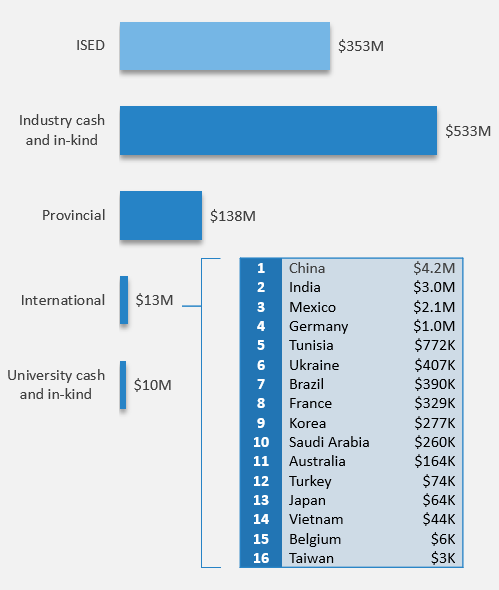
Interviews with industry representatives noted that ISED's partnership with Mitacs enables the co-funding model, which helps support industry R&D and innovation in Canada, particularly for SMEs. In other words, there is less financial risk if the project does not provide the intended results or outcomes, and industry partners are able to gain the needed expertise without the risk of losing the talent elsewhere. Mitacs also allows companies to hire multiple students cost-effectively. For example, ISED's survey of academic supervisors noted that 40% of respondents support 2 to 3 Mitacs interns at any given time.
A notable example from interviews of the cost-effectiveness potential of Mitacs is Xanadu and its Quantum Cloud, where the entrepreneurs built the Ontario-based company using Mitacs internships to get their first prototypes developed. The company went on to hire several past Mitacs interns, filed patent applications that have Mitacs interns among the inventors listed, and developed an open source software to build quantum applications.
Mitacs funding from provincial governments and the Yukon increased in the last five years to help support their economies.
Interviews with provincial government representatives emphasized their interest in partnering with Mitacs to grow their economies and create more WIL opportunities for post-secondary students and postdoctoral fellows in their jurisdictions. Mitacs data suggests that between 2016-17 to 2020-21, all ten provinces and the Yukon increased funding to Mitacs (Figure 6). Provincial funding totaled $13 million in 2016-17 and more than tripled to a total of $44.7 million in 2020-21. While Ontario and Québec represented the largest proportion of provincial funding in 2020-21, at $16.6 million (37%) and $15.1 million (34%), respectively, New Brunswick saw the largest increase in funding from roughly $8,500 in 2016-17 to $552,000 in 2020-21 (6350%).
Figure 4: Distribution of funding to Mitacs from 10 provinces and one territory in 2016-17 and 2020-21.

As a result of the increased federal and provincial funding, each province or region, at minimum, doubled its number of Mitacs WIL opportunities in 2020-21 compared to 2016-17 (Figure 7). Atlantic Canada increased the number of WIL opportunities by 395% partly due to the large increase in funding by the Government of New Brunswick in 2020-21. All provincial government interviewees agreed that if Mitacs did not receive ISED funding, the provinces would not be able to fund the full portion required for Mitacs internships, which would reduce the number of WIL opportunities delivered in their jurisdictions.
| - | 2016-17 | 2020-21 |
|---|---|---|
| Quebec |
1,836 |
4463 |
| Ontario |
1,543 |
4860 |
| British Columbia |
1,183 |
2537 |
| Prairies |
790 |
2611 |
| Atlantic Canada |
271 |
1343 |
| Territories |
0 |
14 |
Finding 7: Mitacs has demonstrated efforts to improve efficiency by leveraging strategic partnerships to minimize administrative burden, and adopting digital technology to modernize its operational processes, which can help optimize program delivery and facilitate data collection as Mitacs continues to expand.
Mitacs is leveraging its partnerships with NSERC and CFI to help improve the efficiency of its operational processes.
Documents suggest that Mitacs has a detailed process to review and approve projects for its WIL opportunities. For example, once a student or postdoctoral fellow, academic supervisor and industry partner have been identified for an Accelerate internship, the first step is to submit a joint project proposal based on a standard Mitacs template that includes specific criteria. Applicants are also asked to provide the names of 6 individuals from a different academic institution who are qualified to peer-review the proposal. Mitacs selects the reviewers based on those suggested in the proposal and its database of external reviewers. The review process can take up to 6 to 8 weeks since reviewers are volunteering their time.Footnote 88 Once the peer-review has been completed, recommendations for project approval are provided to Mitacs.
The general application process for Mitacs WIL opportunities includes the following six steps:
- Application submission
- Application review
- Project approval
- Project Launch
- Project completion
- Final report and exit survey
Interviews with Mitacs representatives noted that Mitacs' partnership with NSERC enables applicants seeking support from both an Alliance grant and Mitacs Accelerate to apply through a streamlined joint submission and review process. Furthermore, Mitacs is providing internal as opposed to external reviews for NSERC grantees who wish to provide WIL opportunities within NSERC programs (i.e., Collaborative Research and Training Experience (CREATE) grants and Applied Research and Technology Partnership (ARTP) grants) to help increase efficiency in its application processing.Footnote 89 According to ISED's survey of Mitacs academic supervisors, 58% of respondents reported that they also use NSERC's Alliance and/or CREATE programs to support their projects.
In addition, interviews with Mitacs and NSERC representatives noted that Mitacs is leveraging NSERC's administrative capacity/services in their joint program delivery for the college internships given NSERC's well established programming in this area. According to Mitacs documents, the partnership with NSERC will help to reduce the administrative burden on applicants by developing coordinated application processes for compatible Mitacs and NSERC programs.Footnote 90
Mitacs' partnership with the CFI is also helping the organization improve operational efficiency. For example, according to Mitacs representatives, the organization's business development officers (BDOs) are currently being trained to use the CFI's Navigator platform which will help match CFI-supported researchers (and facilities) with Mitacs industry partners. According to the CFI's data, the Navigator features more than 775 research facilities covering 28 sectors of application, including aerospace, ocean industries, environmental technologies, advanced manufacturing and life sciences. Footnote 91
Mitacs is leveraging digital technology to help improve the efficiency of its business development operations and application submission process across its WIL opportunities as well as facilitate data collection and reporting.
Interviews with representatives from industry and post-secondary institutions considered Mitacs' BDOs to be instrumental in supporting collaborations between post-secondary institutions and industry through proactive outreach, providing support during the application process, and acting as the first line of triage for project eligibility. However, it was also noted that as Mitacs continues to expand its WIL programs, it may become challenging for BDOs to maintain and provide the same quality of support for each partner.
To mitigate this risk and support the BDOs as Mitacs continues to grow, interviews with Mitacs representatives noted efforts to improve efficiency by leveraging digital technology such as implementing an information-sharing platform where post-secondary institutions can indicate their area of research or expertise and industry organizations can provide their R&D challenges, allowing both parties to search for partners that address their respective needs. This would not only help facilitate match-making, but also further increase the BDOs' ability to understand private sector needs.
According to Mitacs financial data, as a percentage of Mitacs total expenditures, business development decreased from 4.8% in 2016-17 to 3.6% in 2020-21. As Mitacs continues to expand, interviews with Mitacs representatives noted that to minimize expenditures related to in-person meetings and networking, particularly in Canada's more rural regions, Mitacs has encouraged its business development teams to work remotely, which currently represents approximately 50% of the team.
Additionally, interviews with Mitacs representatives noted that Mitacs is also leveraging digital technology to update its application submission process and reduce the variability between programs by creating an online "one-door entry" portal for all applicants. For example, some applicants work with BDOs to submit an application, others apply directly when there is already a supervisor and partnering organization identified, and for Globalink, students and academic supervisors are required to apply separately for the Mitacs matching process.
In addition, application formats between Mitacs WIL programs vary, including document templates, website forms, and application portals. A harmonized application portal will therefore result in operational efficiency gains by helping reduce administrative burden and application processing times, and also facilitate data collection and reporting.
To support the efficient delivery of its WIL opportunities, Mitacs also provides clusters of internships which enable partner organizations to have multiple students participate in their research projects. For example, one interviewee from a post-secondary institution noted that they were involved in a project with approximately 200 units of internships. According to Mitacs documents, processing times can be impacted depending on the number of internship units being sought and the complexity of the R&D innovation project associated with the internships. Footnote 92
Academia's perspectives, from ISED interviews, on the efficiency of Mitacs' 'clusters' approach to delivering WIL opportunities:
- "Mitacs clusters not only enable an organization to have an infusion of research talent, it also accelerates the research program of the faculty members who are supervising those students at the same time."
- "Cluster internships help increase productivity and are critical for developing longer duration projects both within Canada and internationally."
- "We use Mitacs clusters a lot. It's really a trend that is developing in academia."
4.0 Conclusion
The assessment of relevance led to two evaluation findings that concluded there is a continued need to support WIL opportunities and Mitacs addresses a unique need in the WIL landscape in Canada.
Finding 1: There is a continued need to support work-integrated learning (WIL) in order to develop work-ready talent in Canada. The demand for WIL has evolved over the years but barriers to access exist for certain post-secondary student populations. The COVID-19 pandemic has also heightened the need for virtual WIL opportunities.
Finding 2: Mitacs delivers flexible internship programs that align with federal government priorities and address the continued need for in-person and virtual WIL, across Canada's economic sectors and diverse student population. Its focus on building partnerships between post-secondary institutions and industry to facilitate knowledge transfer is unique relative to other entities that deliver WIL opportunities in Canada. Mitacs internships are uniquely focused on solving business and societal challenges in an effort to increase innovation in Canada.
The evaluation led to three findings in the assessment of performance which demonstrated that Mitacs continues to make progress in achieving its expected outcomes related to skills development, talent retention, and supporting R&D and innovation in Canada.
Finding 3: Mitacs helps improve the employment potential of post-secondary students and postdoctoral fellows through its match-making business approach, which is based on a national and global talent pool. Its WIL programs enable post-secondary talent to develop industry-relevant skills that help increase their employment prospects. Virtual learning, in response to COVID-19, has enabled Mitacs to expand participant reach and capacity in regards to its professional skills training that are complementary to its WIL programs.
Finding 4: Mitacs has attracted a growing number of post-secondary talent to WIL opportunities in Canadian organizations. It expanded its business development team to help respond to the increased demand for its WIL programs, including in priority areas such as artificial intelligence and quantum computing. Post-secondary talent have leveraged their Mitacs WIL experiences to secure employment in Canadian organizations or remain in Canada to pursue further education. Mitacs helped develop talent during the COVID-19 pandemic by pivoting to virtual WIL but it is too early to assess the impact of this pivot on talent attraction and retention in Canada.
Finding 5: Expanding the Accelerate program's eligibility criteria has helped Mitacs increase the nature of its research linkages with partnering organizations, including with start-up companies. Mitacs WIL opportunities have demonstrated results in broader innovation, government priority R&D areas, and addressing industry challenges that impact underrepresented communities. Mitacs WIL programs have also helped increase industry R&D investments in Canada. Three findings highlighted the efficiency and flexibility of LTS' program delivery and partnership model to reach a diversity of youth, including underrepresented communities.
In assessing the efficiency of program delivery, the evaluation led to two recommendations which highlighted the efficient approach of strategic partnerships and the co-funding model used to support the delivery of WIL opportunities in Canada.
Finding 6: The current delivery model enables Mitacs to establish strategic partnerships with other players to improve efficiency of its WIL programs, reach diverse student populations, and support priority R&D and innovation areas. Mitacs' partnership with ISED helps the organization leverage funding from industry and provincial governments, and is an efficient approach to delivering WIL opportunities across Canada.
Finding 7: Mitacs has demonstrated efforts to improve efficiency by leveraging strategic partnerships to minimize administrative burden, and adopting digital technology to modernize its operational processes, which can help optimize program delivery and facilitate data collection as Mitacs continues to expand.
The evaluation identified one lesson learned related to demographic data considerations during the planning of new programming
Lesson learned: Plans for how demographic data will be collected and disaggregated should be established early in the development of any new programming. This will help ensure that data is readily disaggregated and accessible, particularly as Mitacs continues to expand its programming.
Appendix A: Mitacs Logic Model
Through the eligible activities funded under the ISED funding agreement, Mitacs is expected to achieve the results in the logic model below, along with related short-term, medium-term and ultimate outcomes. The logic model was derived from Mitacs' Performance Measurement Strategy submitted to ISED in 2020.

Text version
Appendix A depicts a logic model for Mitacs. The logic model shows how program activities are expected to produce outputs and, in turn, how these outputs are expected to lead to different levels of outcomes or results.
The left section of the logic model describes the activities and outputs of the program. The activities of the program are divided into activities completed by Innovation, Science, and Economic Development Canada (ISED) and activities completed by Mitacs.
ISED is responsible for two activities:
- Administering the Contribution Agreement; and
- Monitoring plans and progress of Mitacs.
Mitacs is responsible for six activities:
- Program design and planning;
- Business and partnership development;
- Review of internship, fellowship and project proposals;
- Tracking; and
- Reporting.
These activities lead to three outputs:
- Approved applications;
- Internship, fellowships, research awards and training; and
- Corporate plans and annual reports.
These outputs support Mitacs' immediate, intermediate and ultimate outcomes.
Mitacs' immediate outcomes include:
- Increased collaboration and knowledge transfer between academia and industry, across a wide range of sectors of the Canadian economy;
- Increased participation of students in international research and educational opportunities;
- Innovative solutions to industry challenges, needs and issues;
- Enhanced skills of post-secondary students and post-doctoral fellows achieved through Mitacs work-integrated learning; and
- Increased number of overseas internship opportunities available to Canadian employees of start-ups housed in university-linked incubators.
Mitacs' intermediate outcomes include:
- Increased nature and extent of research linkages with both domestic and international partners;
- Increased participating company investment in industrial research, development and innovation;
- Improved employability of post-secondary students and postdoctoral fellows;
- Increased retention of domestic and international post-secondary students and postdoctoral fellows in Canada after completion of their studies; and
- Increased number of overseas partnerships and opportunities for Canadian start-ups housed in university-linked incubators.
Mitacs' ultimate outcome is to improve productivity and competitiveness of Canadian industry in the global economy.