
Audit and Evaluation Branch
January 2025
Table of Contents
Program Context
Program Overview
Help build capacity and facilitate the application of AI across various sectors in Canada.
The Pan-Canadian Artificial Intelligence Strategy (PCAIS) was designed to harness the potential of AI to enhance the lives of Canadians and strengthen Canada's economy. PCAIS operates within a broader federal AI ecosystem that delivers programming to support AI research, compute, and adoption/commercialization, which collectively contribute to enhancing Canada's AI capability and performance (refer to Appendix B: Other Federal AI Programming).
A first phase of the strategy was launched in 2017, with an investment of $125 million from 2017-22, to strengthen Canada's talent base and global competitiveness in AI research.
A 2022 evaluation of CIFAR, which included funding under PCAIS 1.0, found that PCAIS 1.0:
- Enhanced national coordination and collaboration via the NAIIs;
- Attracted and retained AI researchers and supported training for new researchers;
- Promoted interdisciplinary and cross-sector collaboration, as well as the dissemination of AI research and responsible AI practices; and
The government launched phase two of the strategy in 2021 (PCAIS 2.0), investing $443.8 million from 2021–31 to build on the gains of the first phase and support the responsible adoption and commercialization of AI.
PCAIS 2.0 encompasses three key pillars:
Commercialization: fostering commercialization and use of AI to ensure that Canada's research strengths are translated into real-world applications that can help grow the Canadian economy and improve Canadians' daily lives.
Standards: advance the development and adoption of AI-related standards aligned with Canadian values and interests.
Talent and Research: renews the research- and talent-focused activities under the first phase of PCAIS.
Governance
Roles and Responsibilities
Innovation, Science and Economic Development Canada (ISED) is the lead federal department responsible for the Strategy's development, oversight, and coordination.
The Canadian Institute for Advanced Research (CIFAR) is responsible for administering the talent and research initiatives under the Strategy.
PCAIS is primarily delivered via Contribution Agreements with intermediary organizations, including the Global Innovation Cluster (GIC) funded cluster organizations, the National Artificial Intelligence Institutes (NAIIs), CIFAR, the Digital Research Alliance of Canada (DRAC), and the Standards Council of Canada (SCC). The funding provided to these organizations is governed by multiple Contribution Agreements (CAs) established between the third-party organizations (TPOs) and ISED for the various components of the Strategy.
Program Delivery
The Government of Canada is collaborating with partners from across the country to implement PCAIS 2.0.
National Artificial Intelligence Institutes (NAIIs): comprised of Amii in Edmonton, Mila in Montreal and the Vector Institute in Toronto, the NAIIs are helping Canadian businesses develop and use AI and turn AI research into real-world applications.
Digital Research Alliance of Canada (DRAC): helps to ensure that AI researchers in Canada have access to advanced research compute capacity.
Canadian Institute for Advanced Research (CIFAR): expands the Canada CIFAR AI Chairs program and continues research, training and collaboration programs.
Standards Council of Canada (SCC): furthers the development and adoption of standards related to AI.
Global Innovation Clusters (GICs): the five clusters which comprise the GICs (Digital Technology, Protein Industries, Advanced Manufacturing, Scale AI, Ocean) are promoting the adoption of made-in-Canada AI solutions in key industries.
Program Costs and Resources for PCAIS 2.0
DRAC was provided funding (2021-26) to enhance dedicated computing capacity for AI.
CIFAR was provided funding (2021-22 to 2030-31) to help increase the number of researchers appointed as Canada CIFAR AI Chairs and support collaboration and academic research and training at the NAIIs.
SCC was provided funding (2021-22 to 2025-26) to support the launch of two streams: the AI Intelligence Conformity Assessment Program and the AI Standardization Collaborative. Since the SCC is a Crown Corporation, the Standards pillar was not part of the evaluation.
GICs were provided funding (2021-22 to 2025-26) to support AI commercialization and accelerate economic growth in Canada's most promising industries.
NAIIs were provided funding (2021-22 to 2025-26) to grow capacity of Canadian businesses and other organizations to develop or use AI, turn AI research into real-world application, and encourage responsible development and use of AI.
Figure 1: Program Resources for PCAIS 2.0
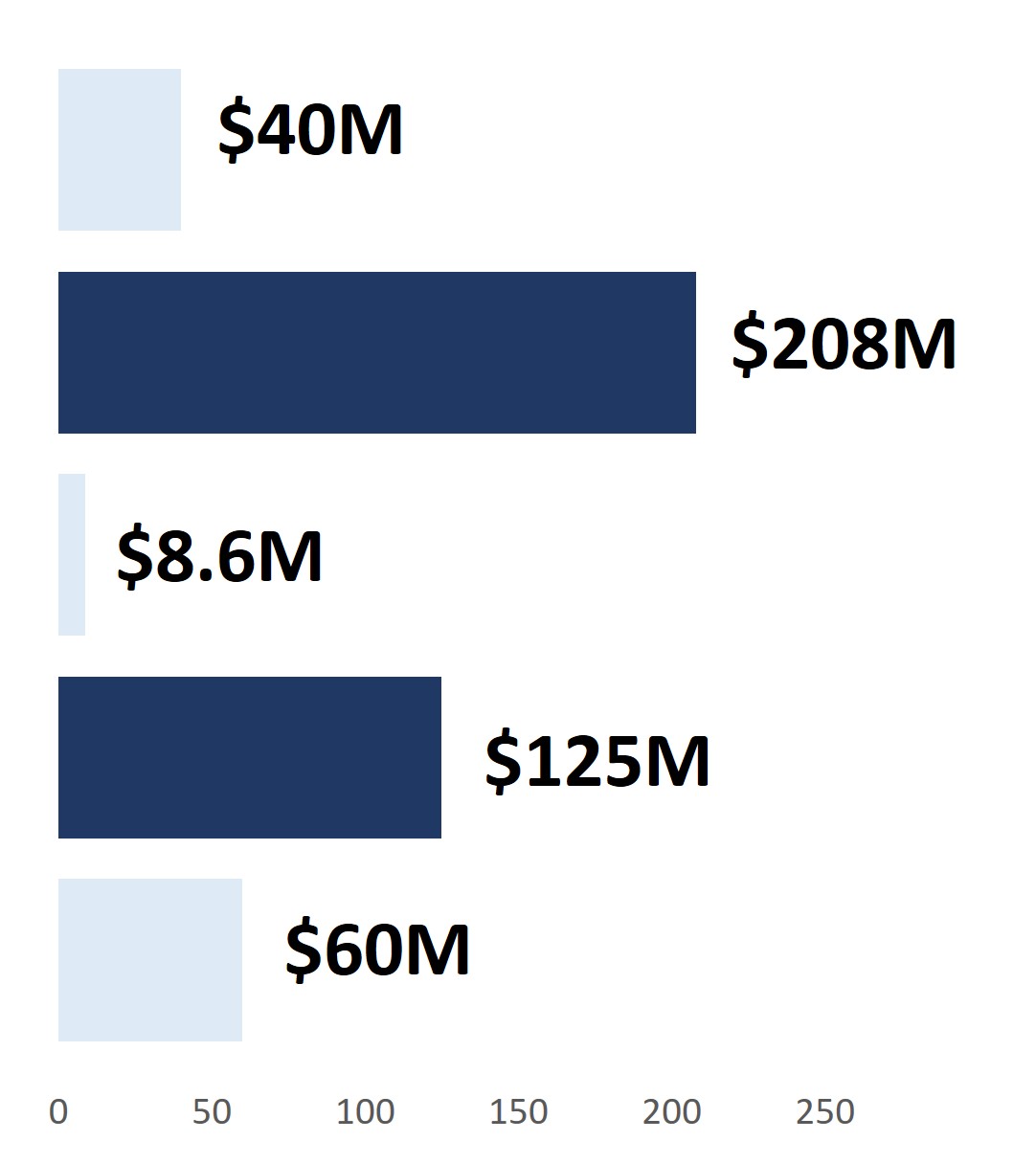
Program Resources for PCAIS 2.0
- DRAC: $40 million
- CIFAR: $208 million
- SCC: $8.6 million
- $125 million
- $60 million
Evaluation Context
An evaluation of the PCAIS 2.0 is required in accordance with the Financial Administration Act and the Treasury Board Secretariat Policy on Results.
The objective of this evaluation was to assess the relevance, performance and efficiency of PCAIS 2.0.
The scope of the evaluation included all PCAIS 2.0 activities, excluding the Standards Pillar. The evaluation covered the period from November 9, 2020, to March 31, 2025.
The evaluation was conducted by the Audit and Evaluation Branch at ISED. A results-based approach was used to examine the achievement of expected outcomes for the PCAIS 2.0, as identified in the logic model (Appendix C).
Evaluation Methodology
The following lines of evidence were used (details in Appendix D):
- Document and Literature Review
- Data Review
- Case Studies
- Online Surveys
- Interviews
Evaluation Questions
Relevance
- To what extent is there a demonstrable need for PCAIS 2.0?
Performance
Immediate Outcomes
- To what extent have collaboration and capacity building engagements to advance AI commercialization projects increased?
- To what extent has investment in Canadian AI commercialization projects increased?
- To what extent has support for advanced and interdisciplinary AI research, training and learning increased?
- To what extent has collaboration between AI researchers and different organizations increased?
Intermediate Outcomes
- To what extent do engagements increase the capacity of partnering organizations, Canadian small and medium enterprises (SMEs) and their employees to develop, adopt, use or commercialize AI technologies?
- To what extent is knowledge related to AI increasingly shared and mobilized in Canada?
- To what extent is Canada producing increasingly more highly qualified personnel in AI?
Ultimate Outcomes
- To what extent is Canada's AI technology sector leading to the generation of economic and social benefits?
- To what extent has Canada's international profile, capacity and AI research competitiveness been maintained?
Efficiency
- To what extent is the PCAIS 2.0 funding model an efficient and effective approach to address the commercialization and talent and research pillars?
The evaluation produced 12 findings, supported by multiple lines of evidence, and led to 3 recommendations.
Findings
Finding 1: The second phase of Canada's Pan-Canadian Artificial Intelligence Strategy (PCAIS 2.0), and the funding it provides, were foundational for enhancing AI competitiveness and innovation in Canada. Through its commercialization-focused initiatives, PCAIS 2.0 has been helping to address key challenges, gaps, and barriers to the scaling, adoption, and commercialization of AI technologies in Canada.
Need for PCAIS Funding
There was broad, near-unanimous agreement among interviewees and literature review findings that public funding was important for supporting the full innovation pipeline in AI – from groundbreaking research, to talent retention and training, to commercialization.
Almost all Canada CIFAR AI (CCAI) Chairs (84%) surveyed viewed PCAIS 2.0 as being extremely important. Survey respondents said that Canada was an early leader in AI through its national strategy. Interviewees said that PCAIS 2.0 has helped institutions to compete globally in attracting and retaining top talent and is widely credited with enabling academic excellence, global competitiveness, and international recognition.
However, it was felt that maintaining global leadership requires renewed investment and more international engagement. It was also said that there's a pressing need to evolve the strategy as AI commercialization accelerates to ensure Canada's businesses can continue to compete internationally.
GIC Program: Most GIC ultimate recipient (UR) survey respondents felt that the funding and support provided by the clusters met the needs of their project (82%) and their organization (75%). As noted in the graph below, the top three needs being addressed via cluster projects were providing funding, reducing project risk, and collaboration opportunities:
Figure 2: GIC ultimate recipient needs addressed by PCAIS funding
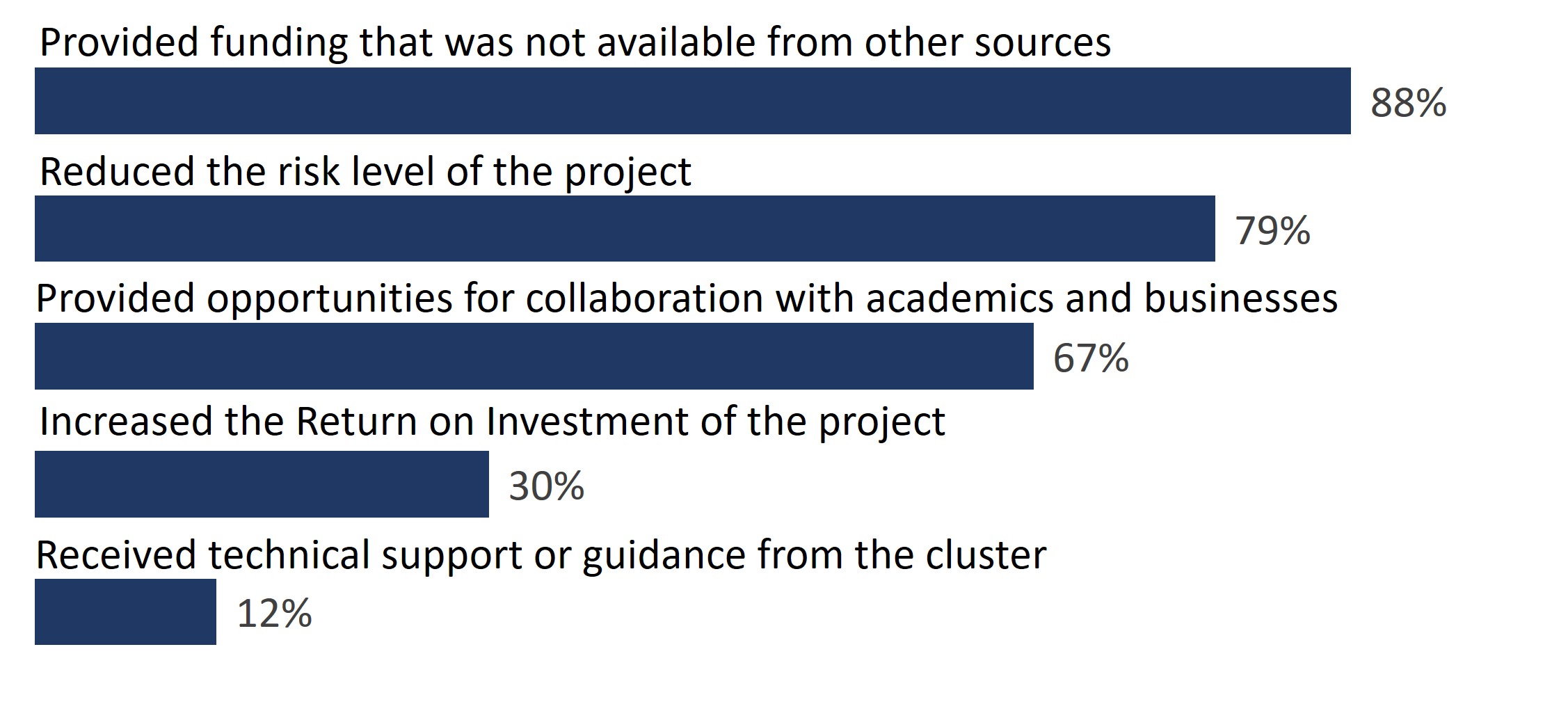
GIC ultimate recipient needs addressed by PCAIS funding
- Provided funding that was not available from other sources: 88% of ultimate recipients.
- Reduced the risk level of the project: 79% of ultimate recipients.
- Provided opportunities for collaboration with academics and businesses: 67% of ultimate recipients.
- Increased the Return on Investment of the project: 30% of ultimate recipients.
- Received technical support or guidance from the cluster: 12% of ultimate recipients.
GIC Cluster Project Case Study
Interviewees said the funding was pivotal. The project involved a novel AI technology, with high uncertainty and significant R&D. The funding enabled them to develop algorithms for their "course correction device"—a smart drilling technology that adjusts trajectory and maintains proper speed and velocity during mineral extraction. The device combines mining and oil & gas technologies, and its fabrication and deployment depend on having the right suppliers and partners, made possible through the Digital Cluster. Without the funding, their technology would not be as far advanced.
Need for PCAIS 2.0 Funding
Interviewees, the literature review and surveys identified some key challenges that PCAIS 2.0 initiatives address:
Awareness Issues: Many businesses lack understanding of AI applications. Statistics Canada's 2021 Survey of Digital Technology and Internet Use found that 69% struggle to identify a business case for using AI, and 28% of non-adopters don't know what tools are available.Footnote 1
Low AI Adoption: As of 2024, only 4.7% of Canadian firms had adopted AI, which was below many other countries, as Canada ranked 28th amongst OECD countries.Footnote 2 Adoption is concentrated in large firms.Footnote 3 Public funding can boost adoption, especially through collaborative projects.Footnote 4
Commercialization Gap & IP Loss: Canada faces more challenges to commercialize AI compared to peers. Many firms sell their IP or move abroad.Footnote 5 U.S. companies dominate acquisitions and investments of Canadian AI IP.Footnote 6
Commercialization Risks: AI projects are inherently risky. Funding helps de-risk and incentivize investment, especially for early-stage innovators. NAII survey respondents also noted unclear return on investments (25% of respondents) and high implementation costs (29% of respondents) as major challenges to AI commercialization. Similarly, the GIC survey found that the high costs of AI commercialization was a significant barrier (37% of respondents).
Venture Capital Deficiency: Canadian AI firms face financing challenges. Canada's venture capital environment is much smaller and more risk-averse than the U.S. Most venture capital investment is foreign (62% in 2022–23).Footnote 7 The GIC UR survey found that access to venture capital funding was the top commercialization barrier (53% of respondents). As such, public funding is needed to catalyze private investment.
Skills Gaps: Skilled talent is scarce and competitive internationally, especially given the number of large AI companies in the U.S.Footnote 8 34% of the NAII survey respondents noted that lack of a skilled workforce was one of the biggest challenges. The GIC UR survey also found that difficulties attracting/retaining AI expertise was a top barrier (37% of respondents).
Limited Compute Capacity: Canada's reliance on foreign cloud platforms is problematic for data sovereignty and IP retention. Domestic AI compute infrastructure lags below demand, which discourages local development.Footnote 9 There is federal funding for new AI compute infrastructure, but it has "yet to hit the ground," so R&D is still inhibited by insufficient Graphics Processing Unit access.
Finding 2: Canada has built a strong AI foundation through early investments, including federal funding for initiatives such as PCAIS 2.0. However, gaps in coordination and cohesion remain, especially across federal initiatives and AI institutions.
PCAIS 2.0 within Canada's AI Ecosystem
Canada's AI Landscape
Canada has a well-established AI ecosystem, which as of 2019 consisted of 800+ startups and enterprises, 60 public research labs, 75 incubators and accelerators, and 60 investor groups, clustered in Toronto (Vector Institute), Montreal (Mila), Waterloo, Edmonton (Amii), and Vancouver.Footnote 10 In terms of investments, as of 2021, most Canadian AI businesses – 293 of 340 – had received equity-free investments, typically from government or accelerator programs.Footnote 11
Federal Programs that Support Canada's AI Ecosystem
A wide range of federal programs support Canada's AI ecosystem, such as the Canadian Sovereign AI Compute Strategy, the Strategic Innovation Fund, NRC programs, Tri-Agencies, Innovative Solutions Canada, and Regional Development Agency initiatives. Together, these initiatives support AI research and talent, expand access to compute infrastructure, and enable business adoption and commercialization (refer to Appendix B: Other Federal AI Programming).
Role of PCAIS
Literature on local cluster development indicates government policies can reinforce the growth of emerging clusters and ecosystems.Footnote 12 Interviewees viewed PCAIS 2.0 as the foundational element of Canada's AI ecosystem, especially on the research and talent development side. The strategy has contributed to creating a critical mass of AI talent, interconnected researchers, and infrastructure through its support of the Canada CIFAR AI Chairs program and the NAIIs. This network is seen as essential for attracting researchers and students to Canada. This in turn creates an anchor for industry, as the presence of top-tier researchers and robust research hubs helps draw in industry, making it advantageous for companies to locate close to talent pools.
Federal and Departmental Roles
The federal approach also largely aligns with international jurisdictions, where it is common to establish AI strategies and to fund R&D and commercialization, compute infrastructure, skills and talent development, academic-industry collaboration, and development of standards/regulatory/ethics.Footnote 13 Interviewees and the literature review found that ISED promotes a unified national approach to AI policy. The literature review indicates that ISED's centralized role supports a nationally unified approach to AI governance. The focus tends to be on innovation, technological and economic development, and consumer protection.Footnote 14
Coordination Mechanisms
CIFAR acts as a coordinator for the research and talent component, but does not manage the entire AI ecosystem, which retains a broad set of players. The NAIIs, under PCAIS 2.0, work with academia, industry, and government, forming a hub-and-spoke system. This allows for the flow of talent and ideas between sectors and regions. The NAIIs each have regional roles—but their mandates and programming also have standardized national elements to minimize regional inequity. There was some debate amongst interviewees about regional disparities, but most agreed the structure successfully balances the leveraging of regional strengths and national coherence.
Cohesion and Fragmentation
PCAIS 2.0 exists amongst other federal and provincial programs, as well as global initiatives. While there were very few similar provincial or territorial AI programs identified in the literature review, interviewees noted challenges in cohesion and coordination amongst the PCAIS 2.0 initiatives (e.g., GIC Program and NAIIs) as well as other federal initiatives (e.g., ISED's Canadian Sovereign AI Compute Strategy, National Research Council programming, and Tri-Agency programming). This increases the potential for duplication of effort and lack of coordination among organizations, thereby potentially reducing efficiency and slowing progress in the advancement of AI objectives.
Finding 3: Through PCAIS 2.0 funding, the NAIIs have offered impactful training to build both foundational and technical AI capacity, including programs for underrepresented groups. However, industry demand for this NAII programming exceeded the resources available to the NAIIs. GIC clusters have also supported training activities, particularly through 'on-the-job learning' in AI commercialization projects.
Training Programs and Services
NAIIs: Interviewees noted that NAIIs support the transition of talent to industry and help businesses understand AI challenges and opportunities. Program data shows the NAIIs delivered training to 37K to 47K participants per year, including through Massive Online Open Courses, workshops, bootcamps, and more. Over 50% of participants were from equity-deserving groups, exceeding the 30% target. Audiences included students, teachers, Highly Qualified Personnel, and industry.
Figure 3: NAII Training Participants

NAII Training Participants
| Fiscal Year | Number of Participants |
|---|---|
| 2024-25 | 37,120 |
| 2023-24 | 46,621 |
| 2022-23 | 40,056 |
As shown below, the NAIIs exceeded their performance target of 50-70% of participants developing new skills or knowledge.
Figure 4: Percent of NAII Training Participants that Developed New Skills or Knowledge

Percent of NAII Training Participants that Developed New Skills or Knowledge
| Organization | 2023-24 | 2024-25 |
|---|---|---|
| Amii | 90% | 86% |
| Mila | 96% | 96% |
| Vector | 95% | 82% |
Interviewees noted that the commercialization impact of NAIIs is largely focused on lower-to-mid Technology Readiness Level related activities. While this is largely due to the nature of NAII programming (providing access to AI researchers and research), some industry partners expressed a desire for more late-stage commercialization support. Interviewees also noted that there was a high level of demand, as there was insufficient capacity to meet the full extent of SME demand for NAII services due to the volume of requested training and services.
GIC Program: Interviewees explained that clusters have training initiatives (e.g., courses, micro-credentials, coding bootcamps, and applied AI talent programs) and targeted programs for underrepresented groups (e.g., bursaries, scholarships, and workshops). However, a lot of training is embedded in projects via collaboration and "learning by doing", as participants co-develop, pilot, and deploy AI.
Almost half of the UR survey respondents (46%) said their organization (mostly SMEs) provided increased AI training or upskilling to employees and underrepresented groups because of their project (to a great or very great extent), as shown below:
Figure 5: AI training or upskilling to employees and underrepresented groups

AI training or upskilling to employees and underrepresented groups
| Level of Satisfaction | Percent of Survey Respondents |
|---|---|
| To a very great extent | 25% |
| To a great extent | 21% |
| To a moderate extent | 21% |
| To a small extent | 25% |
| Not at all | 7% |
Among these UR respondents, about half (52%) found the training to be effective in increasing the knowledge and skills. The training/upskilling provided to project participants included guidance/support (73%), skills/knowledge transfer from partners (63%), training programs (53%), and webinars/workshops (33%).
NAII Industry Partner Case Study
NAIIs provided technical training and structured engagement. This strengthened organizations' foundational AI capabilities and knowledge and improved early-stage product development, via:
- Guidance: NAIIs provided guidance on scoping, model selection, and methods. They helped build essential data foundations, understanding of Machine Learning and fine-tuning of Large Language Models.
- Capacity Building: Addressing internal AI skill limitations by partnering with the NAII on AI for inspection robotics and anomaly detection.
- Learning Format: Sessions involved expert-led instruction—both high-level and technical deep-dives; smaller group work with technical advisors and support via office hours; and tailored guidance.
Finding 4: PCAIS 2.0 funding for the PAICE project aimed to expand AI compute access but faced a slow and complex rollout, with one-to-two-year delays across key activities, and experienced challenges with co-ordination and communication amongst stakeholders.
AI Research Infrastructure Capacity Development
Pan-Canadian AI Compute Environment (PAICE): Activities & Progress
Interviewees noted that access to compute infrastructure at AI institutes helps attract talent. DRAC's PAICE project aims to prioritize compute access for AI researchers and CIFAR AI Chairs, differing from DRAC's general compute access model, allowing for a significant increase in the specialized computing capacity and related services available to AI researchers. The PAICE funding was viewed by stakeholders as a temporary stop-gap measure. Increased demand—especially due to the emergence of large language models—led to the Government of Canada's $2 billion investment in AI Compute (Budget 2024).
The PAICE project involves several key milestones:
- Coordinating an RFI (Request for Information) for AI compute.
- Launching RFPs (Requests for Proposals) for 3 AI compute systems.
- Handling system selection, datacenter preparation, and resource allocation process development.
- Developing a National AI Platform with associated monitoring and metrics.
There have been some delays in PAICE activities:
- The RFI was delayed by 3 months (from Q3 to Q4 of 2022–23).
- Other activities saw 1 to 2-year delays, with originally planned completion by Q1 2023–24 pushed to as late as Q4 2024–25.
| Activity | Planned Completion | Delay |
|---|---|---|
| 1. Coordinated RFI for AI Compute | Q3 of FY2022/23 | 3 months |
| 2. RFPs for 3 AI Compute Systems | Q4 of FY2022/23 | 1 to 1.25 years |
| 3. Selection of systems | Q1 of FY2023/24 | 1.75 years |
| 4. Datacenter Preparations for Installation | Q4 of FY2022/23 | 1.5 to 2 years |
| 5. Development of National AI Platform Common Services | Q4 of FY2022/23 | 1.75 years |
| 6. Monitoring & Metrics for AI National Platform | Q3 of FY2022/23 | 1.75 years |
| 7. AI Compute Resource Allocations | Q1 of FY2023/24 | 1.5 years |
| 8. Hiring Personnel | Q3 FY2022/23 | 1 year |
| 9. Cybersecurity Framework | Q4 FY2022/23 | 1.75 years |
Finding 5: PCAIS 2.0 programs played an important role in strengthening Canada's AI ecosystem through industry engagement, capacity building, and collaborative partnerships. They have exceeded targets for engagement activities and facilitated connections between researchers, academia, and businesses. However, the importance of engagement on regulation and responsible AI development at the international level has increased significantly over the course of the PCAIS 2.0.
AI Capacity Building and Engagements
Capacity building & Support: NAIIs provide various programs to support AI development and adoption (e.g., Amii assigns students to help companies apply AI solutions).
The survey found that Amii's Machine Learning (ML) Explorations Program, Vector's cohort-based programs, and guidance/support/mentoring were some of the most impactful services in terms of improving their organization's knowledge and capacity to advance AI commercialization to a significant or very significant extent, as noted in the graphic below:
Figure 6: Improvement to Organizational Knowledge and Capacity to Advance AI Commercialization
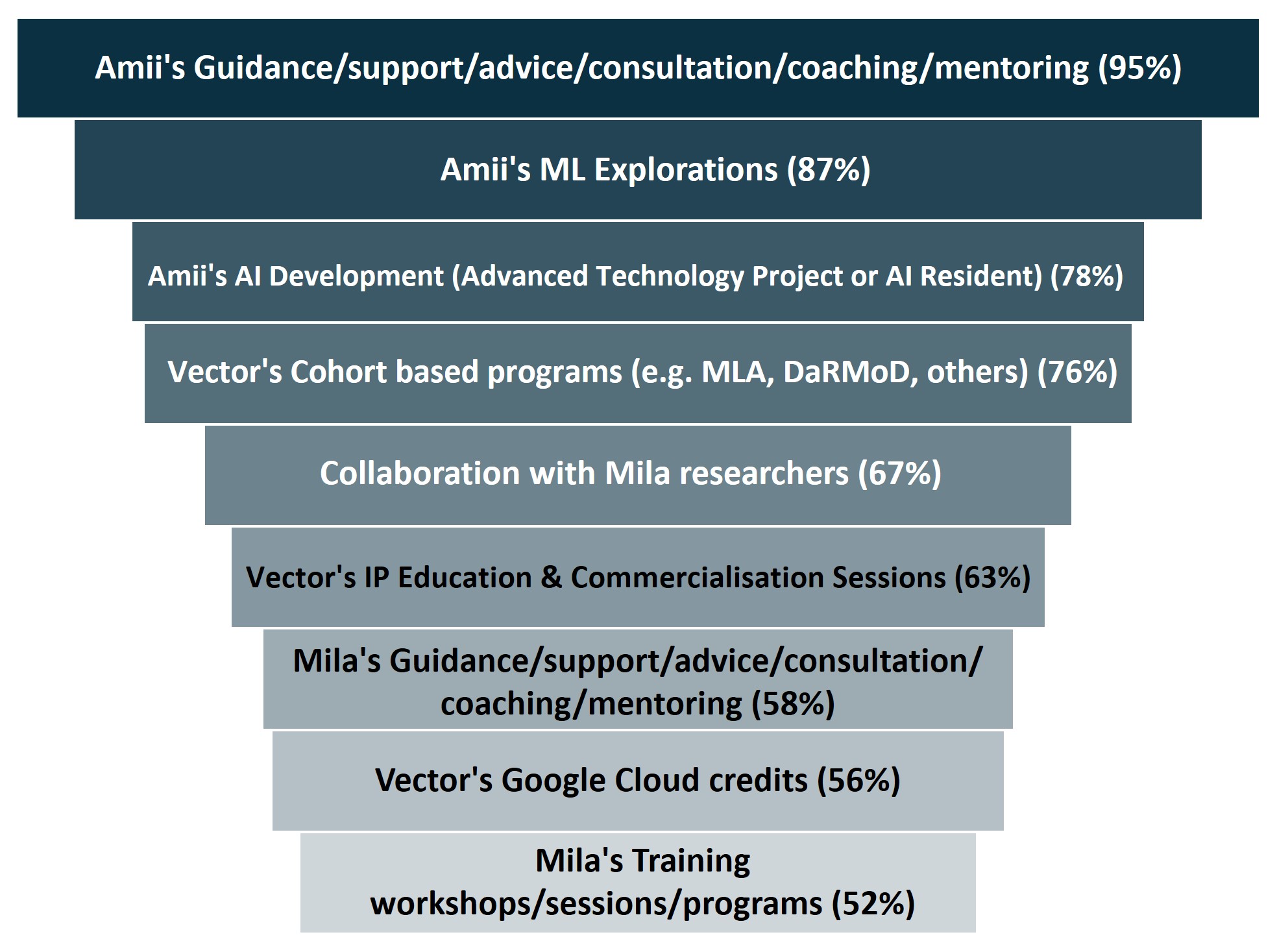
Improvement to Organizational Knowledge and Capacity to Advance AI Commercialization
| NAII Service | Percent of Respondents |
|---|---|
| Amii's Guidance/support/advice/consultation/coaching/mentoring | 95% |
| Amii's ML Explorations | 87% |
| Amii's AI Development (Advanced Technology Project or AI Resident) | 78% |
| Vector's Cohort based programs (e.g. MLA, DaRMoD, others) | 76% |
| Collaboration with Mila researchers | 67% |
| Vector's IP Education & Commercialisation Sessions | 63% |
| Mila's Guidance/support/advice/consultation/ coaching/mentoring | 58% |
| Vector's Google Cloud credits | 56% |
| Mila's Training workshops/sessions/programs | 52% |
The NAIIs reached 907 engagements in 2024-25, surpassing the 2026 target (450) and reached 713 partners (target: 800 by 2026). The partner types included startups, SMEs, large sponsors, and investors.
Networking
CIFAR has held a variety of networking events, including events to support collaboration amongst the NAIIs (e.g., AICan Symposium and the annual CCAI Chair meetings).
NAIIs facilitated networking amongst researchers, SMEs, and industry sponsors. The most common forms of networking were via events and conferences (65%) and personal introductions (45%, via the Institutes).
Figure 7: Industry Partner networking activities facilitated by the NAIIs

Industry Partner networking activities facilitated by the NAIIs
| Type of Networking | Amii | Mila | Vector | Total | Percent of total |
|---|---|---|---|---|---|
| Networking via events and conferences | 45 respondents | 42 respondents | 20 respondents | 107 | 65% |
| Personal introductions | 30 respondents | 31 respondents | 13 respondents | 74 | 45% |
| Talent events | 10 respondents | 24 respondents | 3 respondents | 37 | 23% |
| Ecosystem referrals | 17 respondents | 19 respondents | 5 respondents | 41 | 25% |
One-third of survey respondents made new connections with private sector businesses (39%) and business support organizations (35%).
NAII Industry Partner Case Study
The NAII events and panel discussions facilitated exposure to major industry players, creating opportunities for visibility and collaboration. However, actual commercial partnerships with large organizations were limited. A barrier noted was that unlike the U.S., Canada lacks sufficient government incentives that encourage large firms to work with startups/SMEs. As a result, networking through the institute, while available, often does not lead to collaborations with larger partner organizations.
Collaborations and Partnerships
The NAIIs and CIFAR facilitated collaborations and partnerships. Interviewees found that PCAIS 2.0 positively impacted collaboration between AI researchers and other organizations (industry, non-profits, public sector institutions), with program data showing they surpassed the target of 250 active partnerships by March 31, 2026, with 357 in 2023-24.
Figure 8: Active Partnerships
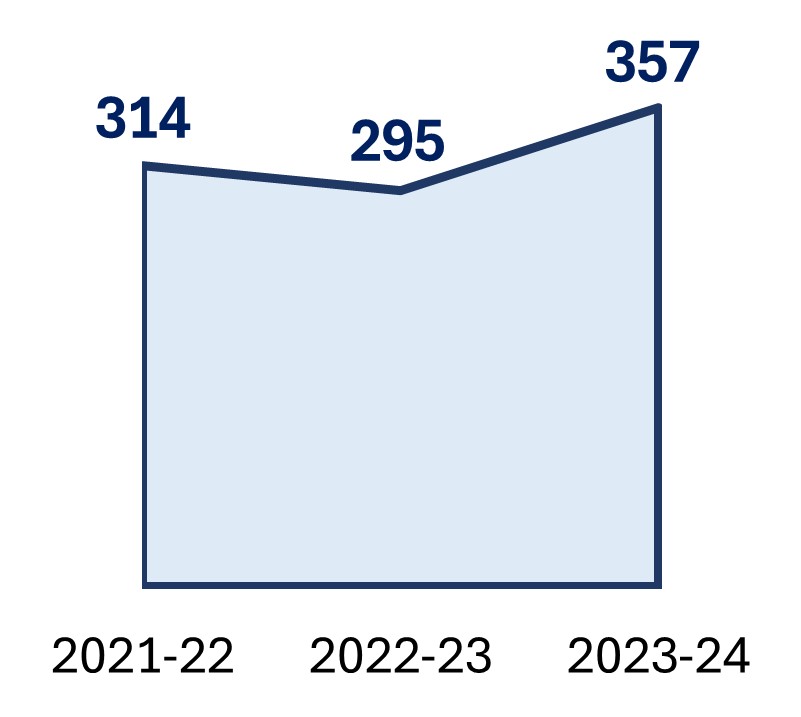
Active Partnerships
| Fiscal Year | Number of Partnerships |
|---|---|
| 2021-22 | 314 |
| 2022-23 | 295 |
| 2023-24 | 357 |
The NAIIs also had 14 to 25 collaboration projects per year (2022-23 and 2023-24) which examined the societal implications of AI, exceeding the target of 2 per year.
However, interviewees said there has been an "extraordinary internationalization of the discourse around AI," especially regarding responsible AI development. It was said that there is a need for more international partnerships and coordination to avoid duplication and share resources. CIFAR staff and others indicated that international engagement is now essential but was not fully anticipated or funded under PCAIS 2.0, meaning such efforts are "cross-subsidized" out of CIFAR's own budget, as well as those of participating institutions.
CIFAR AI Catalyst Case Study
The grant requirements (collaboration with a CIFAR AI Chair and cross-institutional work) encouraged interdisciplinary and multi-institutional collaboration. This resulted in one recipient engaging in collaborations with University of Waterloo academics that would not have otherwise occurred. Another grant recipient established new collaborations with four co-investigators, including researchers at McGill, UBC, the University of Toronto, and Caltech – none of whom they had worked with before.
Survey data showed that CCAI Chairs' involvement with CIFAR was helpful in fostering collaborations with academic researchers (83% of respondents), while half also cited collaborations with private sector organizations. Most CCAI Chairs surveyed also had a high level of satisfaction with CIFAR's role in facilitating these research collaborations.
Figure 9: CCAI Chair collaboration and networking
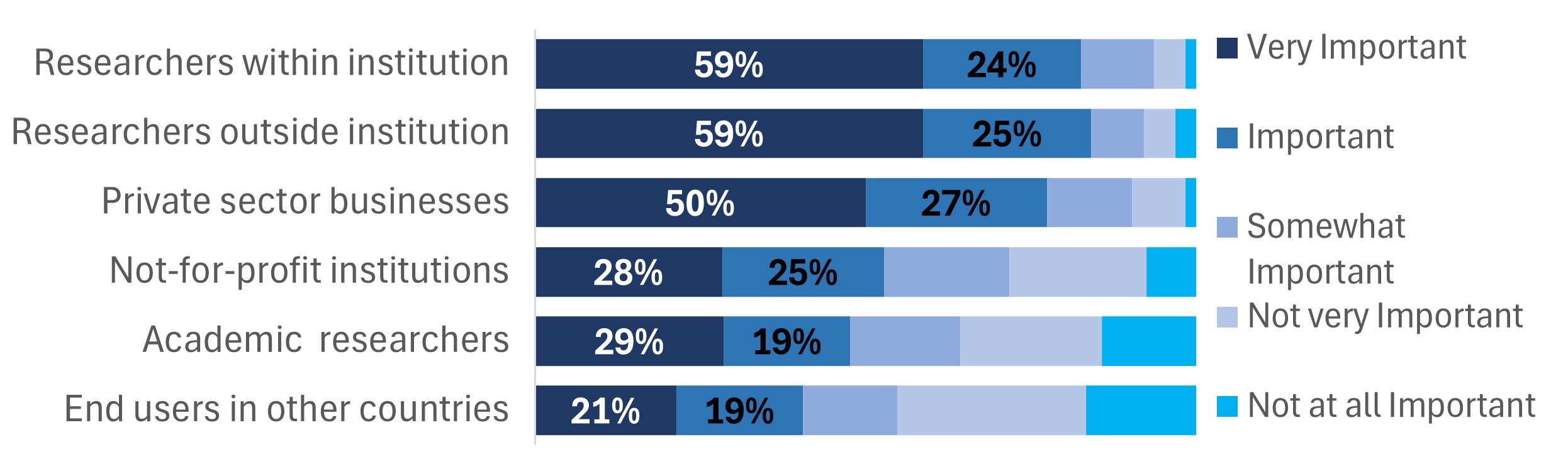
CCAI Chair collaboration and networking
| Type of Research Collaboration | Very Important | Important | Somewhat important | Not very important | Not at all important |
|---|---|---|---|---|---|
| Researchers within institution | 59% | 24% | 11% | 5% | 2% |
| Researchers outside institution | 59% | 25% | 8% | 5% | 3% |
| Private sector businesses | 50% | 27% | 13% | 8% | 2% |
| Not-for-profit institutions | 28% | 25% | 19% | 21% | 8% |
| Academic researchers | 29% | 19% | 17% | 21% | 14% |
| End users in other countries | 21% | 19% | 14% | 29% | 17% |
GIC Program: Interviewees noted that collaboration generates network effects, knowledge spillover, and ecosystem density. The UR survey found half of the respondents engaged in 1-4 ecosystem development interactions and one-third engaged in 5 or more. Interviewees said project collaborations provide SMEs/startups with real world product validation and feedback. Their customers, often larger companies, also get early, lower-cost access to innovative solutions that can be customized to suit their operational needs. The program data review found there were 4.3 collaborators per project, while the survey found 5. Of these, almost half (48%) were small businesses.
Figure 10: PCAIS 2.0 GIC Ultimate Recipient Project Participants

PCAIS 2.0 GIC Ultimate Recipient Project Participants
| Type of Organization | Percent of Project Participants |
|---|---|
| Small business (0-99 employees) | 48% |
| Not-for-profit | 17% |
| Academia or research institutions | 12% |
| Large business (500+ employees) | 10% |
| Other organizations | 9% |
| Medium business (100-499 employees) | 5% |
In terms of limitations on collaboration, for the GIC clusters, connecting SMEs with large adopters was effective but constrained by the availability of funding for the clusters under PCAIS 2.0, and some SMEs also had difficulties securing investments after initial pilots.
Finding 6: Through PCAIS 2.0 funding for the CIFAR AI Chairs program, Canada's AI research ecosystem has been strengthened, attracting top global talent, retaining researchers, and advancing progress toward key targets.
AI Research Talent Attracted and Retained
The Paulson Institute ranked Canada in 2019 as having the 2nd highest concentration of top-tier AI researchers, with 10% of the world's most elite (top 0.5%), second only to the US. However, the ranking dropped to 6th in 2022, with only 3% of the world's most elite researchers.Footnote 15 While Canada continued to grow its AI researcher capacity, other countries also grew their AI researcher capacity at an even faster rate.
Interviewees and program data found that the CCAI Chairs Program has helped to further anchor and grow a strong research base in Canada by providing funding and support that has helped to successfully attract and retain world-class research talent, with the number of CCAI Chairs increasing to 129 in 2023-24 (close to the target of 135 by March 31, 2026), as shown in the graph below:
Figure 11: CCAI Chairs

CCAI Chairs
| Fiscal Year | Number of CCAI Chairs | Percent of Chairs Identified as an Equity Deserving Group |
|---|---|---|
| 2021-22 | 113 | No data |
| 2022-23 | 121 | No data |
| 2023-24 | 129 | 61% |
Survey data supports the role of the CCAI Program in attracting and retaining AI Chairs, as it showed many respondents considered pursuing a research position abroad (61%), as noted in the graphic below:
Figure 12: Role of CCAI Program in Attracting and Retaining AI Chairs

Role of CCAI Program in Attracting and Retaining AI Chairs
- Yes, I considered a similar position at an institution abroad: 40% of survey respondents
- Yes, I considered similar positions at institutions within Canada and abroad: 21% of survey respondents
- Yes, I considered a similar position at an institution within Canada: 10% of survey respondents
- No, I only considered a position at CIFAR: 19% of survey respondents
Growth in Student Research Community
Interviewees highlighted the strong international reputation of the CCAI Chairs program and noted that the talent developed is key to Canada's AI success. They said that the CCAI Chairs train hundreds of graduate students yearly, nurturing future AI leaders.
This is demonstrated by program data which shows that the overall research community within the NAIIs continued to grow, with student researchers (graduates, undergraduates) and faculty growing year-over-year.
In particular, the target for the number of CCAI Chair-supervised graduates was exceeded significantly, with 254 in 2022-23 and 310 in 2023-24 (target of 160 by March 31, 2026).
Figure 13: CCAI Chair-supervised graduates

CCAI Chair-supervised graduates
| Fiscal Year | Number of CCAI Chair-supervised graduates |
|---|---|
| 2022-23 | 254 |
| 2023-24 | 310 |
Further, for fiscal years 2022-23 and 2023-24, the percent of CCAI Chair-supervised graduates who identify as a member of one or more equity deserving groups ranged between 58% to 67%, as shown in the chart below:
Figure 14: CCAI Chair-supervised graduates who identify as a member of one or more equity deserving groups

CCAI Chair-supervised graduates who identify as a member of one or more equity deserving groups
- Amii: 58% of CCAI Chair-supervised graduates
- Mila: 67% of CCAI Chair-supervised graduates
- Vector: 61% of CCAI Chair-supervised graduates
Finding 7: Through PCAIS 2.0, stable and flexible funding has enabled increased interdisciplinary AI research and publications, which have been disseminated to various audiences (e.g., academia, private sector, government, and public).
Research Impact
NAIIs: Interviewees said PCAIS 2.0 is contributing to the enhancement of Canada's AI research reputation and capacity. The target of 150 active research teams at the NAIIs was achieved by 2021-22, with 175 teams. The number of teams grew further to 360 in 2023-24, as shown below:
Figure 15: Active Research Teams at the NAIIs

Active Research Teams at the NAIIs
| Fiscal Year | Number of Active Research Teams |
|---|---|
| 2021-22 | 175 |
| 2022-23 | 288 |
| 2023-24 | 360 |
In 2024, Canada also ranked 2nd in the world on a per-capita basis for the number of AI research papers published.Footnote 16 For peer-reviewed publications, NAIIs exceeded the target of 550, with publications ranging from 1,164 to 1,402 per year. Interviewees highlighted key strengths of CIFAR CCAI Chair Funding:
- Promotes interdisciplinary research and networking.
- Five-year stable and flexible funding allows exploration of cutting-edge topics and quick pivots (e.g., AI safety).
CIFAR: 42% of CCAI Chair survey respondents said that without CIFAR's financial support, their research would not have occurred. The other half said scope, quality, or timing would have been affected. Further, the majority of CCAI Chairs (65%) reported that their involvement with CIFAR's networks/programs influenced the direction of their AI research. The most beneficial aspects of the program were the flexibility to recruit researchers/students and interactions with the AI institutes and CCAI Chairs, while other benefits were also noted below:
Figure 16: Beneficial Aspects of the CCAI Chair Program

Beneficial Aspects of the CCAI Chair Program
- Flexibility to recruit researchers and students: 85% of survey respondents
- Interaction with the AI institutes (e.g., Mila, Vector, and Amii): 79% of survey respondents
- Interaction among other CCAI Chairs: 77% of survey respondents
- Interaction with the next generation of AI leaders in Canada: 53% of survey respondents
- Participation in AI events: 52% of survey respondents
- Quality of interactions at meetings: 44% of survey respondents
- Interactions with other outside academic: 35% of survey respondents
Knowledge Dissemination
NAIIs: The NAIIs met their target in 2023-24 (12 activities), with 17 knowledge mobilization activities held. The NAIIs held a variety of knowledge mobilization activities, such as conferences, symposiums, science communication events, speaker series, research events, panels, and talks.
CIFAR: Lectures/presentations, peer reviewed publications, conferences, and seminars were the most common avenue for knowledge dissemination activities, and most had an international scope (84% to 100% of respondents). Academic (73%) and scientific communities (94%) were the primary audiences, although other groups were also reached (e.g., private sector, government, and public).
Figure 17: Scope of knowledge dissemination (ranked by the # of survey respondents)

Scope of knowledge dissemination (ranked by the # of survey respondents)
| Type of Knowledge Dissemination | International | National | Regional | Local |
|---|---|---|---|---|
| Peer-reviewed publications | 64 | 25 | 9 | 8 |
| Lecture and/or presentation | 63 | 38 | 27 | 27 |
| Conference | 63 | 31 | 20 | 16 |
| Seminar or colloquia | 54 | 33 | 22 | 24 |
| Website | 42 | 14 | 13 | 12 |
| Media | 31 | 19 | 17 | 12 |
| Educational session | 27 | 17 | 13 | 27 |
| Webinar | 25 | 12 | 7 | 7 |
| Blog | 20 | 10 | 4 | 6 |
| CIFAR virtual talks | 11 | 11 | 3 | 4 |
CCAI Chairs were satisfied with the support provided by CIFAR in disseminating their research to various audiences (69% to 82% satisfied) and most perceived CIFAR's knowledge promotion and dissemination activities to be very effective (69%).
CIFAR AI Catalyst Grant Case Study
CIFAR's Catalyst grant was viewed as instrumental in enabling early-stage, interdisciplinary, and innovative AI research that would otherwise struggle to secure traditional funding. The grant-funded research results were shared and mobilized through multiple peer reviewed journal articles, presentations at conferences, open access code, and real time applications made available online for public access.
Finding 8: PCAIS 2.0 funding has contributed to strengthening Canada's AI ecosystem by enabling innovation and driving impacts in key sectors like healthcare, agriculture, and cleantech, while advancing AI technology, ethics, and safety and contributing to economic growth.
Economic and Social Benefits
The performance target of Canada ranking no less than fourth amongst the Group of Seven (G7) nations on the Tortoise Global AI Index rankings (measures three AI capacity pillars) was met, as it was 3rd amongst the G7 in 2022-23 and 2023-24.
However, the target of Canada ranking 2nd on the Stanford Global AI Vibrancy Index ranking (measures technical progress, economic influence, and societal impact) was not met, as it dropped to 3rd in 2022-23 and 2023-24.Footnote 17 Despite being an early leader in AI research, Canada has fallen in the rankings due to comparatively slower industry adoption and commercialization.
Interviewees and survey respondents view the CIFAR, NAII and GIC PCAIS 2.0 components as complementary drivers of AI innovation that deliver broad economic and social value across Canada, as they enable/support:
- Real-world impact through the application of AI in key sectors such as healthcare (e.g., personalized medicine, oncology, neuroscience, disease mapping, detection, and treatment), agriculture, environmental sustainability and aquaculture.
- Broad-level enhancements to AI models and algorithms, as well as AI ethics and safety.
- Economic development by enhancing job creation, productivity (e.g., automation, natural resources extraction, and manufacturing processes), talent retention, and the growth of AI SMEs.
Interviewees noted that the NAIIs were focused on capacity building, early-stage commercialization (e.g., proof of concept and product testing), and talent development, while GICs emphasized sector-specific adoption and commercialization.
These views were supported by a review of program data and client surveys, which found that the NAIIs, GICs, and CIFAR contributed to:
- IP creation;
- AI capacity development;
- Generation of new or improved products, services, and processes;
- Operational efficiency enhancements; and
- Job creation and economic growth.
Finding 9: PCAIS 2.0 programs have contributed to strengthening Canada's AI commercialization landscape by helping industry partners build technical capacity, improve AI readiness, develop new or enhanced AI solutions, and generate new IP. Specifically, GIC clusters are driving strong applied, sector-focused AI commercialization, the NAIIs are focusing more on building foundational AI capabilities, and CIFAR is focusing on the creation and transfer of AI knowledge.
Intellectual Property (IP) Creation
NAIIs: A small share of NAII industry participants reported creation of IP (26%) and a few reported licensing IP (6%).
CIFAR: Survey respondents said patent applications were the main form of IP created, with 23% being granted patents, and 11% licensing their IP. The majority of this CIFAR AI Chair generated IP (68%) was successfully filed in international jurisdictions.
GICs: Slightly more than half of UR respondents (57%) said their organization created IP, and one-third reported sharing or licensing IP between partners.
GIC Program: Enhanced Commercialization Capacity
Interviewees noted that the GIC Program's PCAIS 2.0 funding provided to the clusters increases commercialization capacity, provides access to opportunities that would not otherwise be available, and helps businesses to better understand and address sector-specific AI adoption challenges and needs.
These views are supported by UR survey findings, which show that most project leads surveyed (79%) found federal AI funding and support programs helpful in reaching their AI commercialization goals. More specifically:
- 66% felt that the support and funding from the clusters improved their ability to develop, adopt, use, or commercialize AI technologies to a moderate/great extent
Figure 18: Development, adoption, use, and commercialization of AI technologies

Development, adoption, use, and commercialization of AI technologies
| Extent of Improvement | Percent of Respondents |
|---|---|
| To a great extent | 33% |
| To a moderate extent | 33% |
| To a small extent | 17% |
| Not at all | 17% |
- 57% reported that partnerships and ecosystem development interactions improved knowledge and capacity to advance AI commercialization to a moderate/great extent
Figure 19: Improved knowledge and capacity to advance AI commercialization as a result of partnerships and ecosystem development interactions

Improved knowledge and capacity to advance AI commercialization as a result of partnerships and ecosystem development interactions
| Extent of Improvement | Percent of Respondents |
|---|---|
| To a great extent | 32% |
| To a moderate extent | 25% |
| To a small extent | 29% |
| Not at all | 14% |
GIC Project Case Study
Scale AI has helped enhance the UR's commercialization capacity by:
- Providing early-stage funding, which enabled the project to move forward and reduced the financial risk for participants.
- Facilitating access to top AI talent, bridging the gap for companies that lacked in-house expertise.
- Supporting ecosystem connections, helping companies find the right partners and resources quickly.
- Offering guidance and ongoing support, which helped companies navigate technical and organizational hurdles.
- Fostering a collaborative community, reducing isolation, and encouraging shared learning amongst stakeholders.
NAIIs: Enhanced Commercialization Capacity
Interviewees felt engagements were increasing commercialization capacity via training (e.g. one-on-one coaching for companies), applied projects, and talent placement. Program data supports this, as Amii, Mila, and Vector exceeded their targets (50-70%): in 2024-25, Amii reported 100% of industry organizations were better equipped to develop, adopt, use or commercialize AI, while Mila reported 76% and Vector reported 79%.
Figure 20: Improved ability to develop, adopt, use or commercialize AI

Improved ability to develop, adopt, use or commercialize AI
| Organization | Percent of Industry Partners |
|---|---|
| Amii | 100% |
| Mila | 76% |
| Vector | 79% |
The NAII surveys also found there was a significant improvement in AI capabilities after engaging with the institutes (79% of respondents), with AI model development and data collection and processing improving the most.
Figure 21: Improvements to Industry Partners' AI Capabilities

Improvements to Industry Partners' AI Capabilities
| AI Capability | Amii | Mila | Vector | Total | Percent of total |
|---|---|---|---|---|---|
| AI model development | 37 | 37 | 26 | 100 | 64% |
| Data collection and processing | 31 | 24 | 17 | 72 | 46% |
| AI commercialization | 19 | 10 | 9 | 38 | 24% |
| AI infrastructure | 17 | 7 | 13 | 37 | 24% |
| AI ethics and governance | 10 | 15 | 9 | 34 | 22% |
The engagements also improved the majority of respondents' AI knowledge (74%), ability to take on new AI-related tasks and projects (53%), and confidence integrating AI into business processes (51%).
Figure 22: Improvements to Industry Partners AI knowledge and skills

Improvements to Industry Partners AI knowledge and skills
| AI knowledge or skill | Amii | Mila | Vector | Total | Percent of total |
|---|---|---|---|---|---|
| Expanded my AI knowledge | 52 | 40 | 25 | 117 | 74% |
| Helped take on new AI-related tasks and projects | 40 | 20 | 23 | 83 | 53% |
| Increased confidence in AI integration into business processes | 40 | 20 | 20 | 80 | 51% |
| Improved communication of AI concepts to non-technical stakeholders | 35 | 14 | 16 | 65 | 41% |
| No noticeable impact | 0 | 10 | 0 | 10 | 6% |
CIFAR AI Catalyst Fund Case Study
Interviewees highlighted how their funded research is advancing practical, AI applications across different domains. Both emphasized AI systems to improve decision-making—one through multi-agent simulations, matching algorithms, and auditing tools, and the other through real-time classification systems for gravitational wave detection. While the first focuses on applications in education, healthcare, and AI accountability, the second aims to enhance astrophysics infrastructure and collaboration.
New or Improved Products, Services or Processes
NAIIs: Program performance data from 2024-25 found that Amii, Mila, and Vector met their target range (30-50%) for the percentage of partners reporting new or improved products, services or processes, with Amii reporting 100%,* Mila reporting 67%, and Vector reporting 79%.
In contrast, the survey of NAIIs found more moderate commercialization impacts, which is in line with the earlier stage commercialization focus of NAII activities, as only 65% of respondents felt their involvement with the NAIIs had a significant impact on the development or improvement of AI solutions.
- 53% of respondents (average of 3 new solutions) developed at least one new AI solution following their engagements.
- Fewer reported improving AI solutions (28% of respondents).
While NAIIs supported early-stage startups and SME adoption, some interviewees noted a gap in support for mid-sized and scaling companies.
Figure 23: New or improved AI solutions developed by NAII partners

New or improved AI solutions developed by NAII partners
| Number of AI solutions | Amii | Mila | Vector | Total | Percent of total |
|---|---|---|---|---|---|
| One new solution | 19 | 16 | 10 | 45 | 30% |
| Multiple new solutions | 13 | 8 | 13 | 34 | 23% |
| Improved one solution | 9 | 11 | 3 | 23 | 15% |
| Improved multiple solutions | 3 | 13 | 4 | 20 | 13% |
GIC Program: Interviewees said that the GIC UR projects are driving real-world commercial outcomes, especially when SMEs are matched with large industry partners or "first customers." Interviewees cited impacts in various sectors, including healthcare, agriculture, and manufacturing. Most UR survey respondents (87%) reported having developed new or improved AI products, processes or services for their projects, with an average of 3 solutions per organization. However, interviewees noted it was still early in project implementation and that the overall funding envelope was relatively small for PCAIS 2.0-related GIC projects.
CIFAR: Of those who collaborated with the private sector (48%), two-thirds surveyed indicated it led to new or improved AI-related products, processes or services, with an average of 3.25 products, processes or services.
There were various applications of the research, such as university curriculum and indirect and direct technology/knowledge transfer, as shown below:
Figure 24: Applications of CCAI Chair Research

Applications of CCAI Chair Research
- Influenced or changed university curriculum (e.g., new courses or programs): 55% of survey respondents
- Indirect technology and knowledge transfer for new or improved commercial products, processes, or services (e.g., trade secrets, tacit knowledge, etc.): 53% of survey respondents
- Direct technology transfer for new or improved commercial products, processes, or services (e.g., patenting): 44% of survey respondents
- New or improved health care protocols, diagnostics, prognostics, therapeutics, etc.: 39% of survey respondents
- Policy or program applications: 27% of survey respondents
- Environmental applications: 17% of survey respondents
- Best practices in manufacturing, healthcare, etc.: 16% of survey respondents
- Security applications: 9% of survey respondents
- New or improved health care protocols, diagnostics, prognostics, therapeutics, etc.: 9% of survey respondents
There was a large variety of potential beneficiaries identified as well, with private sector (83%), public and semi-public institutions (63%), and federal government (61%) being the most frequently cited.
NAII Industry Partner Case Study
The NAIIs helped scale AI capabilities, enhance operational effectiveness, and building domain-specific solutions. An NAII's work with one partner helped develop infrastructure monitoring tools (anomaly detection and inspection robots). Another NAII's support helped accelerate the development of an AI platform in financial services. Through structured training programs and mentorship, Vector helped the company to scale and deploy 24 integrated AI applications.
Finding 10: PCAIS 2.0 programs have contributed to improved company performance and growth. Businesses reported enhanced productivity, reduced costs, and faster decision-making due to AI-driven enhancements. Engagements supported job creation, particularly of Highly Qualified Personnel, and helped organizations establish, grow and compete.
Operational Efficiencies
NAIIs: Program data for 2024-25 found that Amii (86%), Mila (62%), and Vector (75%) met their target (30-50%) for the percentage of industry partners reporting improved outcomes (e.g., productivity gains, cost savings) because of the engagements.
The AI driven improvements to service delivery or production most frequently cited by survey respondents were data-driven decision-making (40%), operational automation (40%), and reduced manual workloads for employees (44%).
Around half (58%) reported moderate or significant productivity enhancements. In terms of the specific productivity enhancements, process automation, reduced manual workloads, and faster decision-making were the most frequently cited areas.
Figure 25: Industry Partner Operational Productivity Enhancements

Industry Partner Operational Productivity Enhancements
| Operational Productivity Enhancement | Amii | Mila | Vector | Total | Percent of total |
|---|---|---|---|---|---|
| Reduced manual workload | 27 | 16 | 12 | 55 | 37% |
| Increased process automation | 25 | 13 | 15 | 53 | 36% |
| Faster decision-making | 19 | 10 | 9 | 38 | 26% |
| Cost reductions | 9 | 5 | 7 | 21 | 14% |
| Increase in revenue | 7 | 5 | 6 | 18 | 12% |
| Improved supply chain or logistics | 2 | 3 | 1 | 6 | 4% |
| Increase in profit | 2 | 3 | 1 | 6 | 4% |
GIC Program: Most UR respondents (83%) reported increased efficiencies as a result of their cluster project, as well as decreased costs (37%) and increased revenue (50%).
Job Creation and Growth
NAIIs: Most respondents (86%) felt that their engagement with the NAIIs had a positive impact on their overall growth and competitiveness.
About one-quarter of respondents (25%) reported hiring staff due to NAII programming. Half of the respondents said they hired full-time employees and one-third hired part-time employees, with an average of 3.2 Highly Qualified Personnel (HQP) hired per organization.
NAIIs also supported job creation through their role as talent hubs. They facilitated work-integrated learning, internships, career fairs, bursaries, scholarships, career counseling, and job search and acquisition.
19% of CCAI Chair survey respondents indicated that spin-off companies were created as a result of their AI research, with a total of 18 spinoff companies cited.
GICs: As noted below, two-fifths of UR respondents would not have proceeded with their project without GIC PCAIS 2.0 funding. The remainder would have proceeded with a reduced scope, delays (average 1.7 years), or fewer personnel.
Figure 26: Influence of GIC Funding on Ultimate Recipient Projects

Influence of GIC Funding on Ultimate Recipient Projects
| Influence of GIC funding on Ultimate Recipient project activities | Percent |
|---|---|
| Reduced the scope of activities | 63% |
| Delayed the project | 59% |
| Reduced the number of personnel | 53% |
| Would not have proceeded | 38% |
| Sought other federal funding | 34% |
| Used own source of funds | 22% |
| Sought provincial/territorial funding | 22% |
| Sought private sector funding | 22% |
| Relocated facility to another country | 6% |
Project Activity Reports estimated there would be 562 jobs created and 1,006 maintained as a result of the PCAIS 2.0 funded UR projects by 2025-26.
Figure 27: Jobs created and maintained

Jobs created and maintained
- Expected jobs created: 562
- Expected jobs maintained: 1,006
The GIC UR survey showed progress has been slow (likely due to delays), as respondents reported an increase of 3.6 FTEs per project (extrapolated to a total of 162 jobs created for the 45 projects), most of whom were HQPs (89%).
Finding 11: Overall, PCAIS 2.0 contributions to intermediary organizations are being managed in an efficient manner. They met or exceeded match requirements, costs were similar to comparable organizations, and overhead largely remained within expected limits. However, insufficient centralized coordination was seen as a challenge by stakeholders.
Funding Leveraged
Interviewees said the NAIIs, DRAC, GIC clusters, and CIFAR successfully attracted federal, provincial and private sector revenue sources:
- Around 50% of NAII revenue came from non-federal sources (provinces, industry partners, and service fees).
Figure 28: NAIIs – Non-federal revenues (%)

NAIIs – Non-federal revenues (%)
| Organization | Percent of non-federal revenue | Target |
|---|---|---|
| Amii | 47% | 50% |
| Mila | 53% | 50% |
| Vector | 52% | 50% |
- 5 of 5 GIC clusters met or surpassed the 1:1 industry match requirement. Scale AI and Ocean were only required to match the GIC funds allocated toward non-community stream AI commercialization projects.
Figure 29: GICs – Non-federal funding leveraged (ratios)

GICs – Non-federal funding leveraged (ratios)
| Cluster | Ratio |
|---|---|
| Digital | 1.5 |
| PIC | 1.1 |
| NGen | 1.8 |
- 30% of CIFAR funding came from non-federal sources (around 60% when PCAIS 2.0 contributions are excluded).
- DRAC's PAICE project was not advanced enough for significant matching funds to have been generated.
Operational Cost Comparison
PCAIS organizations' funding profiles are largely comparable to other ISED-funded third-party organizations (TPOs).
- PCAIS 2.0 organizations spend a higher share on wages (61% vs. 41%), largely due to the NAIIs and CIFAR being research-focused organizations.
- Operations and Maintenance (O&M) expenditures are slightly higher for PCAIS 2.0 organizations (18% vs. 14%), largely due to initial setup/overhead costs for GIC PCAIS 2.0 streams.*
- PCAIS 2.0 organizations have marginally higher private sector funding, likely due to relatively higher match funding requirements.
Figure 30: Operational Cost Comparison

Operational Cost Comparison
| Type of Operational Cost | TPO Comparison Group | PCAIS 2.0 Organizations |
|---|---|---|
| Federal funding (% of revenue) | 78% | 75% |
| Private funding (% of revenue) | 18% | 23% |
| Wages (% of revenue) | 41% | 61% |
| Operations and maintenance (% of expenditures) | 14% | 18% |
Note: Organizations are not fully comparable as there are some differences in their characteristics, such as the organizational maturity or types of activities undertaken.
Funding Model and Centralization
PCAIS 2.0 model viewed by interviewees as effective, especially compared to international models/approaches to funding AI activities.
Interviewees said that having multiple smaller organizations deliver the program allows for different areas of specialization and ensures a more equal distribution of projects. However, this creates some duplication of effort and requires more money for management/oversight.
CIFAR's mandate is, in the case of PCAIS 2.0, convening and coordinating across the research and talent part of the ecosystem. However, interviewees noted that CIFAR doesn't have a mandate to coordinate the entire AI ecosystem—some confusion exists among stakeholders.
Challenges and Areas for Improvement:
GICs & NAIIs: Need expressed by interviewees for better coordination among federal and provincial funders, longer federal funding horizons, and more federal spending flexibility.
Overall: Lack of centralized coordination seen as a major gap by interviewees; coordination among PCAIS 2.0 programs is mostly informal. Interviewees called for ISED to play a stronger role in coordination, reducing fragmentation, and breaking silos between sectors/organizations.
CIFAR AI Catalyst Grant Case Study
Interviewees highlighted thes uniquely flexible and low-barrier nature of the Catalyst grant—quick approval, minimal paperwork, and adaptable use of funds—which allowed deep, productive collaboration and workshops. The program's agility and trust-based model were seen as essential for initiating interdisciplinary research that traditional funding mechanisms don't support. They also viewed Catalyst as a springboard to larger-scale projects.
Operations and Maintenance (O&M)
Program data review found that O&M costs were largely within the required limits. For some third-party organizations, there was higher O&M in early project stages, but this ratio is expected to decline over time as spending ramps up (e.g., GIC projects).
Figure 31: GIC Clusters – O&M Expenditures to Date

GIC Clusters – O&M Expenditures to Date
| Cluster | O&M expenditures | O&M allotment |
|---|---|---|
| Scale AI | 9% | 10% |
| Digital | 17% | 10% |
| PIC | 8% | 10% |
| NGen | 12% | 10% |
| Ocean | 16% | 10% |
Figure 32: NAIIs – O&M Expenditures to Date
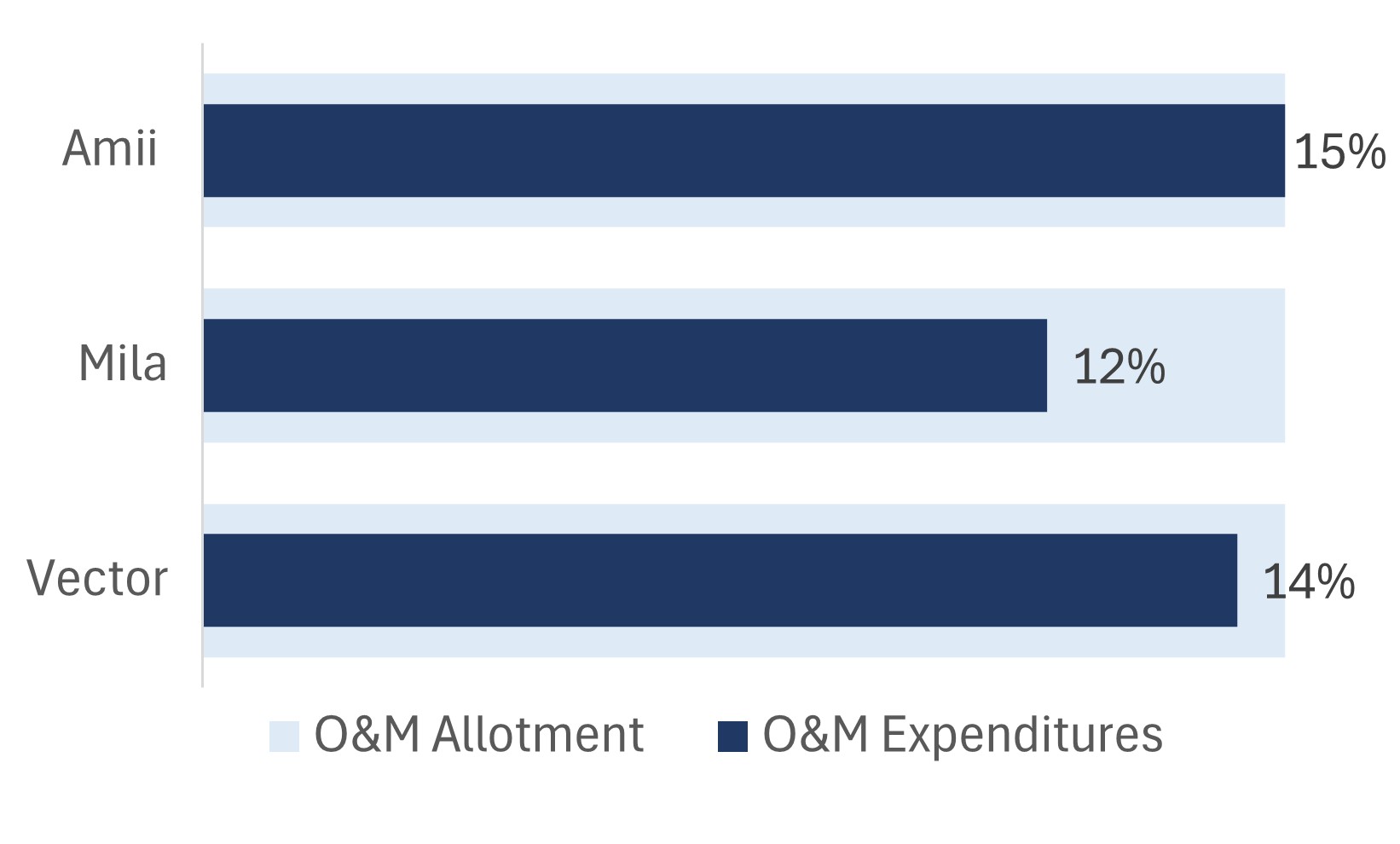
NAIIs – O&M Expenditures to Date
| Organization | O&M expenditures | O&M allotment |
|---|---|---|
| Amii | 15% | 15% |
| Mila | 12% | 15% |
| Vector | 14% | 15% |
Finding 12: PCAIS 2.0 delivery partners made meaningful progress on EDI through strategies and initiatives. Contribution Agreements are generally well-managed, though staff turnover and some reporting gaps presented minor challenges. Due to delays in the rollout of some initiatives, spending was less than anticipated for some organizations.
Equity, Diversity, and Inclusion (EDI) Initiatives:
- DRAC, the GIC clusters, CIFAR, and the NAIIs have taken measures to incorporate EDI into their organizations.
- DRAC has an EDI framework, outreach programs, and a proposed equitable resource allocation model for its PAICE systems, benefiting underrepresented researchers.
- The GIC clusters engage in EDI initiatives, including scholarships, training, and participation in the 50-30 Challenge.
- CIFAR implemented an EDI strategy, including balanced peer review committees, support for parental leave, and scholarships for Black and Indigenous students.
- The NAIIs developed EDI strategies by 2022, formed EDI committees, and joined the 50-30 Challenge. Each NAII also runs various programs that are targeted to support underrepresented groups (e.g., AI4Good Labs, bursaries, mentorships).
Management of Contribution Agreements:
- Interviewees explained that the Contribution Agreements (CA) under PCAIS 2.0 had processes in place to manage the agreements. Key practices identified include regular meetings, guidance documents, risk assessments, and claim processes.
- The document review found that the reporting requirements specified in the CAs appear to have been largely met. Some specific gaps in reporting (e.g., KPIs and financials) were noted, but this information was largely available from other sources.
- One challenge noted by interviewees in managing CA requirements was high turnover of ISED operational staff.
Program Expenditures:
- The GIC clusters were slow with their initial spending; spending was mostly on Operations and Maintenance in the first year, which is consistent with other funding streams for the clusters.
- DRAC underspent in 2022–23 and 2023–24 due to project delays.
- CIFAR had multiple amendments to its funding timelines, with year-to-year deferrals as well.
- NAII spending is aligned with the CA spending profiles.
- A challenge identified by some GIC interviewees included utilizing funds allocated to projects within the approved funding period.
Figure 33: GIC clusters – Cumulative PCAIS 2.0 Expenditures as of 2023-24
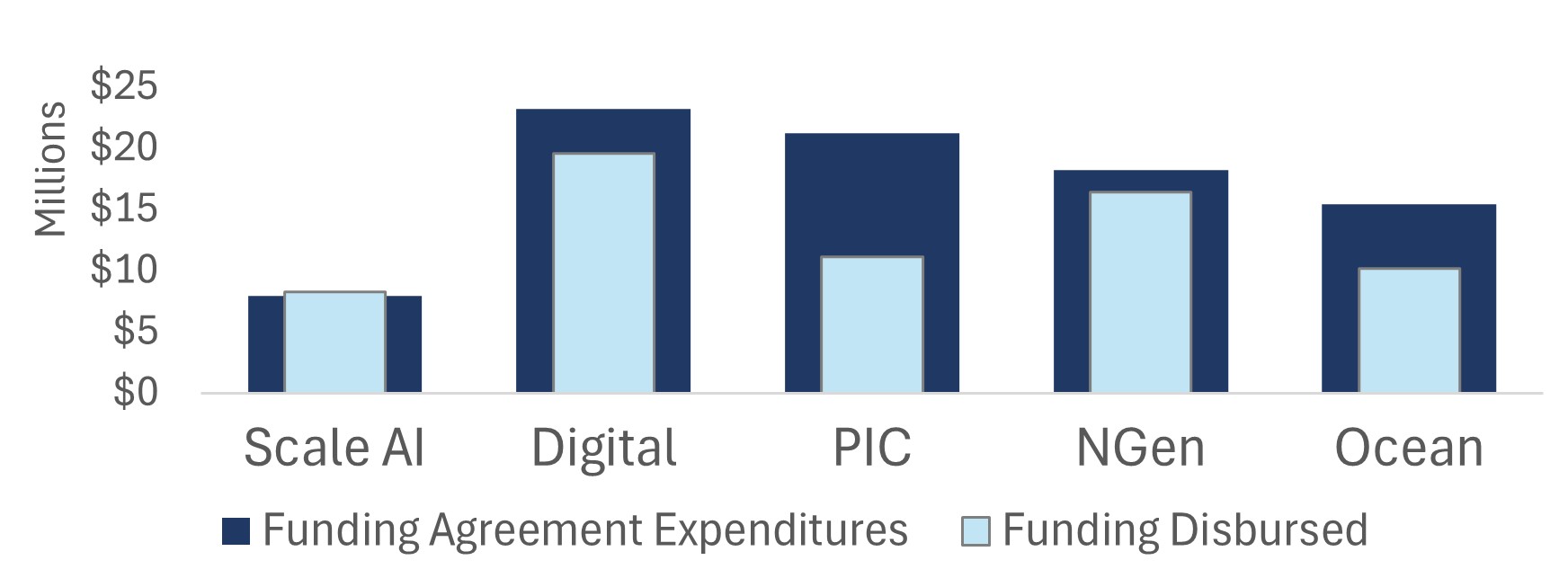
GIC clusters – Cumulative PCAIS 2.0 Expenditures as of 2023-24
| Cluster | Funding Agreement Expenditures | Funding Disbursed |
|---|---|---|
| Scale AI | $5,202,679 | $2,133,163 |
| Digital | $13,995,871 | $7,256,296 |
| PIC | $10,657,258 | $4,200,000 |
| NGen | $7,951,000 | $5,473,000 |
| Ocean | $10,193,192 | $2,100,000 |
Figure 34: DRAC – PAICE Expenditures
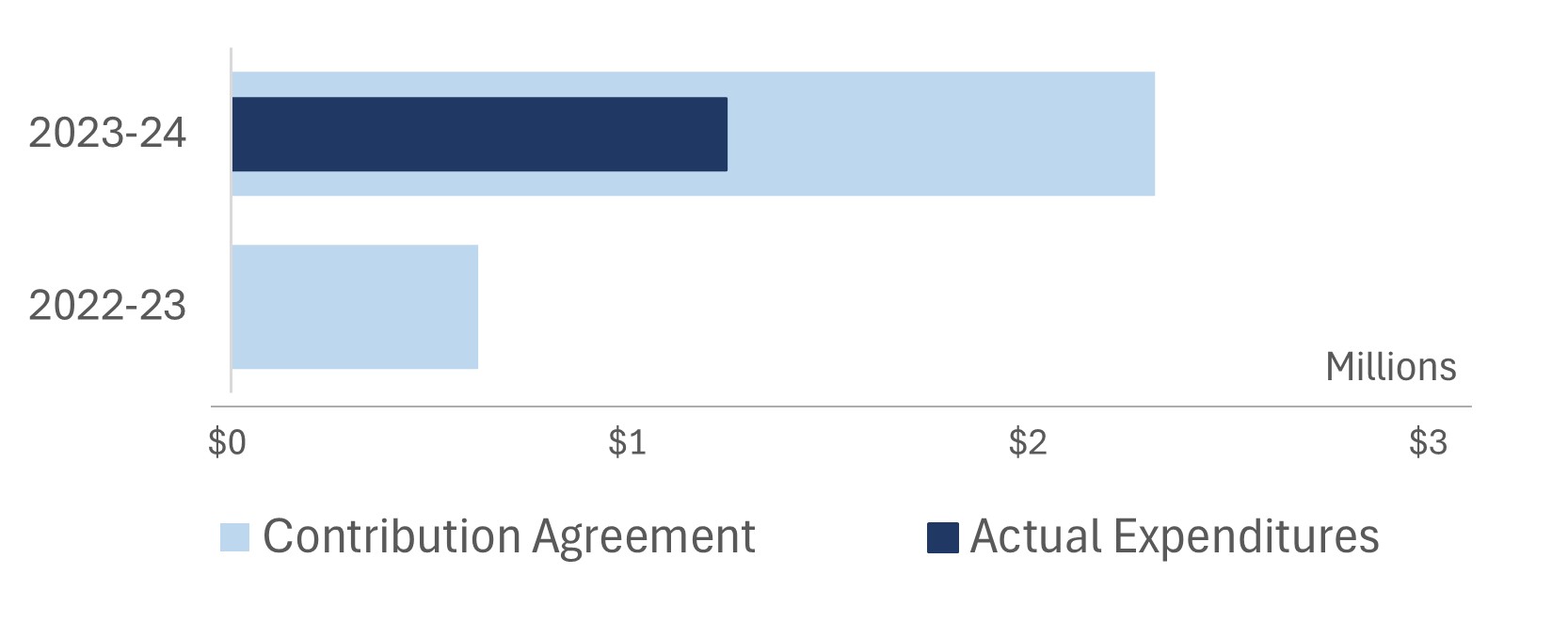
DRAC – PAICE Expenditures
| Fiscal Year | Contribution Agreement | Actual Expenditures |
|---|---|---|
| 2022-23 | $618,628 | $0 |
| 2023-24 | $2,309,193 | $1,236,736 |
Summary
Conclusion: PCAIS 2.0 has helped to position Canada as a global leader in AI research and talent development. It has also helped to foster innovation, supported commercialization, and advanced equity and inclusion efforts, contributing to technological progress across sectors. At the same time, some key barriers remain. Challenges in commercializing and scaling AI solutions, coordinating national programming efforts, and difficulties building and deploying AI infrastructure in a timely manner are limiting Canada's ability to fully capitalize on its AI investments. Continued leadership, integration, and strategic investment are essential to unlock the full economic and societal potential of AI in Canada.
Finding 1: The second phase of Canada's Pan-Canadian Artificial Intelligence Strategy (PCAIS 2.0), and the funding it provides, were foundational for enhancing AI competitiveness and innovation in Canada. Through its commercialization-focused initiatives, PCAIS 2.0 has been helping to address key challenges, gaps, and barriers to the scaling, adoption, and commercialization of AI technologies in Canada.
Finding 2: Canada has built a strong AI foundation through early investments, including federal funding for initiatives such as PCAIS 2.0. However, gaps in coordination and cohesion remain, especially across federal initiatives and AI institutions.
Finding 3: Through PCAIS 2.0 funding, the NAIIs have offered impactful training to build both foundational and technical AI capacity, including programs for underrepresented groups. However, industry demand for this NAII programming exceeded the resources available to the NAIIs. GIC clusters have also supported training activities, particularly through 'on-the-job learning' in AI commercialization projects.
Finding 4: PCAIS 2.0 funding for the PAICE project aimed to expand AI compute access but faced a slow and complex rollout, with one-to-two-year delays across key activities, and experienced challenges with co-ordination and communication amongst stakeholders.
Finding 5: PCAIS 2.0 programs played an important role in strengthening Canada's AI ecosystem through industry engagement, capacity building, and collaborative partnerships. They have exceeded targets for engagement activities and facilitated connections between researchers, academia, and businesses. However, the importance of engagement on regulation and responsible AI development at the international level has increased significantly over the course of the PCAIS 2.0.
Finding 6: Through PCAIS 2.0 funding for the CIFAR AI Chairs program, Canada's AI research ecosystem has been strengthened, attracting top global talent, retaining researchers, and advancing progress toward key targets.
Finding 7: Through PCAIS 2.0, stable and flexible funding has enabled increased interdisciplinary AI research and publications, which have been disseminated to various audiences (e.g., academia, private sector, government, and public).
Finding 8: PCAIS 2.0 funding has contributed to strengthening Canada's AI ecosystem by enabling innovation and driving impacts in key sectors like healthcare, agriculture, and cleantech, while advancing AI technology, ethics, and safety and contributing to economic growth.
Finding 9: PCAIS 2.0 programs have contributed to strengthening Canada's AI commercialization landscape by helping industry partners build technical capacity, improve AI readiness, develop new or enhanced AI solutions, and generate new IP. Specifically, GIC clusters are driving strong applied, sector-focused AI commercialization, the NAIIs are focusing more on building foundational AI capabilities, and CIFAR is focusing on the creation and transfer of AI knowledge.
Finding 10: PCAIS 2.0 programs have contributed to improved company performance and growth. Businesses reported enhanced productivity, reduced costs, and faster decision-making due to AI-driven enhancements. Engagements supported job creation, particularly of Highly Qualified Personnel, and helped organizations establish, grow and compete.
Finding 11: Overall, PCAIS 2.0 contributions to intermediary organizations are being managed in an efficient manner. They met or exceeded match requirements, costs were similar to comparable organizations, and overhead largely remained within expected limits. However, insufficient centralized coordination was seen as a challenge by stakeholders.
Finding 12: PCAIS 2.0 delivery partners made meaningful progress on EDI through strategies and initiatives. Contribution Agreements are generally well-managed, though staff turnover and some reporting gaps presented minor challenges. Due to delays in the rollout of some initiatives, spending was less than anticipated for some organizations.
Recommendations
Recommendation 1: ISED should explore approaches and mechanisms to enhance cooperation, coordination, and synchronization across the different PCAIS program components as well as other AI-related ISED initiatives.
Recommendation 2: SRS should, in its oversight role, explore ways to strengthen coordination among stakeholders, including working with DRAC to clarify processes and timelines for funding agreements with partners, where feasible and with input from PAICE stakeholders, and apply these lessons learned to future AI compute infrastructure projects.
Recommendation 3: SRS should explore approaches to allocate specific support for CIFAR activities related to international AI partnerships and collaboration in areas such as responsible AI development, while ensuring alignment with other AI-related ISED initiatives.
Appendices
Appendix A: Acronyms
AI: Artificial Intelligence
CA: Contribution Agreement
CCAI Chairs: Canadian CIFAR Artificial Intelligence Chairs
CIFAR: Canadian Institute for Advanced Research
CIHR: Canadian Institutes of Health Research
DRAC: Digital Research Alliance of Canada
EDI: Equity, Diversity, and Inclusion
GIC: Global Innovation Clusters
GPU: Graphics Processing Unit
IP: Intellectual Property
ML: Machine Learning
NAII: National Artificial Intelligence Institute
NSERC: Natural Sciences and Engineering Research Council
O&M: Operations and Maintenance
PAICE: Pan-Canadian Artificial Intelligence Computing Environment
PCAIS: Pan-Canadian Artificial Intelligence Strategy
R&D: Research and Development
RFI: Request for Information
RFP: Request for Proposal
SCC: Standards Council of Canada
SMEs: Small and Medium Enterprises
SSHRC: Social Sciences and Humanities Research Council
TPO: Third-Party Organization
UR: Ultimate Recipient
VC: Venture Capital
Appendix B: Other Federal AI Programming
Canada Digital Adoption Program: The Boost your Business Technology Stream offers financial support to SMEs to adopt new technologies.
Canadian Sovereign AI Compute Strategy: This Strategy involves investments in public and commercial infrastructure to ensure that Canadian innovators, businesses and researchers have access to the compute capacity they need.
- ISED's AI Compute Access Fund: The $300 program will support the purchase of AI compute resources by Canadian innovators and businesses.
- ISED's AI Compute Challenge: The $700 million initiative involves a call for proposals via the Strategic Innovation Fund to strengthen Canada's AI ecosystem by securing domestic AI data centres.
- Public AI Compute Infrastructure: An investment of $1 billion to build a large sovereign supercomputing facility that supports researchers and industry. A smaller secure computing facility, led by Shared Services Canada and the NRC, will be established for government and industry to perform R&D. In the near term, $200 million will be provided to DRAC and the NAIIs to augment existing compute infrastructure to address immediate needs.
Global Affairs Canada: Canadian International Innovation Program provides up to $600K to SMEs to pursue international R&D collaboration on projects that have commercialization potential.
Innovative Solutions Canada: Innovative Solutions Canada is a federal program that supports the development and testing of early-stage innovations by Canadian companies in response to government-defined challenges. Through its challenge-based approach, the program provides funding and opportunities to pilot and validate solutions, including AI-based technologies, helping firms advance toward commercialization while enabling the federal government to assess new digital and AI capabilities.
Mitacs: Mitacs connects Canadian businesses with top AI experts and supports R&D to ensure human-centered solutions that drive growth. Businesses work with a Mitacs advisor to find AI talent and the businesses only pay 50% of the costs.
NRC's AI Assist: A $100M program that provides funding for R&D, testing, and validation of AI technologies.
NRC's Digital Technologies Research Centre includes a Data Analytics Centre, Artificial Intelligence for Logistics Program, Digital Health and Geospatial Analytics Services, and two Challenge Programs (Artificial Intelligence for Design & Artificial Intelligence for Productivity).
Regional Development Agencies: The $200M Regional Artificial Intelligence Initiative includes two pillars: AI productization and commercialization & Adoption of AI applications.
Strategic Innovation Fund: The SIF is available to for-profit and not-for-profit organizations with the goal of supporting Canadian innovation. Funding has included support for AI related projects for companies such as Mindbridge Analytics Inc, Cognitive Systems Corp, Creative Destruction Lab (Advancing AI Innovation in Canada), Sanctuary Cognitive Systems Corporation, Ranovus Inc, and Conscience.
Tri-Agency Funding Programs: The tri-agencies (CIHR, NSERC, SSHRC) fund fundamental and applied research related to AI.
Appendix C: Logic Model
The logic model provided below serves as the PCAIS's roadmap. It outlines the immediate outcomes, the intermediate or medium-term outcomes, and the ultimate outcome.
Figure 35: Logic Model

Logic Model
Ultimate Outcome
- Canada's AI technology sector leads to the generation of economic and social benefits
- Canada's international profile, capacity and AI research competitiveness is maintained
Intermediate Outcomes
- Engagements increase the capacity of partnering organizations, Canadian SMEs and their employees to develop, adopt, use or commercialize AI technologies
- Knowledge related to AI is increasingly shared and mobilized in Canada
- Canada produces increasingly more highly qualified personnel in AI
Immediate Outcomes
- Collaboration and capacity building engagements to advance AI commercialization projects are increased
- Investment in Canadian AI commercialization projects is increased
- Support for advanced and interdisciplinary AI research, training and learning is increased
- Enabling of collaboration between AI researchers and different organizations is increased
Appendix D: Methodology
The evaluation was based on five data collection methods, including qualitative and quantitative sources.
To address the evaluation questions, information from multiple lines of evidence was collected and triangulated.
Document and Literature Review
The document and literature review assessed pertinent literature to gain an understanding of the current and continued need for PCAIS programs/activities, the international context, and examined key program and reporting documents to support the assessment of relevance, performance and efficiency.
Data Review
The data review examined the performance data of the various PCAIS 2.0 organizations to assess the extent to which progress has been made towards achieving the expected outcomes outlined in the logic model. An analysis of the administrative and financial data was also performed to assess efficiency.
Online Surveys
Online surveys with individuals who benefitted from funding was undertaken to assess the effectiveness of the underlying programs/activities resulting from PCAIS funding. In total, five surveys were conducted: three for the NAIIs, one for CIFAR AI Chairs, and one for GIC project leads. For the NAII surveys, one was conducted by the NAIIs (Vector) and two were conducted internally by ISED (Amii and Mila). The response rates were as follows:
- 34 out of 61 GIC ultimate recipients responded to the survey, resulting in a response rate of 56%.
- 72 out of 120 CIFAR AI Chairs responded to the survey, resulting in a response rate of 60%.
- 68 out of 228 Mila industry partners responded to the survey, resulting in a response rate of 30%.
- 34 out of 112 Vector industry partners responded to the survey, resulting in a response rate of 30%.
- 67 out of 334 Amii industry partners responded to the survey, resulting in a response rate of 20%.
Case Studies
AEB conducted 4 case studies of PCAIS 2.0 projects and activities, with a focus on achievement of program outcomes and efficiency of the program processes and administration. Projects for the case studies were selected in consultation with PCAIS stakeholders.
Virtual Interviews
A total of 38 interviews were conducted using MS-Teams across the following stakeholder groups to gather diverse perspectives on the relevance, performance and efficiency of PCAIS 2.0:
- ISED management (6)
- TPO Executive Teams / BOD (14)
- CIFAR AI Chairs, including International Scientific Advisory Committee members (15)
- CIFAR Pan-Canadian AI Strategy National Program Committee (3)
Appendix E: Challenges and Mitigations
The evaluation encountered two limitations and evaluators applied related mitigation strategies.
Maturity of PCAIS 2.0
Challenge:
PCAIS 2.0 activities and projects had varying levels of progress in their implementation. As a result, there was limited data to assess the achievement of outcomes for some projects/activities.
Mitigation:
For these outcomes, the evaluation measured only interim progress in achieving these targets.
Measuring Attribution of PCAIS
Challenge:
There are many other AI related initiatives via ISED and other federal programming.
Mitigation:
The specific impact of PCAIS funding was explored in more detail with various ecosystem stakeholders.
Appendix F: Key Terms
50-30 Challenge is a government initiative in Canada aimed at promoting gender parity (50%) and increasing the representation of equity-deserving groups (30%) in leadership roles. It encourages organizations to adopt practices that foster diversity and inclusion, recognizing the benefits of having diverse teams.
AI Ethics is a multidisciplinary field that studies how to optimize the beneficial impact of artificial intelligence while reducing risks and adverse outcomes. It encompasses various considerations, including data responsibility, fairness, explainability, and transparency. Additionally, AI ethics involves a set of guiding principles that stakeholders use to ensure that AI technology is developed and used responsibly.
AI Safety refers to practices and principles that ensure AI technologies are designed and used in a way that benefits humanity and minimizes potential harm.
Business Support Organizations provide advice and help to entrepreneurs and managers to grow their businesses. These organizations offer various services, including business coaching, financial management, marketing, and more, to assist businesses at different stages.
Compute Infrastructure refers to the foundational resources and systems required to perform computational tasks. It encompasses the hardware, software, and networking components that enable the execution of applications, processing of data, and delivery of Information Technology services.
Contribution Agreement is a legal document that outlines the transfer of assets, funds, or property from one party to another. It specifies the conditions of the transfer, including aspects such as liability and indemnities.
Ecosystem Density is defined by the concentration of economic activities, population, and infrastructure within an industrial cluster.
Ecosystem Development Interactions include areas such as attending conferences, tradeshows, or other cluster events; receiving/giving business mentorship, guidance, or coaching; participating in knowledge sharing activities; establishing new contacts; or attending workshops or information sessions.
Equity-Deserving Groups / Underrepresented Groups refers to those groups who, by virtue of their identity, face discrimination, disadvantage, and institutional barriers unrelated to ability. These groups require proactive measures to address these inequities.
Full-Time-Equivalent is a unit of measurement that represents the total number of hours worked by employees in relation to a full-time work schedule. It helps organizations calculate the number of full-time hours worked by all employees, including both full-time and part-time workers.
G7 nations, or Group of Seven, is an informal forum of the world's leading industrialized democracies, which includes Canada, France, Germany, Italy, Japan, the United Kingdom, and the United States, along with the European Union as a permanent guest.
Highly Qualified Personnel refers to individuals who possess a tertiary education degree (such as a bachelor's, master's, or doctoral degree) and typically have at least five years of relevant professional experience.
Knowledge Dissemination activities involves identifying the appropriate audience (for research results, implications, etc.) and tailoring the message and medium to that audience.
Knowledge Mobilization is an umbrella term encompassing a wide range of activities relating to the production and use of research results, including knowledge synthesis, dissemination, transfer, exchange, and co-creation or co-production by researchers and knowledge users.
Knowledge Spillovers refer to the process by which individuals and firms within an interconnected industrial cluster benefit from the innovative activities and expertise of others within that cluster.
Large Language Models are advanced machine learning models designed to understand and generate human language. These models are trained on vast amounts of text data, enabling them to perform a wide range of natural language processing tasks such as text generation, translation, summarization, and question answering.
Machine Learning is a subset of AI that focuses on enabling machines to learn from data and improve their performance over time without being explicitly programmed for each task. It involves the use of algorithms and statistical models to analyze and draw inferences from patterns in data, allowing computers to make predictions or decisions based on new data.
Massive Online Open Courses are online courses aimed at unlimited participation and open access via the Web. MOOCs are designed to allow for open-access online courses without specific participation restrictions, enabling a large number of learners to engage simultaneously.
Network Effects arise from the interconnectedness of industrial cluster stakeholders, where the benefits of clustering can lead to increased economic activity and innovation.
Product Testing refers to the process of examining and assessing a product to ensure it meets predetermined criteria for quality, safety, reliability, and performance before it reaches the market.
Proof of Concept is a demonstration or initial test of an idea, method, or product to show its feasibility and potential in real-world settings. It serves as a tool to collect evidence of an idea's practical or business potential, helping teams determine whether to invest in a larger-scale effort to realize the idea.
Request for Information is a formal process used by organizations to gather information from potential suppliers about their capabilities, products, or services. It is commonly used in business to collect written information about the offerings of various suppliers, enabling informed decision-making in the early stages of procurement.
Request for Proposal is a document used by organizations to announce a new project and invite contractors or vendors to submit their bids. It outlines the project's requirements and specifications, helping businesses find the right partners for their needs.
Small and Medium Enterprises are defined as businesses with 1 to 499 paid employees.
Stanford Global AI Vibrancy Index is an interactive platform designed to assess and compare the AI vibrancy of various countries. It utilizes 42 indicators organized into eight pillars to provide a comprehensive evaluation of each country's AI ecosystem.
Technology Readiness Levels are a method for estimating the maturity of technologies during the acquisition phase of a program. They enable consistent discussions of technical maturity across different types of technology. TRLs range from 1 to 9, where TRL 1 indicates the beginning of scientific research and TRL 9 signifies that the technology is fully operational and has been successfully deployed in the field.
Third-Party Organizations are entities that are involved in the delivery of services or products on behalf of a primary organization.
Tortoise Global AI Index is a comprehensive ranking tool that benchmarks countries based on their investment, innovation, and implementation of artificial intelligence. The index assesses various factors, including the availability of skilled AI professionals, the scale of computational resources, and government commitment to AI development.
Venture Capital is a form of private equity financing that is provided by firms or funds to startups and early-stage companies that have high growth potential. VC firms invest in exchange for equity, or ownership stakes, aiming to generate significant returns as the companies grow and succeed.