
The Quantum Advisory Council has been established to provide impartial advice to Innovation, Science and Economic Development Canada and monitor the progress of the National Quantum Strategy. The council draws on expertise from industry and the academic, not-for-profit and investment communities. The co-chairs and members of the council serve in a volunteer capacity for two years, with the possibility of renewal. More information about the council's mandate and work can be found in the Terms of reference. A summary of each meeting held since July 2023 is available through the corresponding Record of decisions.
Co-chairs
Alexandre Blais, Université de Sherbrooke
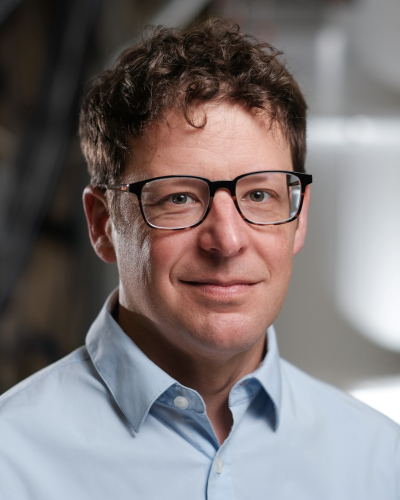
Alexandre Blais is a professor of physics at the Université de Sherbrooke where he is the scientific director of the Institut quantique and holds a research chair on quantum computer architectures. His theoretical work focusses on superconducting quantum circuits for quantum information processing and microwave quantum optics.
He is an active participant in the development of the field of circuit quantum electrodynamics (circuit QED), a leading quantum computer architecture. He is a member of the Quantum Information Science program of the Canadian Institute for Advanced Research, a member of the College of the Royal Society of Canada, and a Fellow of the American Physical Society. His research contributions have earned him a number of academic awards, including NSERC's Steacie Prize, the Canadian Association of Physicists' Herzberg and Brockhouse Medals, the Prix Urgel-Archambault from the Association francophone pour le savoir, the Rutherford Memorial Medal of the Royal Society of Canada, and a Guggenheim Fellowship from the John Simon Guggenheim Memorial Foundation.
Stephanie Simmons, Simon Fraser University
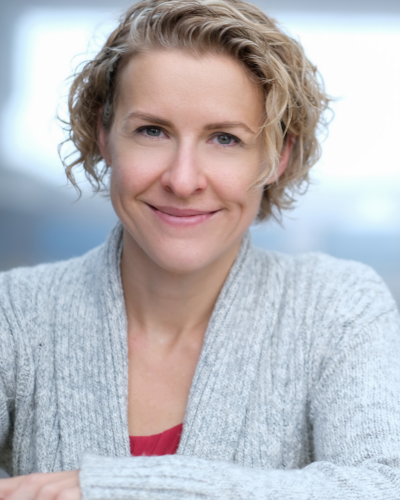
Stephanie Simmons is the founder and Chief Quantum Officer at Photonic Inc., driving the technical vision for next-generation quantum technologies based on photonically-linked silicon spin qubits. Dr. Simmons is a world-leading expert in quantum technologies, silicon spin-photon interfaces, condensed matter spin dynamics and control, silicon-integrated photonics, and quantum optics.
She is a Tier 2 Canada Research Chair in Silicon Quantum Technologies, and a Canadian Institute for Advanced Research Fellow in Quantum Information Science. She is also an Associate Professor at the Department of Physics at Simon Fraser University where she leads the Silicon Quantum Technology research group. Dr. Simmons is an international speaker with over 30 publications, 60 keynote and panel talks, and numerous patents. Her work on developing CMOS-compatible, scalable quantum technologies was awarded a Physics World Top Ten Breakthrough of the Year in 2013, and again in 2015. She has been recognized with an Arthur B. McDonald Fellowship and as a Top 40 Under 40 in Canada. Stephanie has been a reviewer for Nature, Science, Physical Review, NSERC, the Canada Research Chairs program, and more, and her work has been covered by the CBC, BBC, Wired Magazine, Scientific American, the New Scientist, and the New York Times.
Members
Andrew Fursman, 1QBit

Andrew Fursman co-founded 1QBit where he currently serves as CEO in addition to his founding role at 1QBit's independent spinouts, Good Chemistry and Synthesis Health. Andrew was a Founding Partner of Vancouver-based venture capital firm Minor Capital, Co-Founder of Satellogic Nano-Satellites (NASDAQ: SATL), and Co-Founder of Cloudtel Communications.
Andrew also sits on the World Economic Forum's Global Future Council on Computing. He studied Economics at the University of Waterloo and Philosophy and Political Science at the University of British Columbia prior to post-graduate programs in Technology Studies at Singularity University and Financial Engineering at Stanford University.
David Gosset, University of Waterloo

David Gosset is a quantum computer scientist interested in quantum algorithms and complexity theory, Associate Professor at the Institute for Quantum Computing at the University of Waterloo, Associate Faculty at the Perimeter Institute for Theoretical Physics, and a Fellow of the Canadian Institute for Advanced Research. He has worked on theoretical questions relevant to small quantum computers, including understanding the computational power of constant-depth quantum circuits and the limits of classical simulation algorithms.
He has also investigated the computational power and complexity of quantum many-body systems, and the application of physics-inspired tools from these areas to quantum computer science. He received the Pat Goldberg Memorial Best Paper Award from IBM Research in 2016 and 2018. Dr. Gosset received his PhD in Physics from the Massachusetts Institute of Technology, and held postdoctoral positions at the California Institute of Technology (Caltech) and the University of Waterloo.
Martin Laforest, ACET

Martin Laforest is a quantum physicist by training and has spent his career ensuring that quantum technologies have a disruptive yet positive impact on industry and society. Martin is currently based in Sherbrooke and is a managing partner for Quantacet, an early stage, quantum-focused investment fund, and the director of Quantum Strategy for ACET, a deep tech incubator offering specific mentoring tailored to quantum enterprises.
Before joining the Sherbrooke quantum ecosystem, Martin was the senior product manager for ISARA Corporation, a quantum-safe security company. Martin also spent eight years promoting the impacts of quantum technologies to students, governments, companies and investors for the Institute for Quantum Computing at the University of Waterloo where he also received his PhD.
Lisa Lambert, Quantum Industry Canada
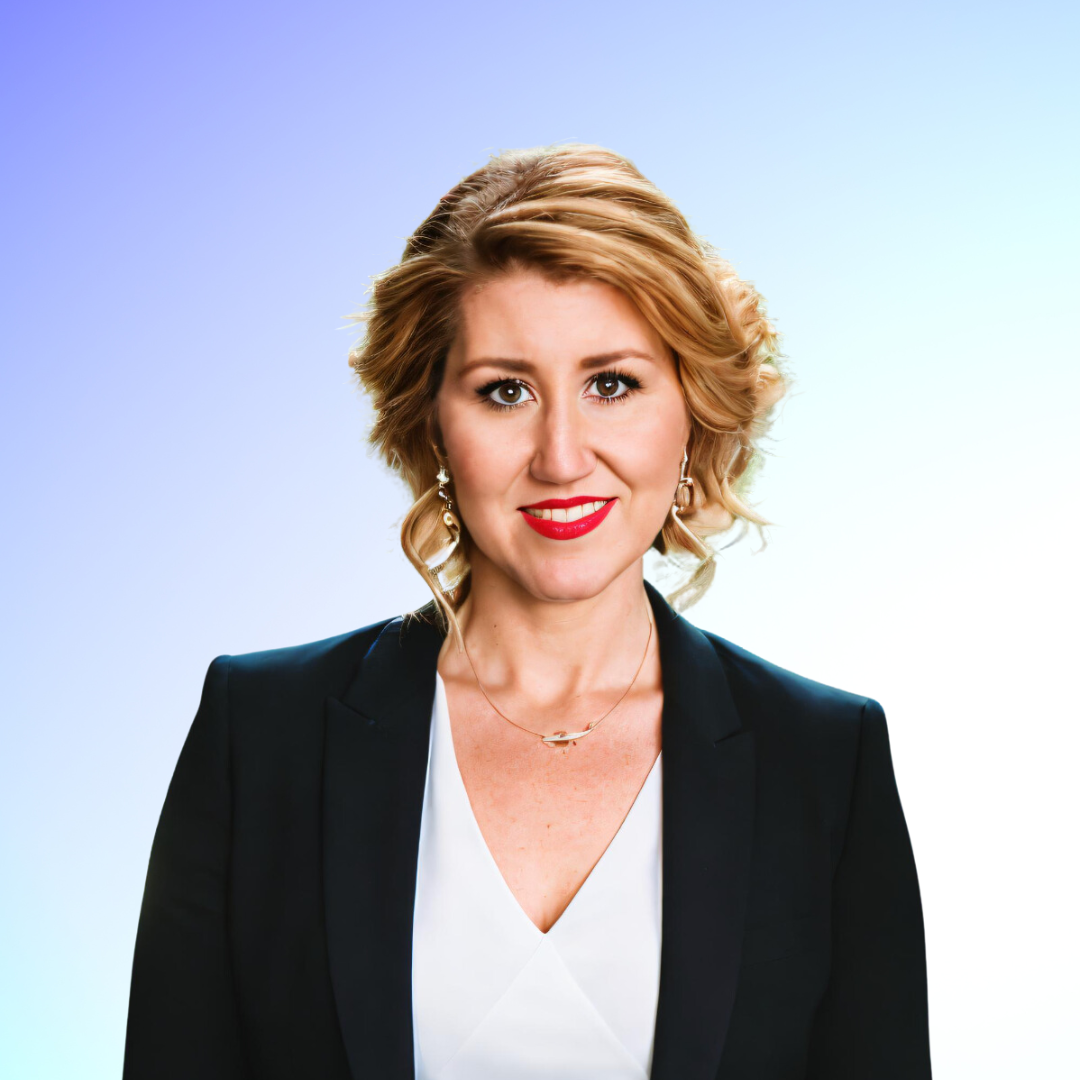
Lambert is the inaugural Chief Executive Officer of Quantum Industry Canada (QIC), the national consortium representing Canada's quantum sector. She works with industry, government, research, capital, and defence partners to support the development of a competitive and globally connected quantum ecosystem in Canada.
She advises at the intersection of emerging technologies, innovation policy, and national security, with a focus on translating scientific leadership into industrial capacity, prosperity, and strategic advantage. She contributes to national and international discussions on transformative technologies, including through engagement with multilateral and allied partners.
Prior to joining QIC, Lisa worked across research, technology, business, and policy environments, building experience in bridging technical innovation with how it is deployed, governed, and scaled.
She serves on the Executive Committee of the International Council of Quantum Industry Associations (ICQIA) and holds advisory roles with organizations globally across industry, technology, defence, and public policy.
Megan Lee, Quantum City
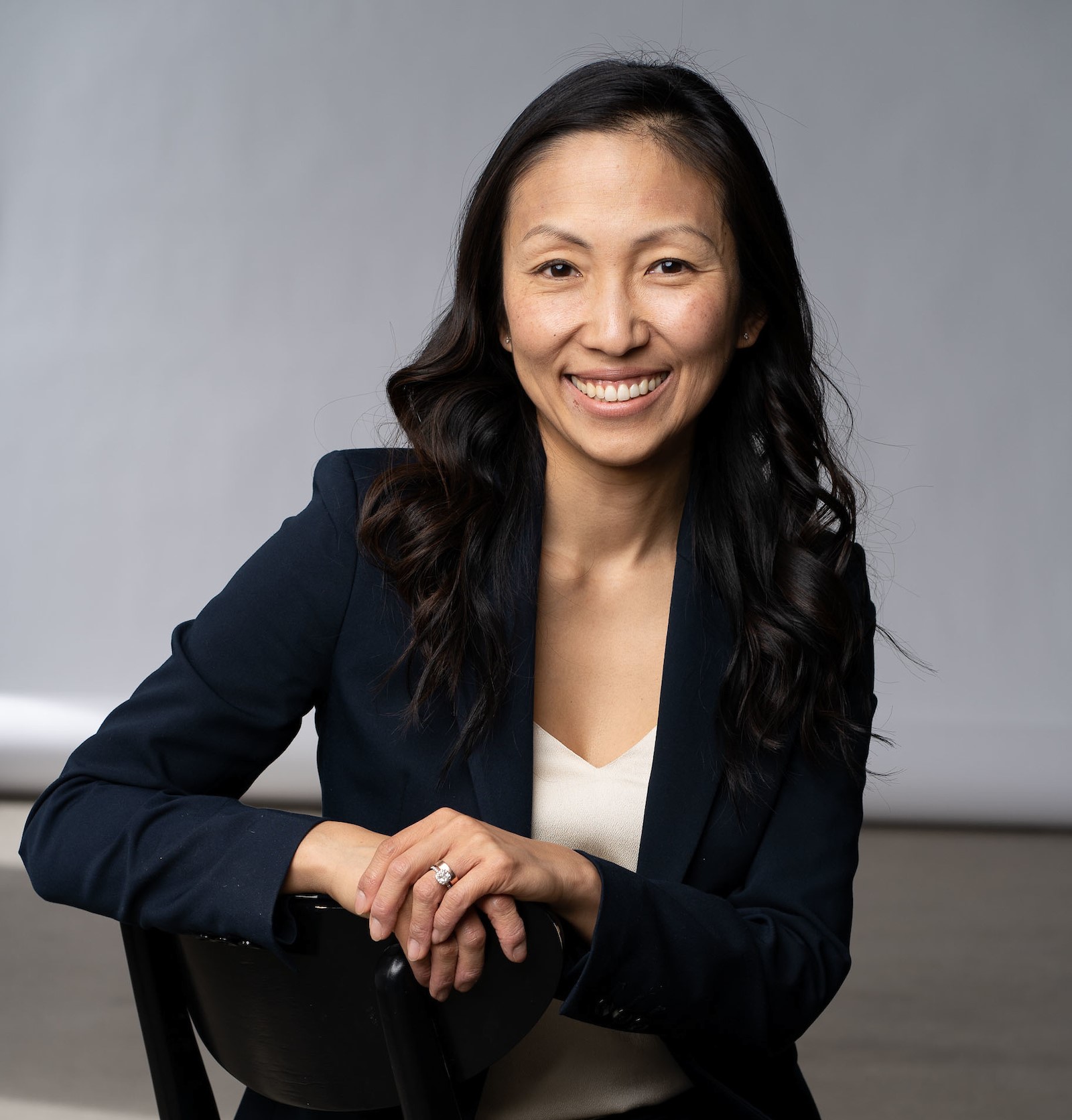
Megan Lee is Managing Director of Quantum City, where she leads the development of a leading quantum innovation ecosystem. She works at the intersection of research, industry, and policy to accelerate the adoption of quantum technologies, translating scientific advances into real-world applications across sectors. Under her leadership, Quantum City has built quantum-enabling infrastructure, talent pipelines, and partnerships connecting researchers, startups, and corporate adopters to advance quantum solutions. She holds a PhD in Biochemistry and an MBA in Technology Commercialization.
With nearly two decades of experience spanning research, commercialization, and venture development, Dr. Lee focuses on ecosystem building—creating partnerships, attracting investment, and enabling companies to scale in the emerging quantum economy. She has played a central role in launching global collaborations and accelerator programs, strengthening Canada's position in the international quantum landscape.
Her work emphasizes inclusive innovation, workforce development, and bridging the gap between discovery and deployment to ensure that quantum technologies deliver tangible economic and societal impact.
Michele Mosca, evolutionQ
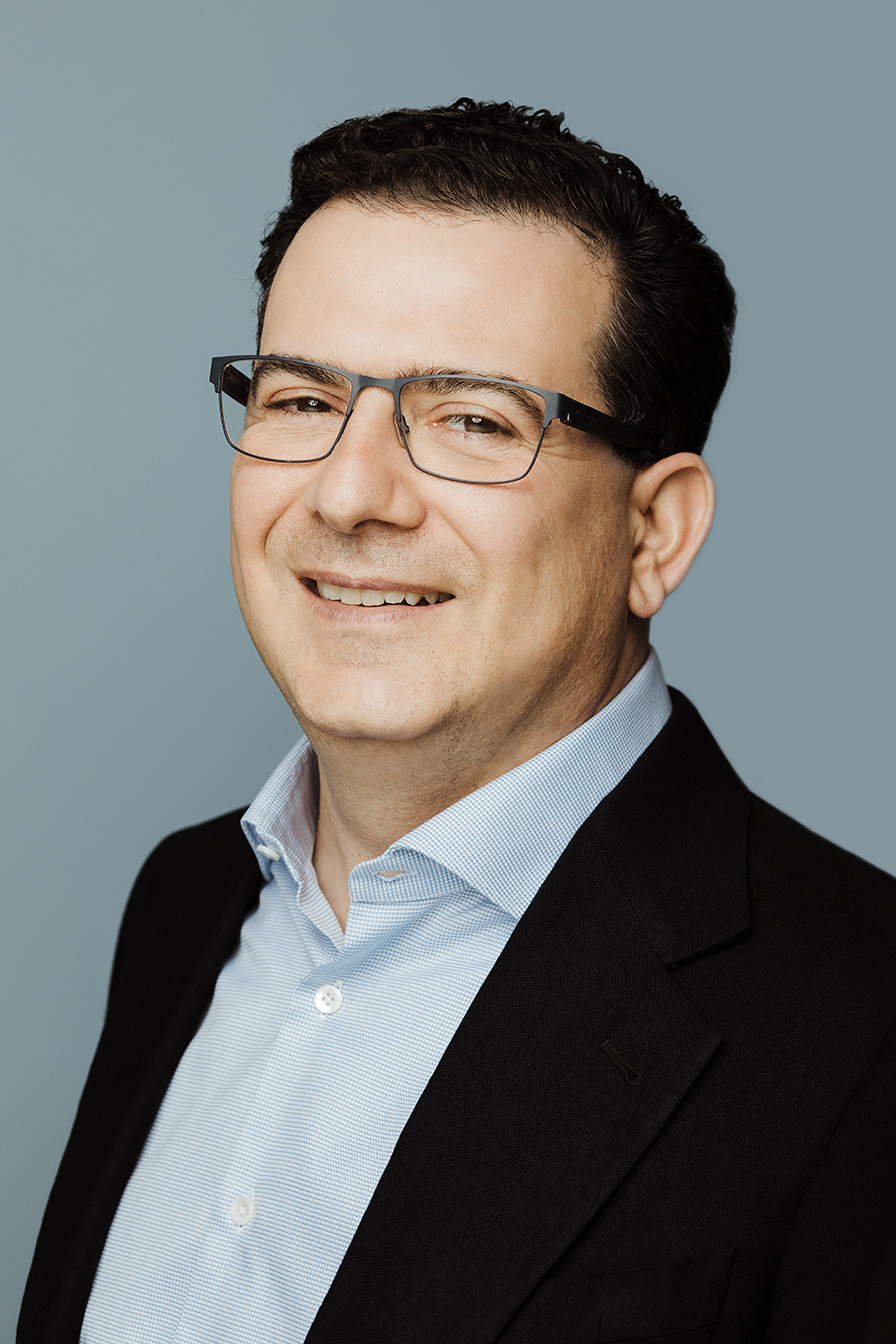
Michele Mosca is recognized pioneer in quantum computing and cybersecurity, and has played a central role in advancing awareness of quantum-era threats and opportunities and promoting practical strategies to defend critical systems against quantum-enabled adversaries.
As co-founder and CEO of the Canadian quantum-safe cybersecurity company evolutionQ, Michele works with governments and industry worldwide to assess and mitigate quantum-related cyber risks, enable long-term cryptographic resilience, and support the transition to quantum-safe digital infrastructure.
Michele Mosca has been instrumental in building Canada's quantum ecosystem as a founder of the Institute for Quantum Computing, Professor in Mathematics at the University of Waterloo, and a founding member of the Perimeter Institute for Theoretical Physics. He has helped catalyze the commercialization of quantum technologies, co-founding ventures such as SoftwareQ and Foqus Technologies, and has led key initiatives in quantum-safe security, including co-founding the Open Quantum-Safe project and the ETSI-IQC Quantum-Safe Cryptography Conference, and playing a founding role in Quantum Industry Canada and Quantum-Safe Canada.
His contributions have earned him the Queen Elizabeth II Diamond Jubilee Medal and a knighthood (Cavaliere) in the Order of Merit of the Italian Republic. He has also been named one of the Top 25 Most Influential People in Quantum Security and one of Canada's Top 40 Under 40. He holds a doctorate in Quantum Computer Algorithms from the University of Oxford.
Thomas Jennewein, Simon Fraser University
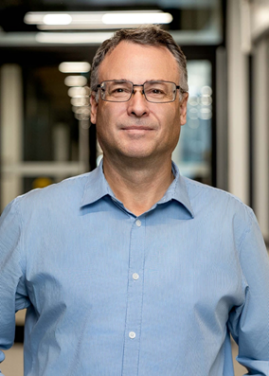
Thomas Jennewein is a professor and 2024 Canadian Excellence Research Chair for Global Quantum Internet Systems at the Department of Physics and Astronomy at Simon Fraser University. Dr. Jennewein's research vision is to build capable and scalable quantum communication technologies for long range and satellite quantum networks. He initiated and leads the Canadian Satellite mission, Quantum EncrYption and Science Satellite (QEYSSat), which aims to demonstrate quantum communication and Quantum Key Distribution between space and ground with stations across Canada and internationally. With his interest in the application of quantum technologies, he also co-funded three quantum-tech startups, to develop and sell satellite based secure communication, sensing and research instrumentation.
Dr. Jennewein completed his PhD in 2002 at the University of Vienna on Quantum Key Distribution and Teleportation Experiments. After a year in the automotive industry, he was a senior scientist at the IQOQI of the Austrian Academy of Sciences (2005). In 2009 he took moved to Canada to take a faculty position at the University of Waterloo / Institute for Quantum Computing.