
A report to the Minister of Justice and the Attorney General of Canada, for the benefit of Innovation, Science and Economic Development Canada
Table of contents
Our mandate
Appointment
McCarthy Tétrault LLP (McCarthy) was appointed by the Minister of Justice and the Attorney General of Canada for the benefit of Innovation, Science and Economic Development Canada (ISED) to conduct a Fact-finding review of alleged breaches of labour and employment practices and policies (Review) at Sustainable Development Technology Canada (SDTC).
Scope of the Review
Allegations of harassment, discrimination, bullying and any other improper employment-related conduct, by or involving SDTC current and former employees and management.
SDTC at a glance
The Canada Foundation for Sustainable Development Technology (SDTC) is an arm's length foundation created by the Government of Canada in 2001 to support and develop new clean technologies. The Government provides the funding and establishes certain criteria for the distribution of the funds under a Contribution Agreement.
Four CEOs have since overseen SDTC: Founding CEO (2001 to 2014), Interim CEO (2014-2015), Former CEO (2015 to 2023) and Interim CEO (2023 and ongoing).
SDTC is not a Crown Corporation and employees are not unionized.
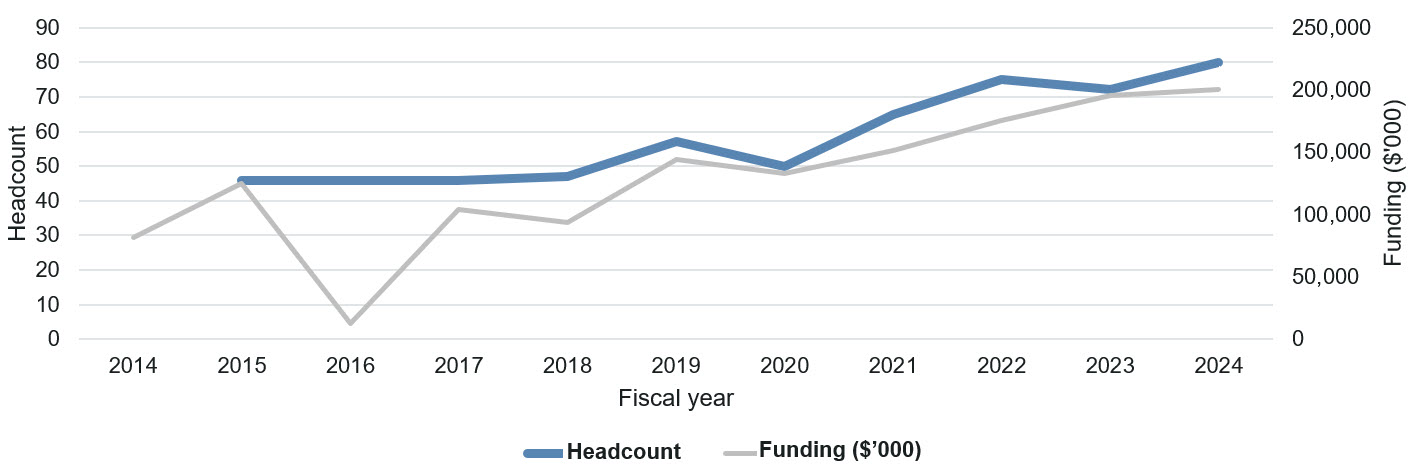
SDTC's workforce has grown over the past decade, consistent with the growth in fundingFootnote 1. See below:
Text version
| Fiscal Year | Headcount | Approvals (in thousands of dollars) |
|---|---|---|
| 2014 | N/A | 82,000 |
| 2015 | 46 | 125,000 |
| 2016 | N/A | 13,000 |
| 2017 | 46 | 103,800 |
| 2018 | 47 | 93,500 |
| 2019 | 57 | 144,500 |
| 2020 | 50 | 133,000 |
| 2021 | 65 | 151,700 |
| 2022 | 75 | 175,900 |
| 2023 | 72 | 195,900 |
| 2024 | 80 | 200,000 |
Fact-finding review process
Action steps to canvass as many participants as possible
News release
ISED issued a news release and McCarthy posted a notice in both official languages on its website, both inviting all current and former SDTC employees to participate in the Review.
Additional/direct communications
McCarthy set up a dedicated email account to communicate with participants.
At McCarthy's request, SDTC directly emailed current and former employees to invite participation. At McCarthy's request, SDTC emailed former employees with known email addresses to invite participation and mailed similar letters to those without.
McCarthy directly emailed former employees to invite participation.
Intake forms
Participants who voluntarily expressed interest to take part in the Review were asked to complete a First Intake Form. No strict deadline was enforced with regards to the First Intake Form.
Voluntary participants were also asked to fill out a Secondary Intake Form which asked participants to indicate their preferred language for the interview and to convey their views in a general way to assist the interview.
Intake forms were not made mandatory. For instance, McCarthy proactively reached out to participants who had not filled out the Secondary Intake Form to set up an interview and McCarthy also invited participants who did not fill out any intake forms.
Consent form and waiver form
McCarthy prepared a consent form for current and former employees which permitted the disclosure, use and collection of personal information in a manner consistent with the Review and law. This consent form was not mandatory for participation.
McCarthy also prepared a waiver form to encourage participation by releasing participants from any specific confidentiality obligations owed to SDTC. This waiver form was not mandatory for participation.
Interviews
Everyone who wanted to participate were interviewed even if they missed deadlines or refused to complete intake forms, the consent form or the waiver form.
Ultimately, 62 interviews were conducted between December 6, 2023, and April 11, 2024.
Interview process
Interviews took place in person in Ottawa and Calgary, and virtually via Microsoft Teams. All 62 interviewees were given the option to participate in either French or English.
- At the start of each interview, and in keeping with best practices for such reviews, participants were instructed to maintain strict confidentiality about their participation in the Review, and all confirmed their understanding and agreement.
- Interviews were not recorded. Participants were asked specifically not to record their interview, and all confirmed they were not.
- All former employees (and contractors, if engaged as such) of SDTC were eligible to participate regardless of length or dates of employment/engagement, position(s) held, lack of information on intake forms (if any), or failure to complete intake, consent or waiver forms.
- Two McCarthy team members met with each participant.
- Interviews were scheduled for a minimum of 1 hour and many lasted longer, in some cases 3+ hours.
Over 3,000 pages of documentation were received between November 15, 2023, and April 10, 2024, from ISED, SDTC, participants, and other parties, including organizational charts, employee data, personnel files (on consent), organizations surveys, workplace policies, termination documentation, email communication and complaints.
Fact-finding timeline

Text version
- News release: November 20, 2023
- Intro emails, consent and waiver forms: November 24, 2023
- First target date: December 2, 2023
- First interview: December 6, 2023
- Second target date: December 8, 2023
- Last target date: December 15, 2023
- First interview: January 10, 2024
- McCarthy identified and invited additional individuals for interviews: Early January 2024
- Last First Intake Form completed by voluntary participant: January 25, 2024
- Last interview: February 2, 2024
- Last documents received: April 10, 2024
- Last interview: April 11, 2024
From December 6, 2023 to February 2, 2024: 36 voluntary participants interviewed (employees + consultant).
From January 10, 2024 to April 11, 2024: 26 invited participants interviewed (employees, consultant + board members).
Statistics
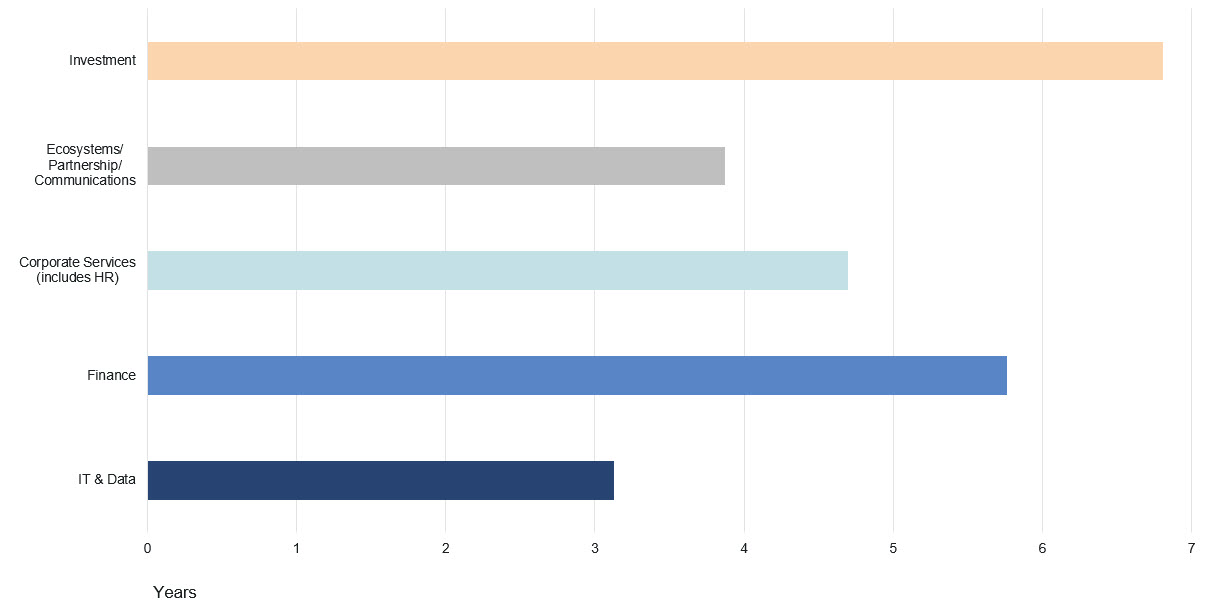
Average length of service of employees by department
Text version
| Department | Average length of service (years) |
|---|---|
| Investment | 6.81 |
| Ecosystems/Partnership/Communications | 4.38 |
| Corporate Services (includes HR) | 4.69 |
| Finance | 5.35 |
| IT & Data | 3.13 |
Department breakdown of participants
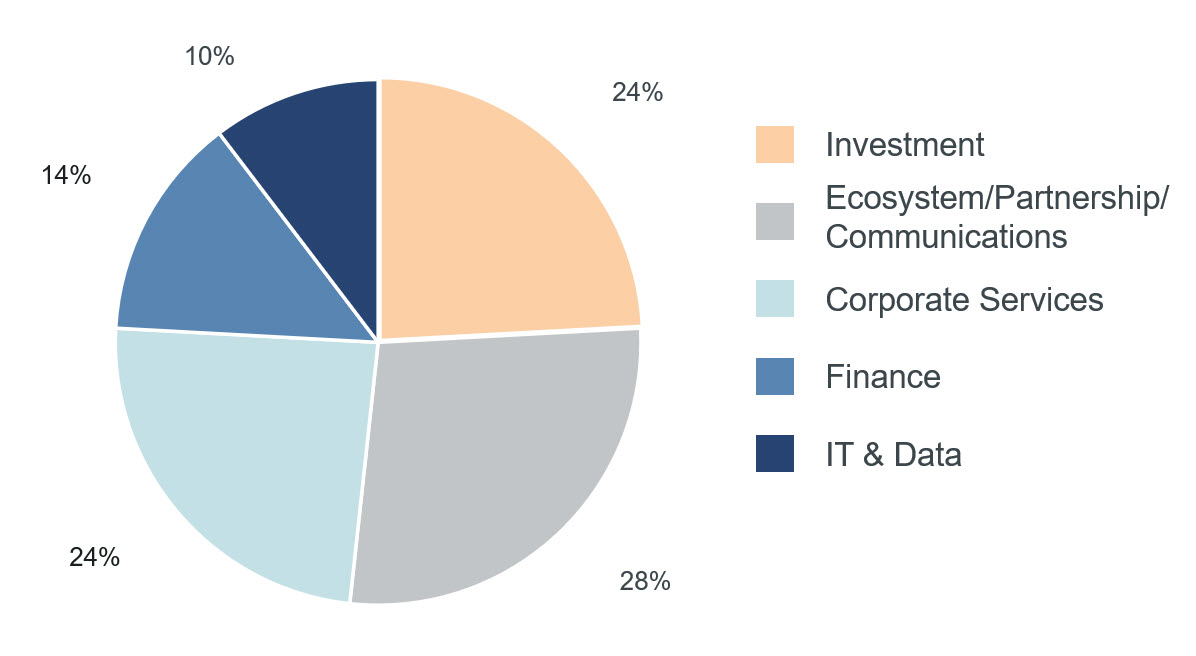
Participants per department
Text version
| Department | Percent of participants |
|---|---|
| Investment | 24 |
| Ecosystems/Partnership/Communications | 28 |
| Corporate Services | 24 |
| Finance | 14 |
| IT & Data | 10 |
Participants per department vs total number of employees since 2018Footnote 2
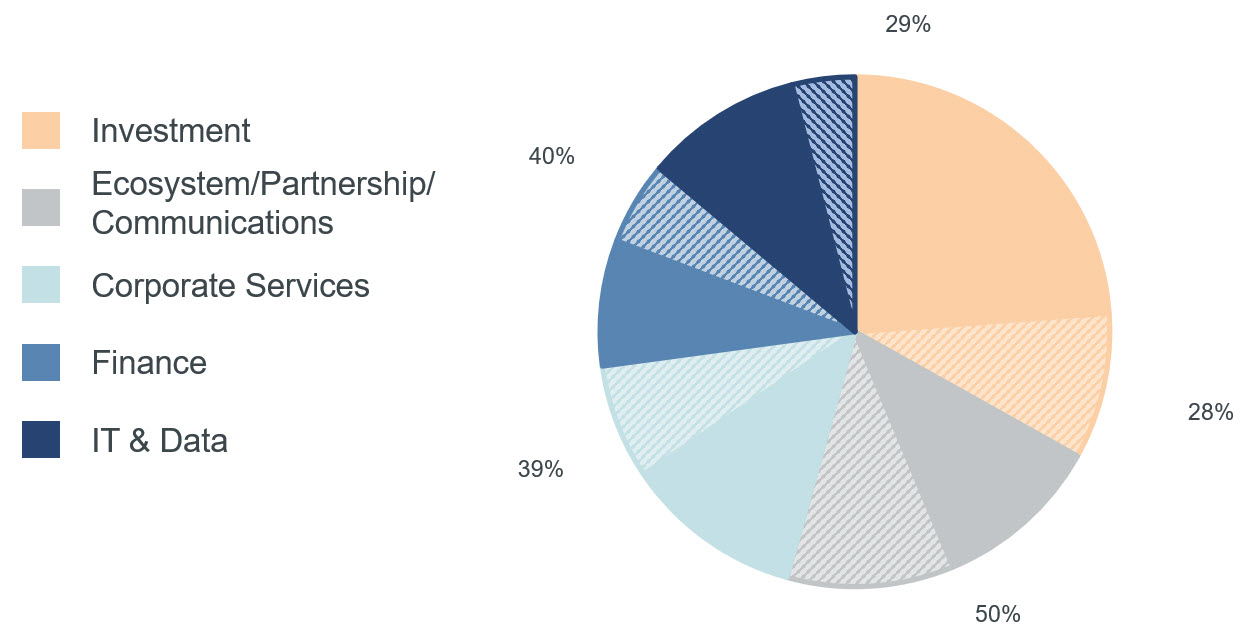
Text version
| Department | Percent of participants vs total number of employees since 2018 |
|---|---|
| Investment | 28 |
| Ecosystems/Partnership/Communications | 50 |
| Corporate Services | 39 |
| Finance | 40 |
| IT & Data | 29 |
Range of employee feedbackFootnote 3
Types of feedback
- Positive:
- Mostly positive experiences with few, if any, negatives
- Neutral:
- A mix of only mildly positive and negative experiences, without any being overwhelming
- Negative:
- Mostly negative experiences with few, if any, positives
Former vs current employees
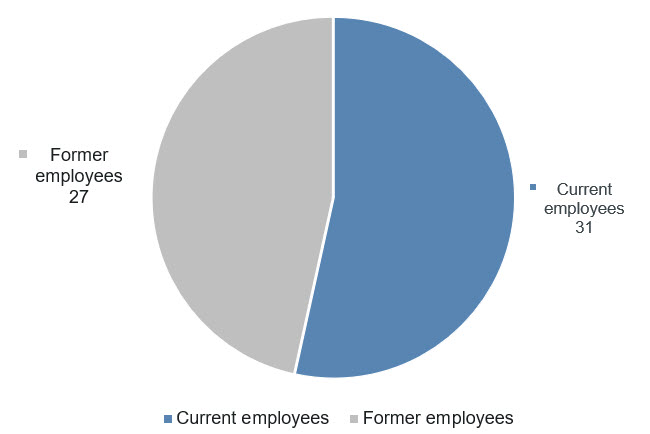
Text version
| Number of participants | |
|---|---|
| Former employees | 27 |
| Current employees | 31 |
Feedback from participants
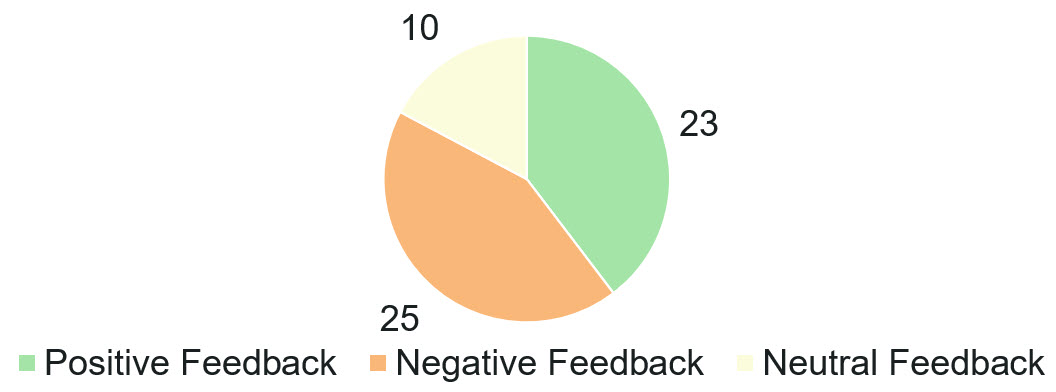
Text version
| Type of feedback | Number of participants |
|---|---|
| Positive | 23 |
| Negative | 25 |
| Neutral | 10 |
Breakdown of feedback
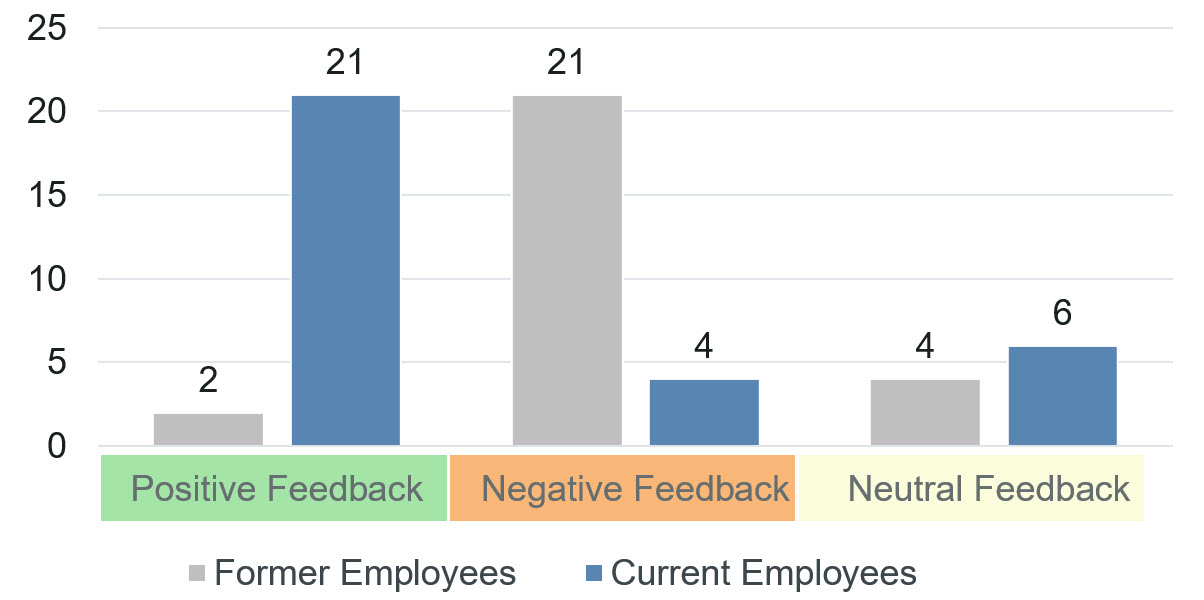
Text version
| Type of feedback | Number of former employees | Number of current employees |
|---|---|---|
| Positive | 2 | 21 |
| Negative | 21 | 4 |
| Neutral | 4 | 6 |
Employee feedback: voluntary vs. invited
Voluntary participants
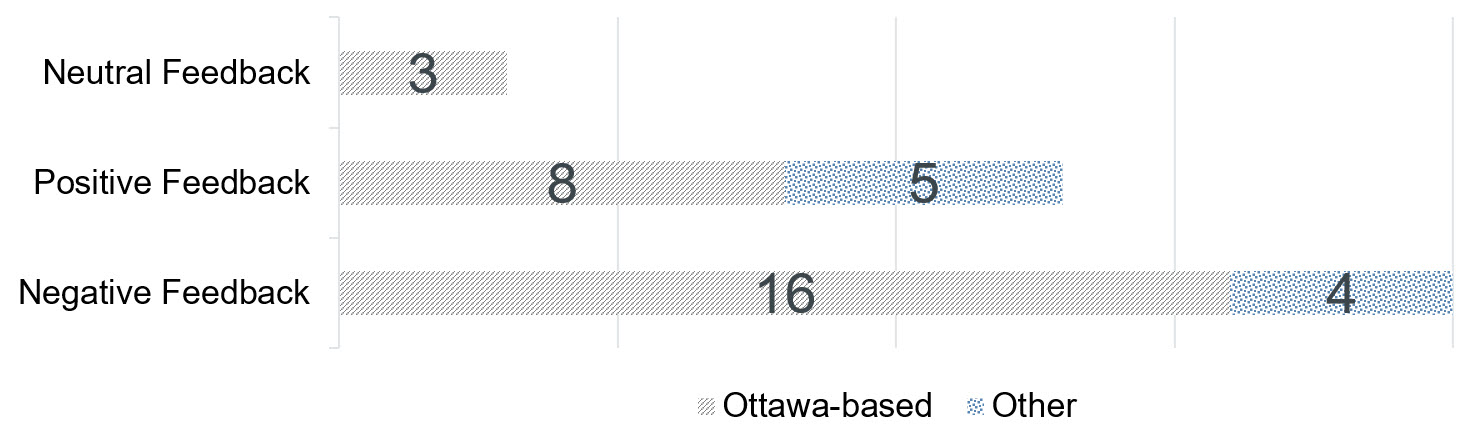
Text version
| Type of feedback | Number of Ottawa-based participants | Number of other participants |
|---|---|---|
| Neutral | 3 | N/A |
| Positive | 8 | 5 |
| Negative | 16 | 4 |
70% of voluntary participants had neutral or negative feedback, versus 55% for invited participants
Invited participants
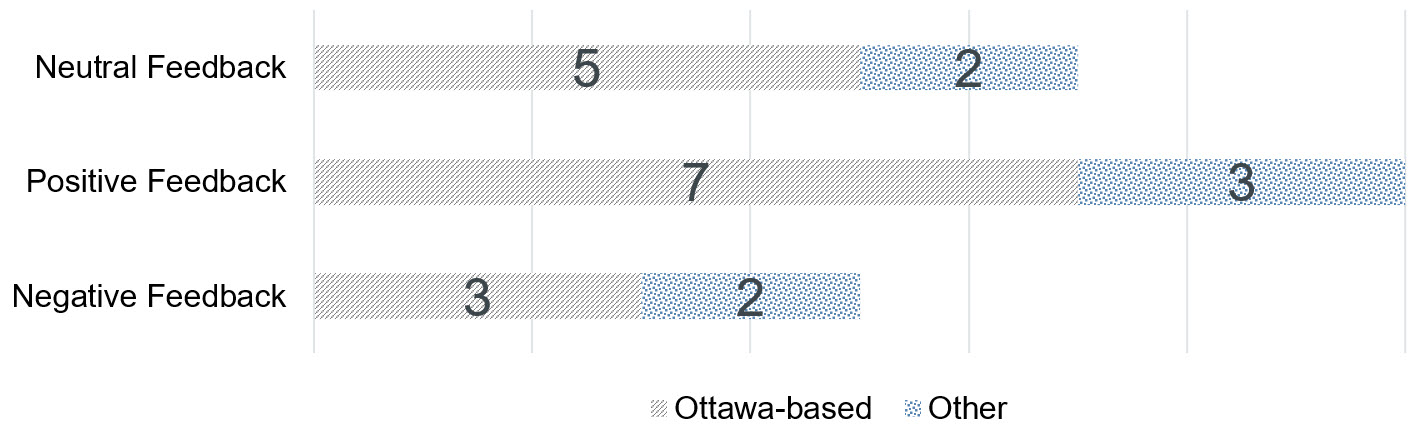
Text version
| Type of feedback | Number of Ottawa-based participants | Number of other participants |
|---|---|---|
| Neutral | 5 | 2 |
| Positive | 7 | 3 |
| Negative | 3 | 2 |
64% of Ottawa-based participants had neutral or negative feedback
Factual findings and standards
How did we determine facts?
- Conducted extensive interviews
- Requested and received documentation
- Tested participants' statements and recollections
- Assessed credibility
- Conducted follow-up interviews and requested additional documentation
- Identified additional participants to corroborate or challenge asserted facts
What standards did we use to assess the facts?
- General legislative framework governing employment law such as human rights, occupational health and safety and employment standards
- SDTC's employment-related policies, including the Workplace Violence and Harassment Policy which defines "workplace violence" as:
- the exercise or an attempt to exercise physical force by a person against a worker, in a workplace, that causes or could cause physical injury to the worker;
- a statement or behaviour that it is reasonable for a worker to interpret as a threat to exercise physical force against the worker, in a workplace, that could cause physical injury to the worker.
- and "workplace harassment" as:
- engaging in a course of vexatious comment or conduct against a worker in a workplace that is known or ought reasonably to be unwelcome;
- workplace sexual harassment.
What was outside our scope?
- Compliance with the Contribution Agreement
- Issues related to financial conflict of interest
- Workplace allegations before 2015
Negative themes expressed by the participants and the factual findings
Negative themes expressed by participants
- Harassment/bullying
- Arbitrary and discriminatory terminations
- Complaints ignored or suppressed by inadequate HR
- High turnover and toxic workplace
- Nepotism
Factual findings on harassment/bullying
Harassment/bullying
What we heard
- Participants described the communication style of some executives, using a wide variety of descriptors such as direct, confrontational, condescending, polarizing, overbearing, intimidating and aggressive.
- Some expressed apprehension about participating in meetings where executives were involved, because they had been unfairly or harshly challenged or saw other colleagues treated similarly.
- Some felt that executives treated employees as either "in" or "out", and that this "shunning" was obvious to all.
- Many participants did not agree that executives harassed or bullied employees and described communication as professional and the environment as open and collaborative.
Factual findings
- The facts as we ascertained them do not give rise to behaviour that would contravene applicable legal standards or SDTC policy.
- Certainly, some participants used terminology such as "harassment" and "bullying" to describe executive treatment of employees in the workplace. That was, however, the minority, and the few examples that were offered as evidence revealed more of a discomfort with the direct style of leadership and/or disagreement with decisions made by leadership than actual harassment/bullying. Importantly, there were no examples of executives yelling or swearing, verbally abusing or physically threatening employees.
- Leadership's predominant focus on organizational objectives (akin to an entrepreneurial startup) may have negatively impacted work culture for some employees. However, the comparison some made between the executives' direct leadership approach (which often took the form of challenging assumptions and conclusions in front of others) and harassment or a toxic workplace is not a balanced or fair description.
Factual findings on terminations
Arbitrary discriminatory terminations
What we heard
- Some participants alleged a bias in leadership against longer service male employees. The example offered was the termination of 5 employees in 2019, labeled by some as the "2019 Purge".
- These terminated employees were widely viewed as strong performers and vocal about challenging change, and whose terminations led some to conclude it was best to stay silent than question leadership.
Factual findings
- While some of the terminations resulting from the 2019 reorganization were senior male employees, the male/female composition of the organization and the leadership team before and after this reorganization does not support a finding of gender/age bias.
- Reasonable objective criteria were developed and used to determine which employees were terminated and which were awarded the restructured roles.
- Most participants stated that the organizational changes implemented during the 2019 reorganization to reduce the number of investment lead roles were necessary to meet organizational objectives, proved ultimately successful, and that the employees who were awarded the restructured roles were deserving and competent performers in their own right.
- Based on the documentation we reviewed, the employees terminated in the 2019 reorganization as well as other employees terminated without cause at other times, received reasonable severance packages which included customary NDA terms.
Factual findings on human resources
Complaints ignored or suppressed by inadequate HR
What we heard
- Some participants asserted that employees were terminated for raising HR complaints.
- Some questioned the efficiency of the HR function citing high turnover.
- Some questioned the impartiality of the HR function department, and alleged that HR was an instrument of the leadership team that actively suppressed employee complaints about management.
Factual findings
- HR did have significant turnover. HR roles were frequently covered by external consultants from a staffing agency on short term assignments. Between September 2016 and March 2023, no HR employee (or consultant) remained in their role for more than 1.5 years.
- The HR turnover rate and use of consultants had some adverse impact on the internal profile, effectiveness and engagement of HR. It is fair for some employees to have felt that HR was not a priority of SDTC leadership. The facts do not support, however, a finding that HR was deliberately ignored by SDTC or was an instrument manipulated by leadership. The evidence suggests there were active measures taken to hire and retain experienced HR professionals, with limited success until more recently.
- SDTC had in place a confidential communication channel called the ConfidenceLine available to employees for reporting unethical and improper conduct.
- There was no evidence that employees themselves suppressed actual complaints because of HR, inadequate policies or lack of knowledge about reporting procedures. There was evidence of one workplace complaint, which was addressed and resolved in a reasonable and appropriate manner.
- There was evidence of one whistleblower complaint, which was adequately addressed by the Board through the creation of a special committee and the hiring of an investigator, and despite minimal cooperation from the whistleblower.
Factual findings on turnover and toxic workplace
High turnover and toxic workplace
What we heard
- Some participants alleged there was unusually high turnover across the organization, citing the "toxic workplace", lack of promotional opportunities due to flat structure and preference for hiring externally over promoting internal talent.
Factual findings
- The facts do not support a finding that employee turnover was related to a so-called "toxic workplace", or that turnover was unusually high.
- Most of the former employees interviewed who had voluntarily resigned from SDTC did not do so because of a so-called "toxic workplace" but rather to pursue opportunities elsewhere. The flat structure at SDTC was a limiter for many.
- We did find that the two reorganizations (2016 and 2019), which resulted in involuntary terminations, left a lasting negative impression about job security and executive motives on certain employees.
- However, it appears the case that the changes implemented by leadership since 2015, as mandated by the Board, were done to strengthen leadership, workplace culture, organizational accountability to clients, and efficiency particularly around speed of funding.
- A vast majority of the participants agreed that structural and program changes undertaken in the last decade were necessary and not misguided. Furthermore, a vast majority of the participants, even those who expressed strong negative views about leadership, agreed the changes have been beneficial to the organization and its clients.
Factual findings on nepotism
NepotismFootnote 4
What we heard
- Some participants felt there was nepotism in employee hiring practices, both for new hires and promotion opportunities.
- Some participants also felt that there was nepotism in consultant engagement and sometimes promotion to employment status thereafter.
- It was communicated that these personal connections within leadership improperly stifled openness and create a culture of apprehension.
Factual findings
- SDTC did not, during the period of the Review, have a specific "anti-nepotism" policy, which is not a legal requirement in any event. SDTC did have various iterations of a Code of Conduct which set out general standards of behaviour and avoidance of conflicts but not in respect to hiring practices.
- Our Review identified several leadership positions over the time period of the Review that were filled with persons previously known to an executive(s).
- We found the connections to these hired leaders predominantly arose from prior professional dealings, not close friendships or family. We also found that these leaders were regarded by most participants as qualified and competent for their roles, with work biographies aligning with the skills, qualifications and experience for the roles. We did not find evidence that any special advantages or perquisites were given to these hires.
- While the hiring practices at SDTC over time were not always uniform, the process for these leadership hires (as was the case for other hirings at other levels) included job postings, interviews and consideration of other candidates.
- It is not unusual, especially in smaller organizations in niche industries, to hire people who have some prior connection to the leadership team. However, as conveyed by some participants, hiring into key positions individuals with ties to the leadership team can lead to perceptions of favouritism, bias and distrust of management more broadly.
Final conclusions
- Current or former executives did not engage in the type of repetitive, vexatious or major incident conduct that would constitute harassment, bullying or workplace violence under applicable standards. The assertion that there was a "toxic workplace" was a minority view among participants and appears to be largely attributable to animosity towards leadership style and disagreement with management decisions, organizational changes and conflict of interest issues.
- Decisions about restructuring or terminations were not made using discriminatory criteria, nor were they arbitrary and lacking reasonable business justification.
- Severance packages were within market expectations and NDA terms and use were in keeping with customary employment practices.
- Turnover in HR and reliance on staffing agencies to fill HR roles caused many participants to feel under-served and under-supported by HR. In the two instances where a formal complaint was made, reasonable process was followed, and the complaints were appropriately addressed. HR policies were not lacking or deficient, and a confidential complaint procedure was available to employees.
- Voluntary turnover was not out of line with benchmarks, and for the most part, employees voluntarily left SDTC to pursue other opportunities in the industry (experiential and/or promotional), and not because of a negative work experience. The flat organizational structure left little room for advancement.
- Key leadership positions were, in some cases, staffed with individuals who had personal/professional connections with executives. All had the requisite qualifications and experience for the roles. While it may not be contrary to policy or law, and not unusual in a niche inter-connected industry, this practice contributed to perceptions of favouritism, bias, and a lack of promotional opportunity and management support.
Legal disclaimer
This Report is intended to provide an overview of the Review conducted within the scope of our mandate and is not intended to serve as a comprehensive analysis or as legal advice. While efforts have been made to ensure the accuracy and completeness of the information contained in this Report, the Report was prepared based on unsworn participant interviews and documentation made available to McCarthy. McCarthy makes no representations or warranties, express or implied, about the accuracy, reliability, completeness, or timeliness of the Report. McCarthy expressly disclaims all liability in respect to the use of this Report, or actions taken or not taken based on any or all the contents of this Report by anyone other than our clients, the Minister of Justice and the Attorney General of Canada.