Research team swells understanding of coastal flooding risks
December 23, 2024 | from Defence and security science

Nearly 6.1 million people live within 20 kilometres from the marine coasts of Canada. Funding from the Canadian Safety and Security Program (CSSP) is helping Canadian communities better understand risks from storm surge, sea-level rise and tsunamis to develop mitigation strategies.
DRDC continues to AMAZE with Arctic emissions reduction research
December 4, 2024 | from Defence and security science

The Arctic can be a challenging place for technology, with remoteness, harsh weather and freezing temperatures adding a layer of complexity.
How advances in science are changing prevention and treatment for Human immunodeficiency virus (HIV)
December 3, 2024 | from The Science of Health

World AIDS Day, observed every year on December 1, is a time to honour the lives of those affected by HIV and AIDS, remember those lost, and reflect on the ongoing efforts to address HIV.
December 2, 2024 | from The Science of Health

Generally speaking, we don’t think much about radiological emergencies because we don’t often experience them in Canada. Should one happen though, the potential effects could be quite serious.
Mapping the future: how geomatics is driving digital innovation at the CFIA
November 7, 2024 | from Cultivating Science

When it comes to pin-pointing sources of food-borne illness, tracking detections of a new invasive plant pest, or studying the spread of an animal disease, geographic data is a powerful tool that helps the Canadian Food Inspection Agency (CFIA) respond effectively to challenges and emergencies.
6 things the CFIA does to keep Canada’s food supply safe
October 30, 2024 | from Cultivating Science

Canada’s agriculture and agri-food system employs about 2.3 million people and generates over $150 billion of Canada's gross domestic product (GDP). It is a complex system that is safeguarded by Canadian Food Inspection Agency (CFIA) employees and is known as one of the best food safety systems in the world.
Tandem satellites will advance R&D in space domain awareness
October 10, 2024 | from Defence and security science

Defence Research and Development Canada (DRDC) is adding a new subsatellite to the Redwing space domain awareness project, through a partnership with the United Kingdom’s Defence Science and Technology Laboratory (Dstl), Magellan Aerospace, and the University of Manitoba.
Investigating Silicone Bakeware is their Bread and Butter!
October 1, 2024 | from The Science of Health

Silicone bakeware has gained popularity as a replacement for traditional non-stick bakeware due to its versatility and ease of use. However, as with anything purchased for use in the kitchen, we want to be confident that harmful chemicals aren’t being released into food or the air through their use.
Chemicals detectives: How scientists examine exposure to chemicals
September 16, 2024 | from The Science of Health

Chemicals are everywhere – in air, soil, water, products and food. And they can enter our bodies when we eat, breathe, and through our skin. Every day, we are exposed to a myriad of chemicals, whether they are human-made or occur naturally in the environment.
CFIA scientists develop new test for unusual food safety case
August 21, 2024 | from Cultivating Science

In late August 2022, Ontario public health authorities notified the Public Health Agency of Canada of 12 cases of an unknown foodborne illness in York, Ontario. Early observations from local public health authorities identified symptoms consistent with aconitine poisoning.
Bees, our unparalleled allies in detecting viruses in fruit trees
August 14, 2024 | from Cultivating Science

Over time, plants can become hosts to many viruses that cause serious plant diseases. This is especially true for long-lived perennial fruit plants like apples, cherries, or blueberries. That is why it is important to rapidly detect new viruses before they can become a threat to our food production.
July 24, 2024 | from Defence and security science

With just 10 microlitres (one drop) of blood and five minutes for results, Defence Research and Development Canada (DRDC) is advancing health and safety monitoring at the annual NATO training event, Exercise PRECISE RESPONSE.
July 24, 2024 | from The Science of Health

Generally, when thinking of stress, the causes are often school, work, finances, or other personal challenges. But what if the air we breathe contributes to the stress our body feels? Most of us are exposed to air pollutants everyday, both inside and outside our homes, and what is in the air we breathe has an impact on our health.
July 23, 2024 | from Defence and security science

Chemical, biological, radiological, nuclear, and explosive (CBRNE) threats are constantly evolving. To be able to tackle them efficiently and effectively, it’s important to coordinate efforts with allies and across government.
Canada becomes fifth country to test above the horizon laser technology to counter drones
July 18, 2024 | from Defence and security science

During a recent counter-drone demonstration event, Canada became the fifth NATO country to test above-the-horizon lasers to defeat drone threats without a mountain or other geographic backdrop to stop the laser.
Train like you fight: DRDC supports realistic training with NATO Allies
July 17, 2024 | from Defence and security science

Thirteen NATO Allies are gathered in southeastern Alberta for interoperability training during Exercise PRECISE RESPONSE 2024, with scientific support from Defence Research and Development Canada (DRDC)’s Suffield Research Centre.
Counter drone prototypes undergo real world testing at IDEaS Sandbox
July 12, 2024 | from Defence and security science

Technology needs to keep pace to detect and defeat drones that are faster, smaller, and less detectable every year. Innovators are developing counter drone technologies, but they need a safe space to test their technologies against a wide variety of drones, swarm attacks, and variable conditions.
Twinning is winning: collaborating for the global management of animal diseases
July 4, 2024 | from Cultivating Science

International scientific collaboration on animal disease prevention, diagnosis, response and management must keep pace with the globalization of our economies and societies. Increased trade, population growth and climate change lead to new challenges in managing the spread of animal diseases.
CSSP introduces match-making board to connect prospective partners
June 18, 2024 | from Defence and security science

The Canadian Safety and Security Program (CSSP) acts as a bridge between the safety and security needs of all levels of government, with science and technology solutions developed in partnership with industry and academia.
Canada engages with OECD to transform science, technology and innovation
June 17, 2024 | from International collaboration

Science, technology and innovation issues have become so complex that countries around the world need to collaborate more to solidify their research strategies. Countries are working together in developing innovative and inclusive science and technology policies to address the challenges facing the global population.
Smoking out the health impacts of firefighting
June 17, 2024 | from The Science of Health

Firefighters put their lives on the line every day to protect us from wildfires, house fires and everything in between. Evidence shows that they are more likely to develop certain types of cancer, as well as chronic conditions such as respiratory and cardiovascular diseases. Researchers are working to better protect these modern-day heroes while they do their job.
Advancing the inclusion and recognition of Indigenous science at the CFIA
June 13, 2024 | from Cultivating Science

My name is Mike Reid and I am a proud L’nu Mi'kmaq. I embarked on my career with the Canadian Food Inspection Agency (CFIA) back in 2009 as a laboratory technician at the (former) St. John's Laboratory in Newfoundland. Drawn to new opportunities, I transferred to Ottawa in 2011 and joined the Ottawa Laboratory (Carling), where I focused on food diagnostic testing.
Pioneering research on emerging technology for risk-based pesticide monitoring
June 6, 2024 | from Cultivating Science
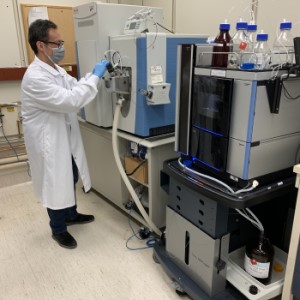
The Canadian Food Inspection Agency (CFIA) monitors the levels of pesticide residues in food to ensure that any residues detected do not exceed levels considered safe for human health. The challenge for regulatory agencies like the CFIA is how to monitor as many of these compounds as possible while also maintaining efficiency and accuracy. Modern technology offers new strategies to achieve this balance.
Tiny tech, big impact : Monitoring air quality with low-cost sensors
June 4, 2024 | from The Science of Health

Have you ever wondered about the air you breathe? From city streets to countryside valleys, air quality can impact your health. Thanks to advancements in technology, monitoring air quality is becoming easier and more accessible than ever before.
June 4, 2024 | from Defence and security science

Researchers are investigating topics to assess, adapt to and mitigate the impacts of climate change for NATO militaries. For example, developing green energy technologies for the North reduces the use of fossil fuel in the Arctic. Reducing dependence on fossil fuels reduces greenhouse gas emissions, saves money, and reduces the logistical burden of transporting fuel to the Arctic.
Scientists and students unite on the hunt for invasive mosquitoes
May 30, 2024 | from The Science of Health

Scientists at the Public Health Agency of Canada’s (PHAC) National Microbiology Laboratory encourage students to get involved in a new citizen science project monitoring the tiger mosquito (Aedes albopictus), an invasive species first detected in the Windsor/Essex region of Ontario in 2016. These mosquitoes can spread infectious diseases that pose risks to people’s health.
International science perspectives on potato wart
May 30, 2024 | from Cultivating Science

Potato wart is a disease of potatoes caused by the fungus Synchytrium endobioticum – a particularly hardy and persistent pest. While potato wart does not pose a risk to human or animal health, the disease can deform potato tubers, making them unmarketable, and reduce crop yields.
May 28, 2024 | from Defence and security science
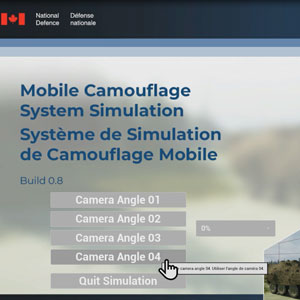
Powerful systems can create realistic simulations that bring new worlds to life in video games and animation, but Defence Research and Development Canada (DRDC) is using these systems to simulate the real world and address a variety of military needs.
DRDC helps detect dark vessels
May 21, 2024 | from Defence and security science

When it comes to illegal, unreported, and unregulated (IUU) fishing, it’s important that Canada is not in the dark. IUU fishing contributes to marine habitat destruction and declining fish stocks, representing up to 26 million tonnes of fish caught annually.
Learning to fly: DRDC research examines virtual reality training for pilots
May 16, 2024 | from Defence and security science

Virtual reality can make you feel like you’re really in the cockpit of an airplane and new research is showing it can be used effectively in training Royal Canadian Air Force (RCAF) pilots, according to defence scientist Dr. Ramy Kirollos.
Leadership and innovation in seed identification
May 15, 2024 | from Cultivating Science

Could you identify a plant seed out of hundreds of thousands of species, or tell the difference between the seed of a crop and an invasive species?
DRDC conducts research to support Canadian Public Safety Broadband Network
May 10, 2024 | from Defence and security science

When an emergency such as a natural disaster, or terrorist attack occurs, cellular networks in proximity to the incident can experience disruptions or possibly outages.
DRDC participates in multinational experiment Project Convergence CAPSTONE 4
May 7, 2024 | from Defence and security science

Defence Research and Development Canada (DRDC) experimented with two artificial intelligence (AI) enabled technologies to improve sensing and surveillance, in the multinational experiment Project Convergence CAPSTONE 4, held from February 18 to March 20, 2024 in Fort Irwin, California.
DRDC tests Arctic survival kits for military aircraft with Allies
May 2, 2024 | from Defence and security science

Surviving a plane crash in the Arctic is dependent on having the right equipment and skills to withstand the extreme temperatures and avoid cold weather injuries until rescue.
May 1, 2024 | from The Science of Health

Dr. Heather Coatsworth is passionate about bugs.
So much so, she has made it part of her life’s work. An entomologist by training, she has brought this passion to her role as Chief of the Field Studies program at the Public Health Agency of Canada’s (PHAC) National Microbiology Laboratory (NML), where part of her job is researching Lyme disease.
What's the tea on best before dates: 6 ways they help you at home & while shopping
May 1, 2024 | from The Science of Health

Best before dates get a lot of attention these days, including being subject to misinformation (spoiler alert: they are about freshness, not safety, and are not being eliminated). So what's the real tea on best before dates?
Supplemented foods labelling… A Decade of Research
March 7, 2024 | from The Science of Health

If you’ve fallen behind on nutrition labelling news, no worries, we’ve got you covered! In August 2021, the Canadian Food Inspection Agency and Health Canada published a food labelling coordination policy.
DRDC helps military members breathe easier during training
March 1, 2024 | from Defence and security science

Shaved skin used to be the only way to get a good seal and adequate respiratory protection wearing a gas mask, but research trials on a new respirator, called the C5B, promise a “breath of fresh air” during training drills for Canadian Armed Forces (CAF) members who have beards, long hair, headdresses or uniquely shaped faces.
DRDC’s Centre for Security Science funds work on a portable platform for pathogen detection
February 14, 2024 | from Defence and security science

The first step of addressing any sickness is figuring out the cause. Whether its for treatment or to avoid spreading it, diagnoses are necessary for dealing with illness.
Former CAF member to act as bridge to Canadian innovation for the Ukraine
February 13, 2024 | from Defence and security science

When given the chance to serve her country and make a difference in the world, time and time again, Marie-Pierre Raymond has enthusiastically said yes.
Collaborating for safer food and stronger agriculture
February 12, 2024 | from Cultivating Science

We all know that fresh fruits and vegetables are an important part of a healthy, balanced diet. These crops are also used to make foods like juices, cereals and pasta, and feed the animals that add eggs, meat and dairy to our diets.
Unveiling the essence of nature’s fragrance
February 12, 2024 | from The Science of Health

What do we all do when purchasing products like perfumes, candles, dish soaps, or herbal teas? Make sure we like the scent, of course!
Standardization is key to help militaries work together towards green future
February 9, 2024 | from Defence and security science

Defence scientist Inbal Marcovitch is working to ensure that standardization is part of the process as Canada and its allies work to rapidly adopt new green military technologies to respond to the climate crisis.
DRDC investigates augmented reality for improved mission planning
February 8, 2024 | from Defence and security science

Augmented reality offers potential advantages for the Royal Canadian Navy (RCN) to be able to visualize in three dimensions the battlespace both above and below the surface of the water.
DRDC engineering group puts equipment to the test to simulate deep ocean conditions
February 5, 2024 | from Defence and security science

Alexandra McLeod, a mechanical engineering technologist and leader of the maritime information systems and technology (MIST) group at the DRDC Atlantic Research Centre, explains how they use a high-pressure tank to ensure underwater equipment can withstand the pressure of the ocean depths.
Small but mighty: Unveiling the power of small modular reactors
January 25, 2024 | from The Science of Health

Almost everything we do depends on electricity - cooking, cleaning, working, you name it! The way in which electricity is generated can impact our environment, our economy, and our health.
Dalhousie University student discovers new career interest during co-op term with DRDC
January 24, 2024 | from Defence and security science

Dalhousie University electrical engineering student Tristan Batchelor describes his experiences during a co-op term with Defence Research and Development Canada's Atlantic Research Centre in the fall of 2023.
Bot or not? Defence scientists detect deception online
January 8, 2024 | from Defence and security science

The internet is widely used as a tool for entertainment, to connect with friends and family, and to learn new skills. However, it can also be a battlespace, and just like on land, sea and in aerospace, it’s important that Canada is prepared to face threats online.
Looking back at my career at the CFIA
January 4, 2024 | from Cultivating Science

As I write this, it is hard to believe that my time at the Canadian Food Inspection Agency (CFIA) is coming to an end! Looking back on my career at the Agency in several different roles, I can honestly say that it has been both a privilege and a pleasure.
Previous blogs
2024 2023 2022 2021 2020 Older blogs